
Asbestos in Older Boise Homes: What Treasure Valley Homeowners Need to Know
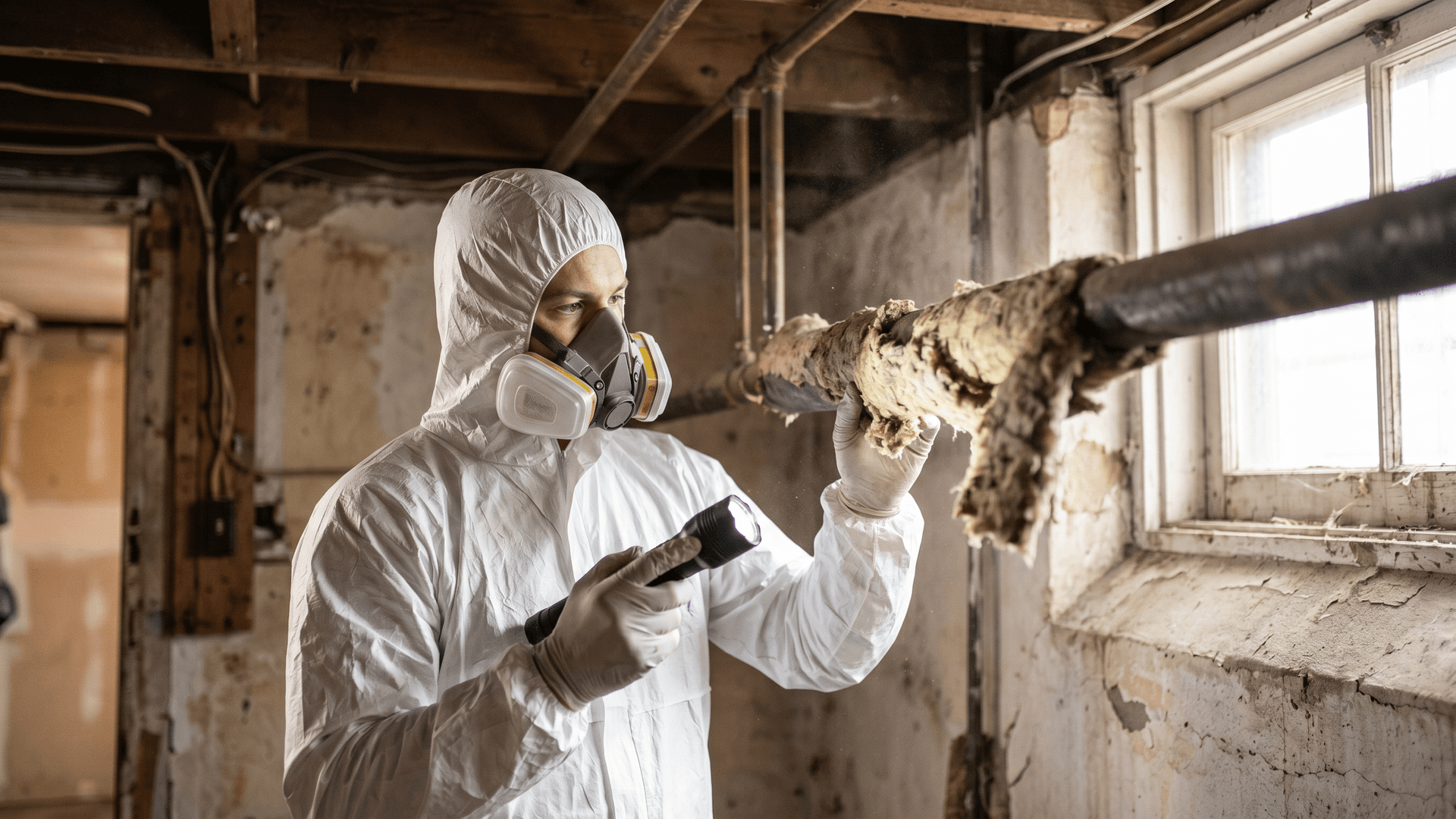
If your Boise home was built before 1980 — whether it's a post-war bungalow in the North End, a mid-century ranch on the Bench, or a 1970s split-level in the East End — there's a real chance asbestos-containing materials are somewhere inside it. That doesn't mean you're in danger right now. But it does mean you need the right information before you renovate, buy, or sell. This guide cuts through the national noise to give Treasure Valley homeowners a clear, locally grounded picture of what asbestos is, where it hides in Idaho homes, and exactly what to do about it.
Get Your Quote
Ready to handle this with a pro?
You're reading about What Is Asbestos and Why Should Boise Homeowners Be Concerned. Get a fast quote for water damage restoration service in Boise, ID from Apex Restoration.
What Is Asbestos and Why Should Boise Homeowners Be Concerned?
The Science Behind Asbestos and Why It Was Used
Asbestos is a naturally occurring mineral fiber that was prized by builders for decades because of its remarkable fire resistance, durability, and insulating properties. It was widely incorporated into residential building materials from the 1930s through the late 1970s, well before federal regulators recognized the full scope of its health risks. The EPA's family protection guidance on asbestos explains that the core danger isn't the material itself — it's the microscopic fibers that become airborne when those materials are disturbed, fibers too small to see and easy to inhale without realizing it.
Health Risks Linked to Asbestos Exposure
Prolonged or repeated inhalation of asbestos fibers is linked to serious diseases including mesothelioma, asbestosis, and lung cancer. What makes these conditions particularly difficult is the latency period — illnesses often take 20 to 50 years to develop after initial exposure, which is why prevention matters so much more than reaction. NCBI research on indoor pollution health effects confirms that a single, brief disturbance event carries very low risk for most people — the real danger comes from repeated or large-scale exposure over time.
The Key Distinction: Presence vs. Disturbance
This is the most important concept for any Boise homeowner to internalize: asbestos that is intact and undisturbed does not automatically pose a health threat. The risk escalates sharply when materials are cut, drilled, sanded, or demolished. Homeowners doing common upgrades — window replacements, flooring updates, electrical work — are the most likely to accidentally disturb asbestos-containing materials without even knowing it.
Where Is Asbestos Most Commonly Found in Older Boise Homes?
The Most Likely Locations in Idaho 1950s–1970s Construction
Popcorn (acoustic) ceilings applied before 1978 are among the highest-risk surfaces in local homes, and they're extremely common in mid-century Treasure Valley properties. Nine-inch-by-nine-inch vinyl floor tiles — and the adhesive layer beneath them, often hiding under carpet that was installed later — are another frequent source in Boise homes from this era. Pipe and duct insulation around furnaces and in basements, particularly in homes built during the post-WWII expansion of the Treasure Valley, frequently contains asbestos wrap. Textured drywall joint compound and plaster used through the mid-1970s can also contain asbestos fibers, making even cosmetic wall work a potential trigger.
Vermiculite Attic Insulation: An Idaho-Specific Risk
Zonolite brand vermiculite insulation — used heavily in Idaho homes built between the 1950s and 1970s — is a concern that doesn't always get the attention it deserves in national asbestos guides. Zonolite was sourced from a mine in Libby, Montana that was heavily contaminated with asbestos, and many Treasure Valley homeowners still have it sitting in their attics. Not all vermiculite contains asbestos, but Zonolite specifically warrants professional evaluation before any attic work, insulation upgrades, or HVAC projects disturb it. Undisturbed vermiculite in a sealed attic poses minimal immediate risk — the danger comes when someone goes up there to add insulation or run new ductwork without knowing what they're dealing with.
Boise Neighborhoods and Construction Eras With Elevated Risk
The North End, Bench, and East End neighborhoods contain significant concentrations of pre-1960 and 1960s–1970s housing stock, making them areas where asbestos awareness is especially relevant. The post-WWII construction boom in the Treasure Valley — roughly 1945 through the 1960s — coincides precisely with peak asbestos use in residential building materials. Homes built between 1945 and 1979 carry the highest probability of containing multiple asbestos-containing materials; homes built after 1980 have dramatically lower risk. Buyers entering the Boise market for affordable older homes should treat pre-1980 construction as a trigger for informed awareness, not alarm.
How Do You Test for Asbestos in a Boise Home?
What Homeowners Can Do Before Calling a Professional
Idaho homeowners can legally collect their own bulk samples for submission to a certified laboratory — this is not the same as abatement and does not require a licensed contractor. For popcorn ceilings, lightly mist the surface with water, use a plastic scraper to collect a golf-ball-sized sample into a zip-lock bag, and wear an N100 respirator and disposable gloves throughout the process. For floor tiles, chip a small piece from an inconspicuous edge and include a portion of the adhesive layer beneath it, then seal it in a clearly labeled bag. The EPA's homeowner's guide to asbestos provides step-by-step guidance on minimizing disturbance during sample collection — the goal is a small, targeted sample, not a demolition project.
Choosing a Certified Asbestos Testing Laboratory
Samples should be sent to an NVLAP-accredited laboratory for polarized light microscopy (PLM) analysis, which is the standard method for identifying asbestos fibers in bulk building materials. Results typically come back within 3 to 7 business days, with rush options available if you're on a renovation timeline. Standard lab analysis runs approximately $25 to $50 per sample — a modest investment that can save you from a much more expensive and stressful situation down the line. Do not rely on at-home test kits sold at hardware stores; only accredited lab analysis provides results that are legally and medically reliable.
When to Hire a Certified Asbestos Inspector Instead
If you're purchasing a home and need formal documentation for a real estate transaction, a certified asbestos inspector provides a written report that carries professional weight. Pre-renovation inspections by a licensed professional are strongly recommended before any structural work, window replacement, or HVAC upgrades in a pre-1980 Boise home. Washington State's LNI office maintains an asbestos certification program that offers a useful reference for understanding what credentialed professionals look like in the broader Pacific Northwest region — the same professional standards apply when hiring in Idaho.
Get Your Quote
Ready to handle this with a pro?
You're reading about What Are Your Options If Asbestos Is Found in Your Home. Get a fast quote for water damage restoration service in Boise, ID from Apex Restoration.
What Are Your Options If Asbestos Is Found in Your Home?
Encapsulation: The Practical First Choice for Undisturbed Materials
Encapsulation means sealing or covering asbestos-containing materials so fibers cannot become airborne — it does not remove the asbestos, but it effectively eliminates the risk when done correctly. This approach is ideal for intact floor tiles under carpet, undisturbed popcorn ceilings in rooms that won't be renovated, and pipe insulation that remains in good condition. Encapsulation is significantly less expensive than full removal, and legally leaving covered asbestos tiles in place is a recognized and accepted practice when materials are genuinely undisturbed. For many Boise homeowners, this is the most practical path forward.
Full Removal: When Abatement Is the Right Call
Full professional asbestos abatement is necessary when renovation work will directly disturb asbestos-containing materials — there is no safe DIY alternative for this scenario. Real-world cost benchmarks from homeowners who've gone through the process suggest approximately $6,000 or more for 550 to 600 square feet of tile removal, though costs vary based on material type, scope, and contractor. Abatement contractors are required to follow strict containment, disposal, and air-monitoring protocols, and in Idaho, asbestos waste must be disposed of at approved facilities such as the Ada County hazardous waste landfill. Get multiple quotes before committing — homeowners who approach the process calmly and gather several bids consistently report better outcomes than those who hire the first contractor they call in a panic.
A Decision Framework: Encapsulation vs. Removal for Boise Homeowners
The decision between encapsulation and full removal doesn't have to be complicated. Use this framework:
Renovating the space? Full removal is required before work begins — no exceptions.
Material is intact and undisturbed, no renovation planned? Encapsulation or leave-in-place management is appropriate.
Buying or selling the home? Get a professional inspection and documentation; properly disclosed and managed asbestos is common in older Boise homes and does not have to derail a transaction.
Contractor accidentally disturbed material? Stop work immediately, ventilate the area, conduct air monitoring, and consult a professional — a single disturbance event is low risk but should be documented.
What Happens If Asbestos Is Accidentally Disturbed During a Renovation?
Immediate Steps After Accidental Disturbance
Stop all work in the affected area immediately and evacuate the space — don't try to clean it up with whatever is on hand. Do not use a standard household vacuum, which will spread fibers rather than capture them; only HEPA-rated equipment is appropriate for asbestos cleanup. WasteCap's tips for avoiding asbestos during renovations recommend ventilating the space by opening windows and allowing air to circulate before anyone re-enters. These immediate steps significantly reduce the risk from what is, in most cases, an already low-risk single-disturbance event.
Assessing Risk After a Single Disturbance Event
The community consensus among homeowners who've been through this situation is consistent with what environmental health professionals say: a single, limited disturbance event carries very low health risk. The real danger lies in repeated or large-scale exposure, not in accidentally scraping a ceiling tile once. Air monitoring by a certified industrial hygienist can confirm whether fiber levels have returned to background after cleanup, which provides both peace of mind and documentation. Record the incident, the materials involved, and all cleanup steps taken — this matters for future real estate disclosure and your own records.
Preventing Accidental Disturbance on Future Projects
The single best preventive step is simple: test before you disturb anything. Before any renovation in a pre-1980 Boise home — window replacement, flooring removal, electrical updates, insulation work — testing should come first. Share your home's construction date and any known material concerns with every contractor before work begins; do not assume tradespeople will proactively test or ask. A routine window replacement in a 1962 home, for example, can unexpectedly disturb asbestos-containing window glazing or the surrounding plaster — a scenario that's entirely avoidable with a $50 lab test.
How Does Asbestos Affect Buying or Selling an Older Boise Home?
What Buyers Should Know Before Making an Offer
A pre-purchase asbestos inspection is a practical contingency for any pre-1980 Boise home — treat it like a standard home inspection, not an emergency measure. The most common concerns in mid-century Treasure Valley homes are floor tiles, plaster walls, popcorn ceilings, and pipe insulation, but not every material in every home will test positive. Asbestos presence alone is not a dealbreaker; disclosed and properly managed asbestos is common in older Boise homes and does not necessarily affect insurability or habitability when handled correctly.
Seller Disclosure and Idaho Real Estate Considerations
Idaho sellers are generally required to disclose known material defects, which can include known asbestos-containing materials. The Boise School District's legal notifications page offers a local example of how public institutions handle required asbestos disclosure under federal law, illustrating the kind of documentation standards that apply across Idaho. Proactively testing and remediating before listing can actually turn a potential liability into a selling point — buyers who see documentation of completed abatement or professional encapsulation are getting verifiable certainty, which has real value in a transaction. Buyers who panic and walk away from older Boise homes over asbestos concerns often miss out on well-built mid-century properties that simply need informed management rather than avoidance.
How Abatement Affects Home Value and Resale
Professional abatement with documentation adds verifiable value to a home sale by removing uncertainty for future buyers. Encapsulation with a professional report is often sufficient for lender and insurance requirements when full removal is not warranted. Pairing asbestos awareness with attention to other older-home environmental concerns — including lead abatement and mold remediation — gives both buyers and sellers a complete picture of a home's environmental health, which is increasingly expected in the Boise market.
Get Your Quote
Ready to handle this with a pro?
You're reading about Is Asbestos in Your Older Boise Home Really Something to Worry About. Get a fast quote for water damage restoration service in Boise, ID from Apex Restoration.
Is Asbestos in Your Older Boise Home Really Something to Worry About?
Putting the Risk in Honest Perspective
Asbestos in intact, undisturbed condition in a pre-1980 Boise home is a manageable condition — not an emergency. The Treasure Valley's growing population of families moving into older Idaho homes makes asbestos awareness timely and practical, particularly given how deeply the cultural identity of homeownership is tied to the older housing stock that defines neighborhoods like the North End and the Bench. Informed homeowners who test before renovating, hire credentialed professionals for abatement, and document their home's material history are genuinely well-protected.
The Practical Takeaway for Treasure Valley Homeowners
Three rules cover most situations:
Know your home's construction era. Built between 1945 and 1979? Elevated awareness is warranted. Built after 1980? Risk is dramatically lower.
Test before you disturb anything. DIY sample collection is accessible, affordable, and the right first step before any renovation project.
Match the response to the situation. Encapsulation when materials are undisturbed; professional abatement when renovation will disturb them; multiple quotes; calm process.
Next Steps and Local Resources
If water damage has complicated your older home's environmental concerns — a leaking roof in a North End bungalow, for example, can create conditions where multiple hazards overlap — local restoration services are available throughout the Treasure Valley, including water damage restoration in Boise, Meridian, Nampa, Caldwell, and Eagle. For homeowners and contractors working across the state line, water damage restoration in Spokane and Spokane Valley are also available resources. The bottom line: older Boise homes are worth owning, worth renovating, and worth buying — as long as you go in with the right information and a practical plan.
Related Posts
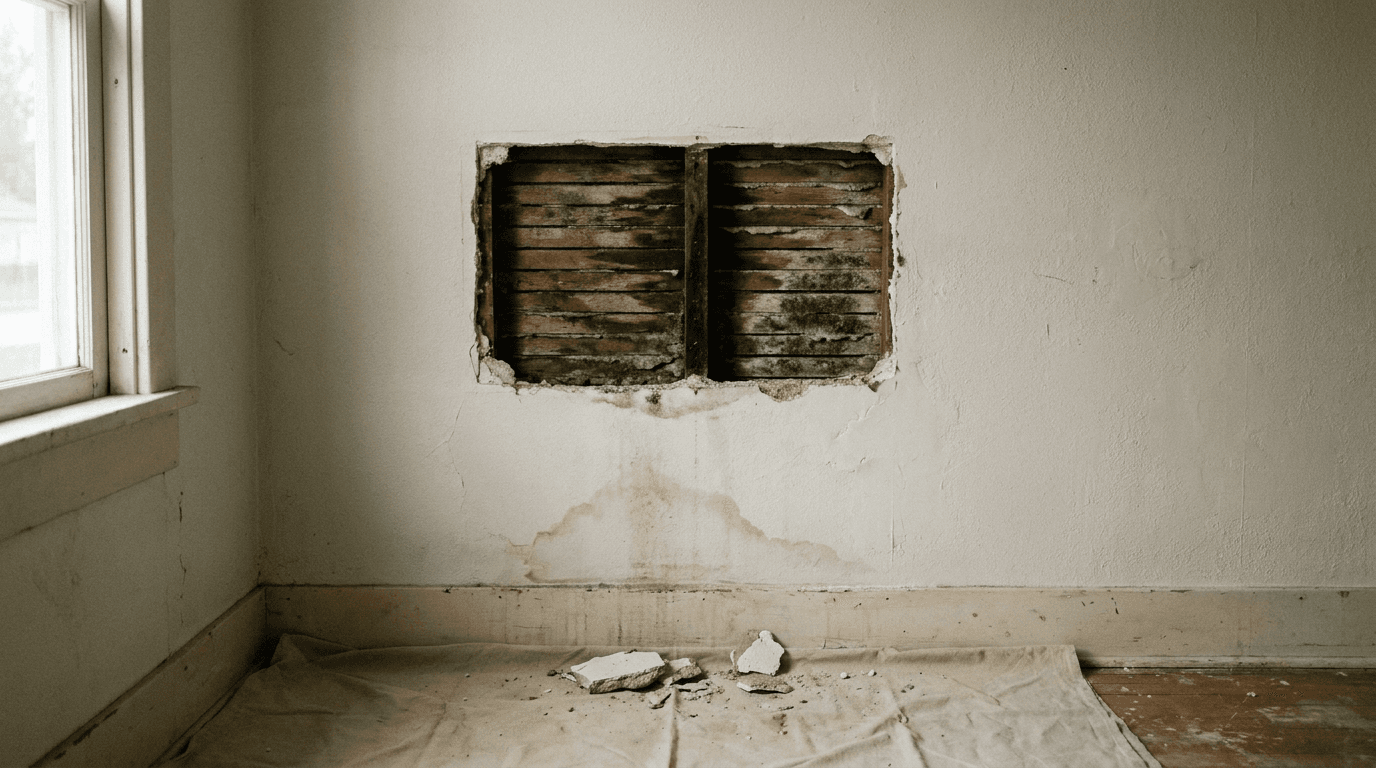
Does Homeowners Insurance Cover Mold Removal in Caldwell?
Homeowners insurance can pay for mold removal in a Caldwell home when the mold traces back to a covered water event, often only up to a limit. Here's how that limit often works, what an adjuster weighs, and what to tell your insurer.
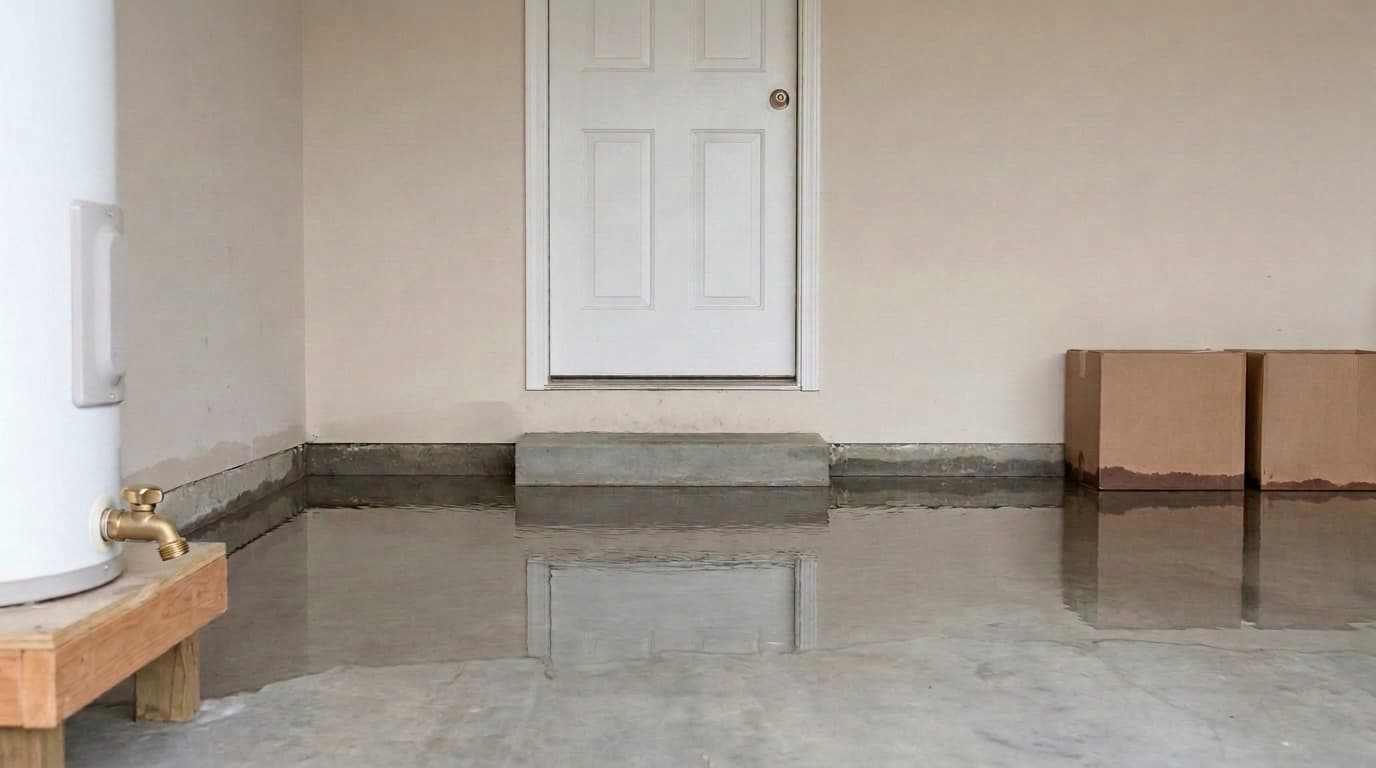
What Should You Do When a Star Garage Floods?
When a water heater or washer floods a Star garage, stay clear of anything electrical the water reached, stop it at the source, and move it away from the house wall. Here's what to check next, and which board Idaho's code calls for when that wall is repaired.
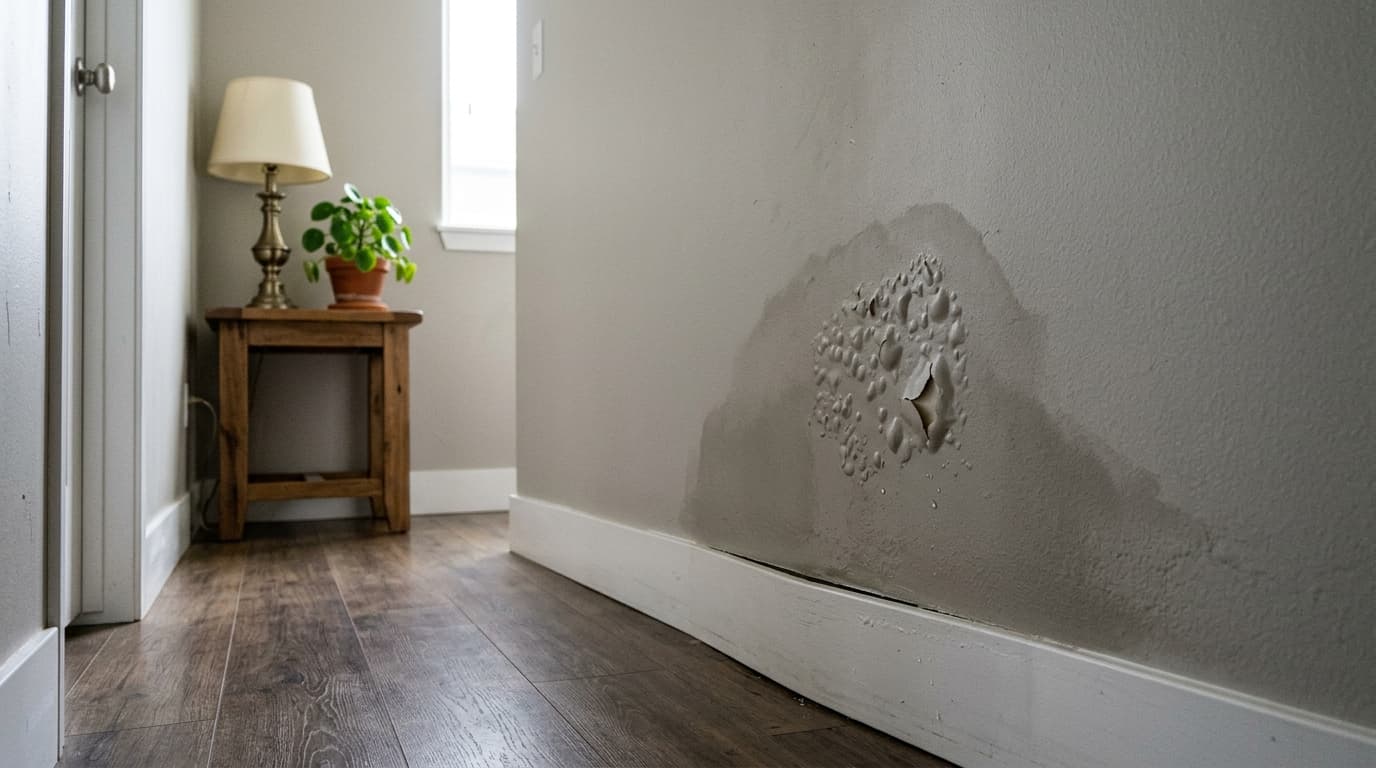
How Do You Find a Water Leak in a Middleton Wall?
A leak inside a Middleton wall can show up in the water bill, a faint running sound or a bubbling paint seam before any stain appears. Here's how to narrow it down, what the City's meter rules mean for you, and when opening the wall makes sense.