
Why Is There Mold in a New House in Boise?
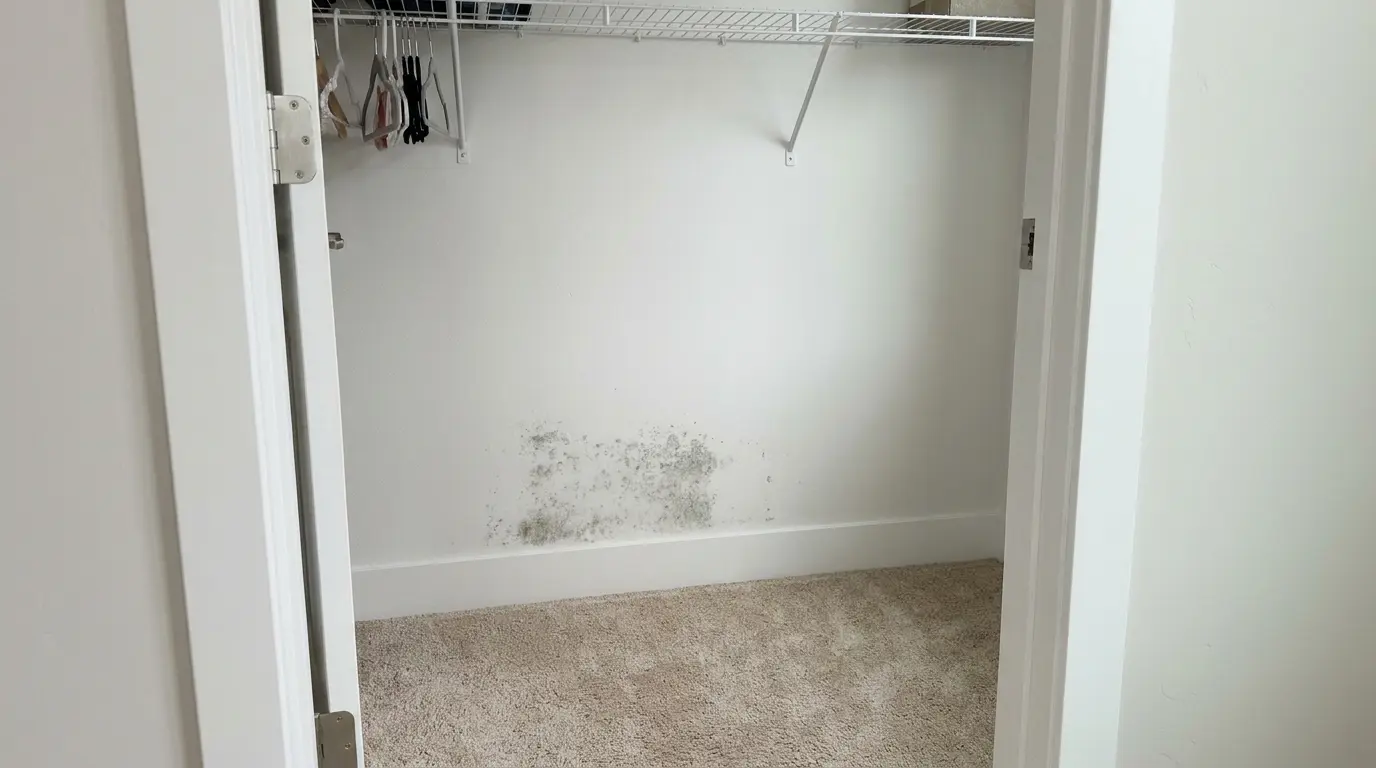
Mold grows in a new Boise house for the same reason it grows in an old one: something stayed damp. In a new build, the construction itself brings water in. Lumber can get rained on before the roof is on, and drywall can go up over framing that never fully dried.
The remedy is the same as in any house: find the source of the moisture, fix it, and get the growth out. Once mold has spread past a small patch, that last step is a job for mold remediation. If the build itself caused the problem, Idaho law also sets out how you put your builder on notice.
Get Your Quote
Ready to handle this with a pro?
You're reading about Is It Normal to Find Mold in a New Boise House. Get a fast quote for water damage restoration service in Boise, ID from Apex Restoration.
Is It Normal to Find Mold in a New Boise House?
Mold spores in a new house are normal. Mold growing on a wall is not. Spores drift through indoor and outdoor air everywhere, but they only grow where there is moisture. So growth on a wall means moisture is reaching that spot.
New houses start out with extra water built in. EPA's moisture control guidance for building design and construction calls moisture problems common. It says the construction process is almost certain to run into them. Poured concrete, floor levelers and water-based finishes all go in wet. As they dry, they can raise indoor humidity during a building's first year of use, which can lead to condensation.
Newer houses are a sizable share of the city's housing. By the Census Bureau's 2024 American Community Survey five-year estimates, about one in four Boise housing units was built in 2000 or later.
Before you worry, make sure it is mold. A gray streak on fresh paint can be a scuff from moving day. Mold shows up as spots in many colors, and it can smell musty, as CDC describes it. What isn't normal is growth that spreads or comes back after cleaning, or a musty smell you can't trace. Each one points to a wet spot you haven't found yet.
What Causes Mold in a Brand-New Boise House?
The first suspect we'd check is water that got into the house during the build and was closed in before it dried. The same EPA guidance says wet lumber and concrete have both caused problems in new buildings.
Framing that got wet before the house was closed in. Before the roof and windows go on, a house is an open frame, and rain or snow can soak the lumber and sheathing. Across most climates, rain puts more water into buildings than any other source. Boise is semi-arid, with just over eleven inches of precipitation a year at the airport, according to the National Weather Service office in Boise. But three quarters of it falls between November and May. Say your house was framed in January. Its lumber took whatever fell before the roof and windows went on.
Drywall hung over damp wood or concrete. Wood that looks dry can still hold enough water to humidify a wall cavity once it is closed in. Paper-faced drywall attached to damp lumber or concrete may grow mold until those materials dry.
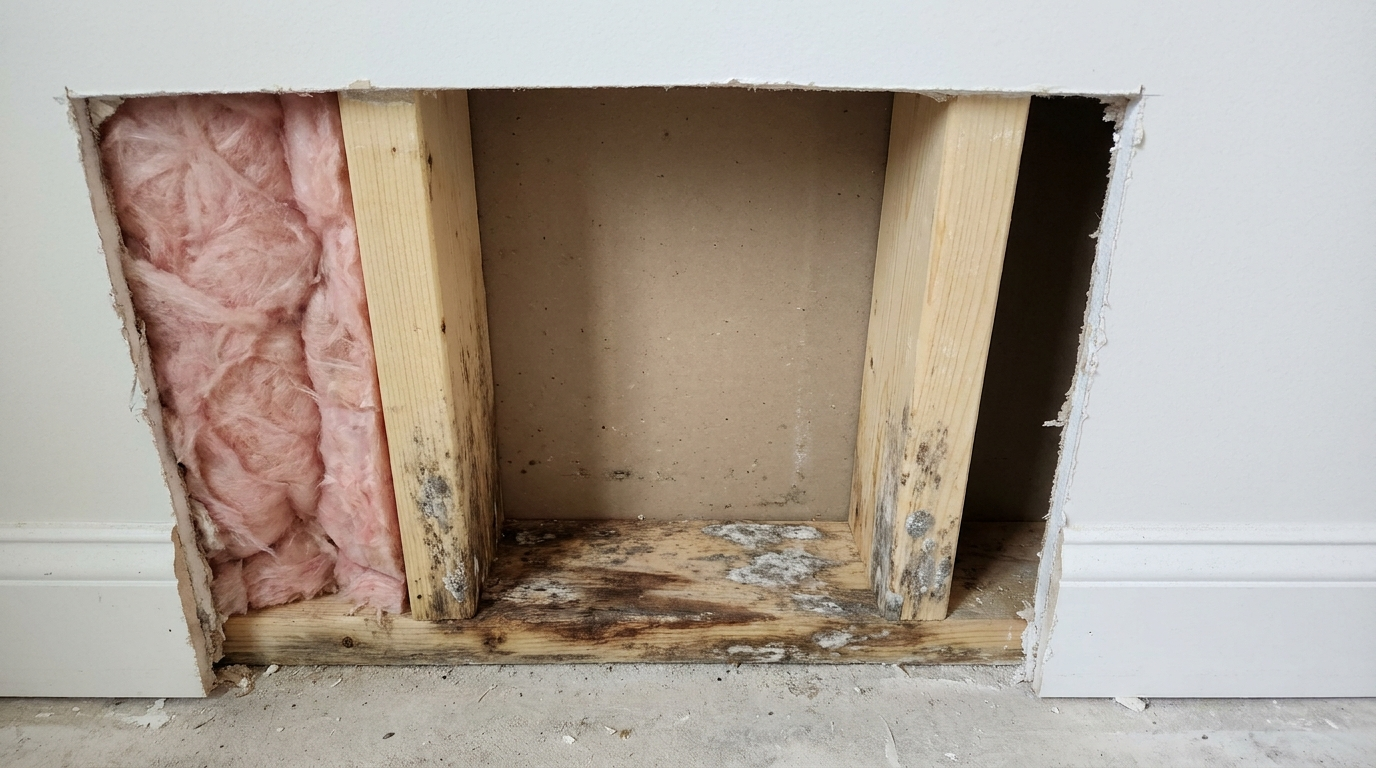
For a new house, the City of Boise's required inspections include an energy-efficiency inspection of the air sealing, insulation and windows. It happens after framing and before the drywall goes up. The list doesn't include a moisture reading of the framing. Ask your builder whether the wood was dry before the walls were closed, and how that was confirmed.
A leak inside a new wall. Model plumbing codes require leak tests, but EPA notes those tests are sometimes done poorly or skipped. Small leaks inside a wall can go unnoticed for some time. For example, a drywall screw driven through a pipe can start one.
A tight house without enough fresh air. A tightly sealed house with too little ventilation can trap moisture indoors, where mold can grow. Idaho's residential code requires dwelling units to have whole-house mechanical ventilation (IDAPA 24.39.30). Find out from your builder where your system is and how it is set to run.
Indoor humidity is the number to watch. EPA recommends keeping it below 60 percent if possible, ideally between 30 and 50 percent. A small humidity meter from a hardware store will show where your house sits.
Where Does Mold Show Up First in New Homes Around Boise?
Your nose may find it before your eyes do. A musty smell you can't trace is a reason to suspect hidden mold. In a new house, start with any wall that got wet during the build. The growth can sit on the back of the drywall while the painted face still looks clean.
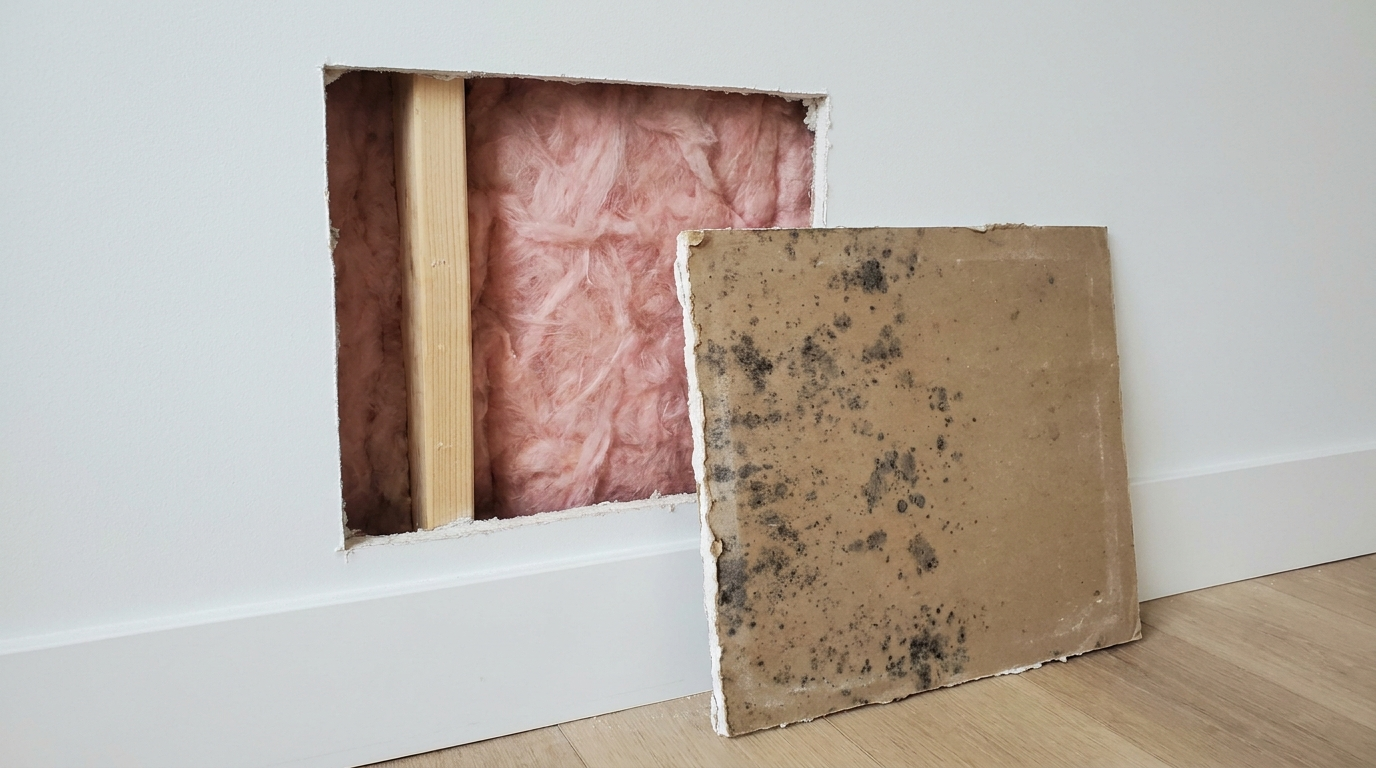
From there, check the other places where hidden mold and construction water can sit:
Walls behind furniture and around windows, where condensation forms. Condensation can be a sign of high humidity, so dry it quickly and look for the source.
Inside walls around pipes that leak or sweat.
Under carpet and pad on a concrete slab. Concrete has to be thoroughly dry before carpet or other flooring covers it.
The crawl space, if the house has one. Its exposed soil has been a source of problems in new buildings.
Inside ductwork and at the vents. If that is where you see it, start with our guide to mold from an air conditioner in Boise.
Be careful about opening a wall to look. EPA calls for caution when looking means disturbing possible mold, and suggests an experienced professional if you suspect it is hidden. If you'd rather not guess, you can have the house inspected for moisture and mold. We use moisture meters and thermal imaging to find where the water went.
Get Your Quote
Ready to handle this with a pro?
You're reading about How Quickly Should Boise Homeowners Deal With Mold in a New House. Get a fast quote for water damage restoration service in Boise, ID from Apex Restoration.
How Quickly Should Boise Homeowners Deal With Mold in a New House?
Soon, but without panic. Mold damages what it grows on, and the longer it grows, the more harm it does. If something just got wet, like a leak you caught today, the window is short. EPA says that when wet materials are dried within 24 to 48 hours of a leak or spill, mold won't grow in most cases. That window is for a fresh leak or spill, not for framing that was closed in damp.
Size is one factor in who should clean it. EPA says a moldy area under about 10 square feet is, in most cases, a job you can handle yourself. A lot of water damage changes that, and EPA sends those jobs to its remediation guidance. Follow its mold cleanup guidelines and wear the gear it lists: gloves, goggles and an N-95 respirator. For anything larger, Idaho's Department of Health and Welfare (DHW) suggests considering a professional.
In a new house, we'd also think about what's behind the spot. If the framing behind it is still wet, cleaning the surface is unlikely to last. Don't paint or caulk over mold, either; paint over a moldy surface is likely to peel.
You usually don't need a lab test. When mold is visible, EPA says sampling is unnecessary in most cases, and no federal limits exist to compare a result against. Color doesn't tell you how harmful a mold is, DHW notes. So "black mold" gets the same answer as any other kind: remove it and fix the moisture.
Health effects vary from person to person. CDC says damp, moldy places may cause a range of health effects, or none at all. People with asthma or mold allergies may react severely, and people with weakened immune systems or chronic lung disease may get lung infections from mold. If you think mold is affecting anyone in the house, talk to your doctor. That's also the person to ask whether it's safe to stay.
Idaho law adds a reason not to wait. Under Idaho Code 6-2504, a builder may be excused from some or all liability for a construction defect. It has to show you unreasonably failed to limit the damage in a timely way. The statute counts late notice to the builder after you discover a defect as that kind of failure. Not allowing timely access for inspections and repairs counts too.
Who Fixes Mold in a New Boise House, You or the Builder?
It depends on what caused the moisture, so pin that down first. If you believe the build caused it, Idaho's Notice and Opportunity to Repair Act sets out the next steps, and they start in writing.
You serve a written notice of claim. Before you can sue a builder over a construction defect, Idaho Code 6-2503 requires one. You serve it in person or by certified mail to the builder's last known address. It says you are making a construction defect claim and gives "reasonable detail sufficient to determine the general nature of the defect."
The builder answers in writing within 21 days of being served. The answer proposes an inspection, offers a payment to settle without one, or says the builder disputes the claim.
If there is an inspection, a written follow-up comes next. It offers to fix the defect at no cost to you, offers a payment to settle, or says the builder won't go further.
If the builder disputes the claim or doesn't answer in time, the statute lets you sue without another notice.
A later buyer counts. The statute's definition of who can bring the claim includes someone who bought the house from an earlier owner (Idaho Code 6-2502). It isn't limited to whoever signed with the builder.
The statute sets no warranty period, and it doesn't promise that the builder will repair or pay. It sets the order of steps and the time to answer. Who ends up paying depends on the cause, your contract and whether the problem counts as a construction defect. An inspection, an Idaho attorney and, if it comes to that, a court settle those questions. Lawsuits also have filing deadlines, so ask that attorney which ones apply.
Some of the work is yours either way. Under Idaho Code 6-2504, a builder can also defend itself by showing you didn't keep up the routine maintenance owners are commonly expected to do. The same goes for the builder's written maintenance recommendations, if you were given them and they were reasonable. Daily habits matter, too: run the bathroom fan when you shower, use the kitchen exhaust when you cook, and make sure the dryer vents outside.
While that plays out, keep a record. Take dated photos, write down when you first noticed the mold, and keep copies of your notice, the certified mail receipt and every reply. If the mold needs to come out before the builder's process ends, ask your attorney how to keep the builder's chance to inspect intact.
When it's time for the work, our technicians are IICRC certified, and we follow IICRC standards on every job. For the price side, see our breakdown of what mold removal costs in Boise.
The Bottom Line on Mold in a New Boise House
If you've found mold in your new house and can't tell where the water is coming from, that's the work we do. Our crews cover Boise and the rest of the Treasure Valley. That includes mold work and water damage restoration in Garden City, Eagle and Meridian.
Apex Restoration Team
Water Damage & Restoration Specialists
We're the Apex Restoration team — a family-owned, IICRC-certified crew handling water damage, mold, and abatement across Boise, the Treasure Valley, and Eastern Washington & North Idaho. We answer 24/7 and write these guides to help homeowners make calm, informed decisions when water, mold, or hazards show up.
Related Posts
Does the Popcorn Ceiling in an Old Spokane House Have Asbestos?
A popcorn ceiling in an old Spokane house may hold asbestos, and only a lab can tell. Who should test it, when it's risky and who may legally remove it.
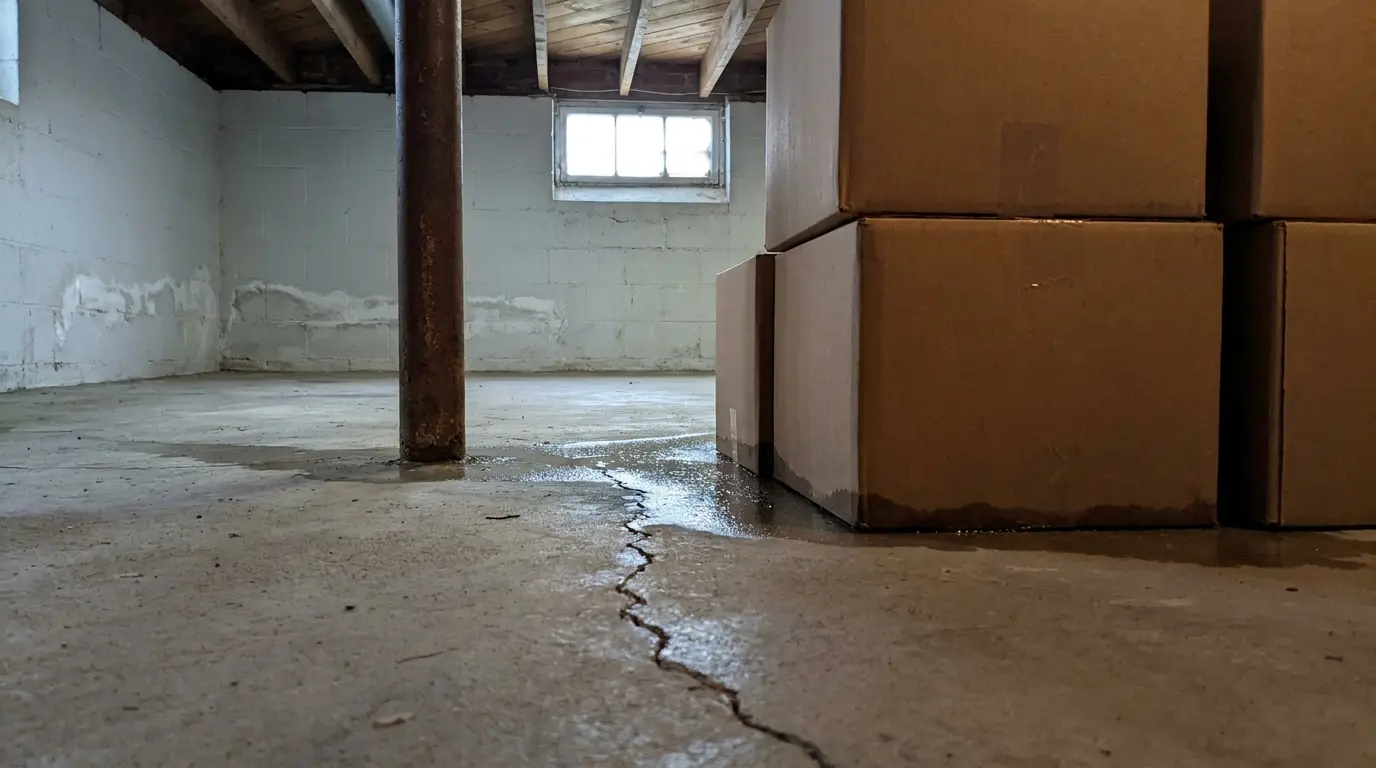
Why Is Water Coming Up Through the Basement Floor in Spokane?
Water rises through a basement floor when the soil under it is soaked and can't drain. Why older Spokane homes get it, when it's urgent and what to do.
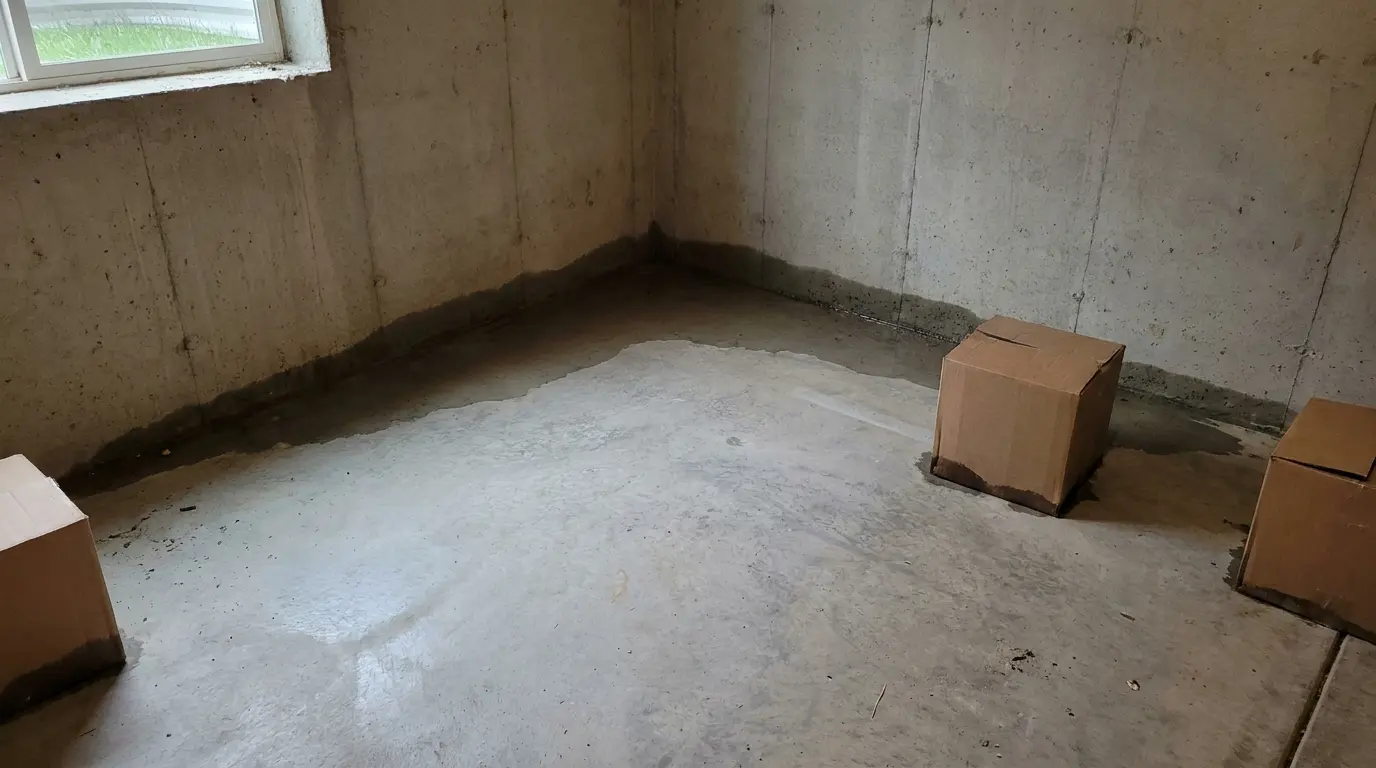
Why Do Basements Get Wet When Irrigation Starts in Meridian?
Canal seepage raises groundwater all irrigation season, and sprinklers can soak soil by your walls. How it gets into a Meridian basement and how to stop it.