
Why Is Water Coming Up Through the Basement Floor in Spokane?
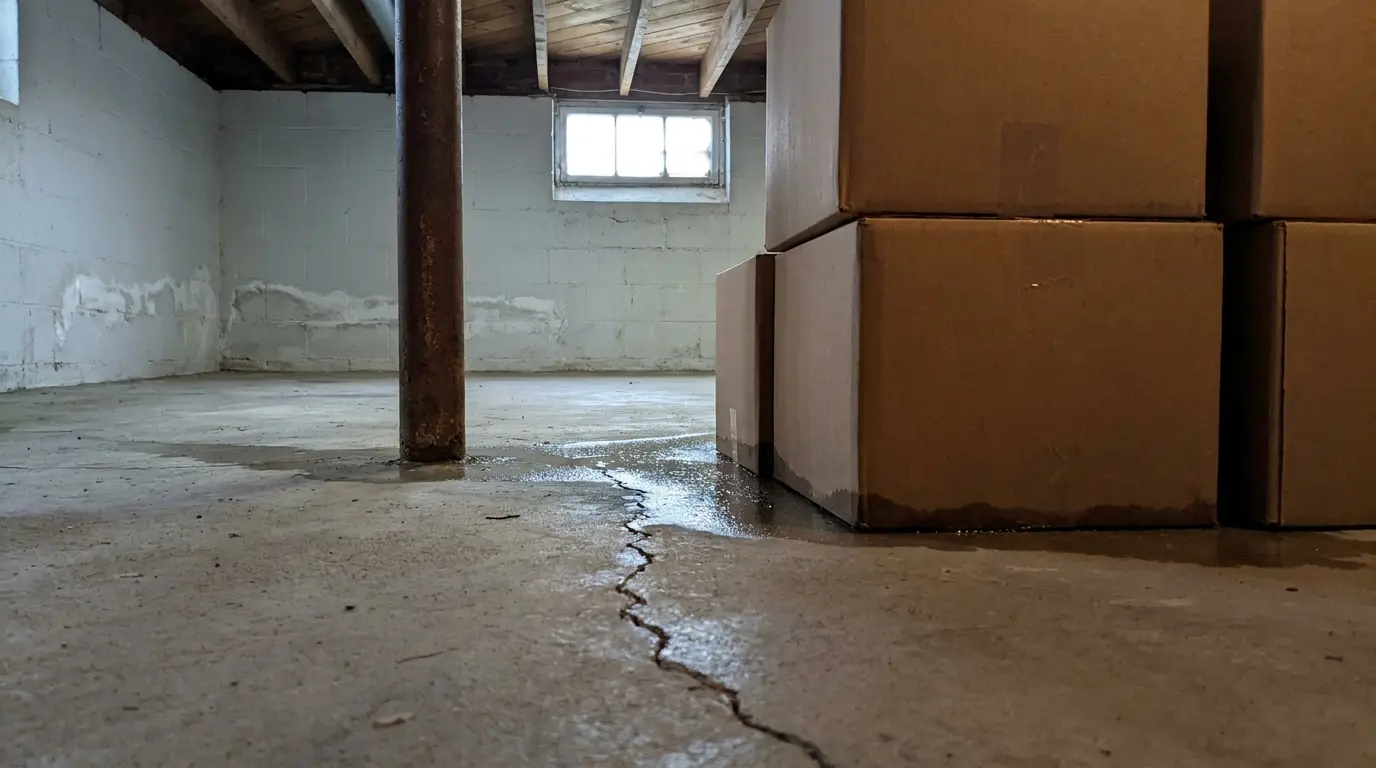
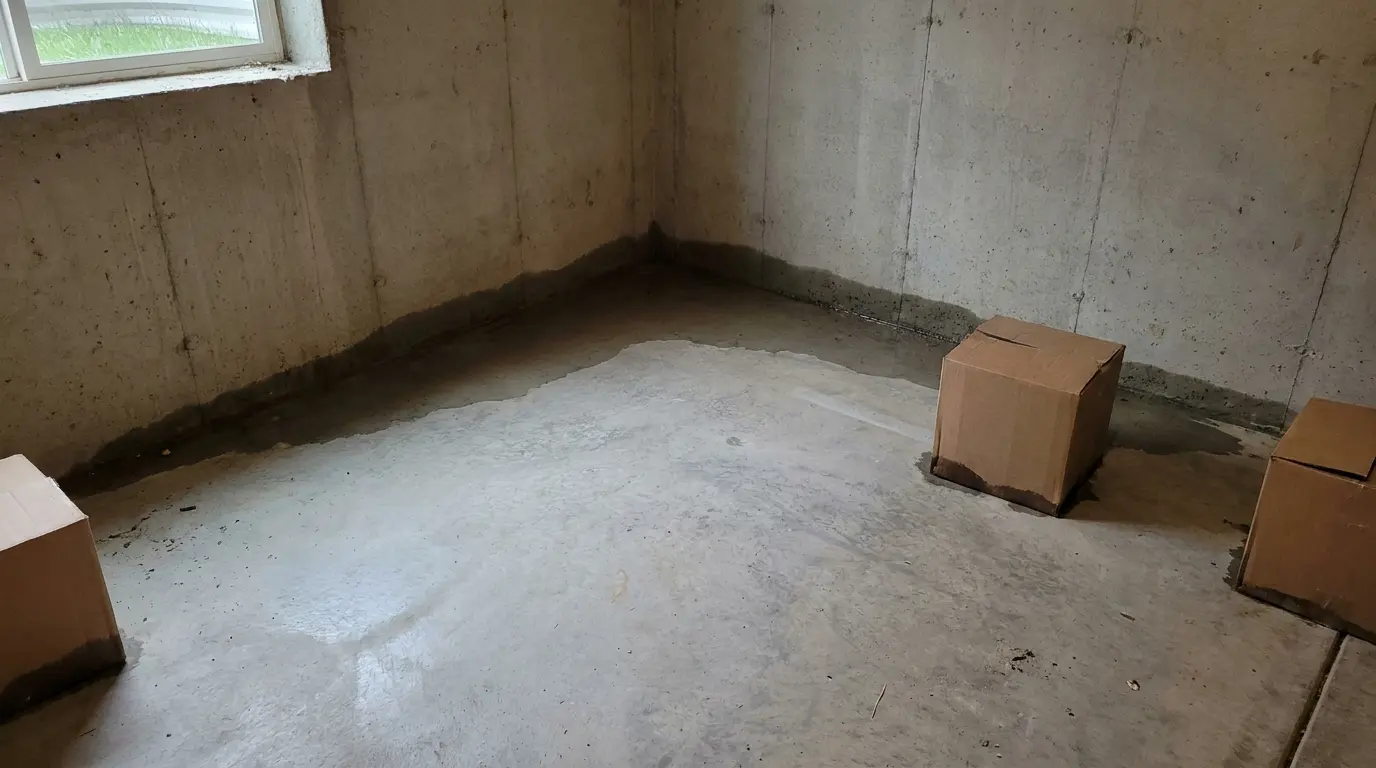
Water comes up through a basement floor when the soil under and around the slab fills with water faster than it can drain away. The water then pushes through the slab's weak spots, and sometimes through the concrete itself.
Older houses are more exposed, because many were built with no drain around the footing to carry groundwater away, and Spokane has plenty of them. Its winters also bring snow, and a thaw can send a lot of water into the soil at once.
If water is standing on the floor right now, stay out of any that reaches outlets, cords or appliances until the power is off. Then comes removing the water and drying the space, which our basement water extraction crews handle across Spokane.
Get Your Quote
Ready to handle this with a pro?
You're reading about Why Do Older Spokane Basements Let Water Up Through the Floor. Get a fast quote for water damage restoration service in Boise, ID from Apex Restoration.
Why Do Older Spokane Basements Let Water Up Through the Floor?
Many of them were never given a way to shed groundwater. A lot of older houses have no drain below ground at all (University of Minnesota Extension). It's a holdover from the days when basements weren't used as living space. That's a general point about older houses, not a count of Spokane basements.
Spokane has plenty of older housing: about half of the housing units in the City of Spokane were built before 1960. That's from the U.S. Census Bureau's 2024 American Community Survey 5-year estimates.
An older slab may also be missing a layer that newer floors get: a plastic sheet underneath, called a vapor retarder. Washington's residential code calls for one under most new concrete floor slabs. The sheet slows ground moisture moving up through the concrete, which is porous enough to wick water up from wet soil. A slab poured decades ago was built to the rules of its day, and it may have nothing under it.
What Pushes Water Up Through a Basement Floor in Spokane?
When water really is coming up from below, groundwater does the pushing. Once the soil around and under the slab is soaked, the water in it presses up and moves through any gap it finds. That push is called hydrostatic pressure. A wet floor has other possible causes too, so check them in this order, quickest and cheapest first.
1. Rule out a pipe or condensation. A leaking water line or water heater can puddle on a slab and look like seepage. EPA's WaterSense leak checklist suggests reading your water meter when no water is being used. Read it again two hours later, and if the number has changed, you probably have a leak. Check under the water heater for pooled water or rust, too. In summer, humid outdoor air can condense on a cool concrete floor, and that dampness is easy to mistake for a leak. Our post on a musty basement smell in Spokane covers the plastic-sheet test for telling condensation from moisture coming up through the slab.
2. Check where roof and yard water goes. Rain and snowmelt that collect against the foundation soak down along the wall, and some of that water ends up in the basement. Downspouts that empty at the wall, ground that slopes toward the house and window wells that funnel water inward all put it there. Water that gets in this way can show up along the edge of the floor, where it meets the wall.
3. Notice whether it follows a thaw or a long rain. The water table, the level where the ground is full of water, can rise with the seasons and with flooding. The higher it climbs, the harder it presses on the slab. Most of Spokane's snow falls from November through March, and December and January are the snowiest months. Those are NOAA's 1991 to 2020 climate normals for Spokane International Airport: snowfall averages, not groundwater readings. Still, a thaw can put a lot of water into the soil at once. Say your basement stays dry all fall, then a damp patch spreads across the middle of the floor the week the snow melts. That timing is a clue that the water is coming from the ground, not a pipe.
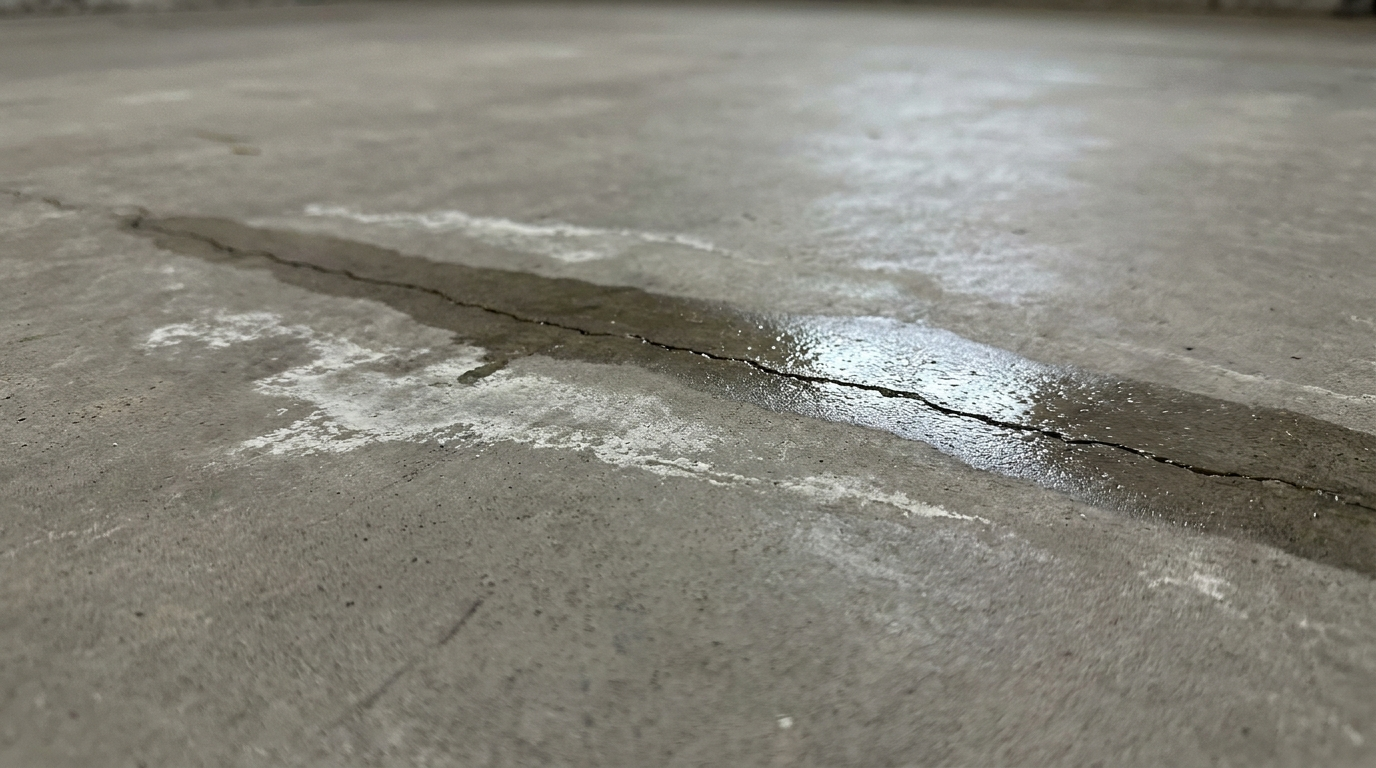
4. See where it comes through. Look along the seam where the floor meets the wall, at cracks, and around pipes and support posts that pass through the concrete. Concrete foundations usually develop a few cracks over the years. A damp area with no crack at all can mean water or vapor is moving up through the concrete itself.
How Can You Tell if an Older Spokane Basement Has Drain Tile?
Often you can't tell by looking, because drain tile is buried. It's a perforated pipe or gravel drain that sits low, beside the footing or under the slab. When it works, it lowers the water around the basement before that water can press on the floor.
A drain has to empty somewhere, either by gravity or into a sump pit, where a sump pump lifts the water outside. A sump pit in the floor suggests a drain may lead to it. The pit alone can't tell you whether that drain circles the whole footing or still works.
For a firmer answer, ask the building department that covers your address whether it has permit records for the house or for later drain work. A drainage contractor can also check what's there. Washington requires construction contractors to register with the Department of Labor & Industries (L&I). You can look one up with L&I's Verify a Contractor, Tradesperson, or Business tool before you sign anything.
Washington's residential code calls for drains around most basement foundations, except where the house sits on well-drained soil. An older house may have been built before that rule. And a rising water table can still reach a basement on well-drained ground.
A drain that was put in can also stop working. Buried pipe can collapse, fill with silt or tree roots, or come loose from the sump it empties into.
Get Your Quote
Ready to handle this with a pro?
You're reading about When Is Water on a Spokane Basement Floor an Emergency. Get a fast quote for water damage restoration service in Boise, ID from Apex Restoration.
When Is Water on a Spokane Basement Floor an Emergency?
It's an emergency when the water touches anything electrical, might be sewage, is soaking into your things, or keeps coming. A damp patch or a thin film that comes and goes with the weather can wait for a planned fix.
Electricity comes first. Stay out of water that reaches outlets, cords or plugged-in appliances until the power is off. CDC's safety guidance for a flooded home says to turn the power off if you can reach the main switch from a dry spot. If you'd have to step into standing water to reach it, call an electrician to shut it off. Never switch power on or off, or use an electric tool, while standing in water. Have an electrician check the system before the power goes back on.
Water rising out of a floor drain can be a sewer backup rather than groundwater. If sewage caused the damage, EPA's Brief Guide to Mold, Moisture and Your Home says to call a professional who has experience with contaminated water. Our guide to sewage backup cleanup covers the first steps.
Time matters once water reaches what you own. EPA says that when wet materials are dried within 24 to 48 hours, in most cases mold won't grow. Carpet, pad, drywall and cardboard boxes all hold water, so a soaked finished basement needs drying fast, even when the water is shallow.
Water that rises faster than a wet-dry vacuum can pick it up needs a professional pump-out and drying. If a storm pushed water in through doors, windows or window wells instead, our guide to basement flooding after a storm covers the first day.
What Should Spokane Homeowners Do When Water Comes Up Through the Basement Floor?
Get the water out and the floor drying, then fix the cause from the outside in. That order puts the cheap fixes ahead of the expensive ones.
Remove the water safely. Once an electrician has said the power is safe to use, a wet-dry shop vacuum can clear a shallow film of water. Wear rubber boots. If the basement holds deep water, don't empty it all at once. For a flooded basement, Washington's Department of Health says not to drain it until most of the water outside the walls has gone down. That keeps the walls from being pushed in and the floor from heaving. Deep water is a job for a professional pump-out. Never run a gasoline pump or generator indoors or within 20 feet of a door, window or vent, even with windows open. The exhaust can cause carbon monoxide poisoning. Fans and a dehumidifier help; set fans in a window or doorway so they blow air out, not in. If water reached the furnace or ductwork, have the system checked and cleaned before you turn it on. The vacuum, rubber boot, exhaust, fan and furnace steps follow CDC's flood guidance.
When it's a soaked finished room or water that won't stop, our crews pump it out and dry the space. We use thermal imaging and moisture meters to find where the water went. Pumping out costs more the more water there is. Angi's national 2026 cost data says emergency pump-out can add $300 to $2,000 to a flooded basement job, depending on the volume of water. That's a national range, not our pricing.
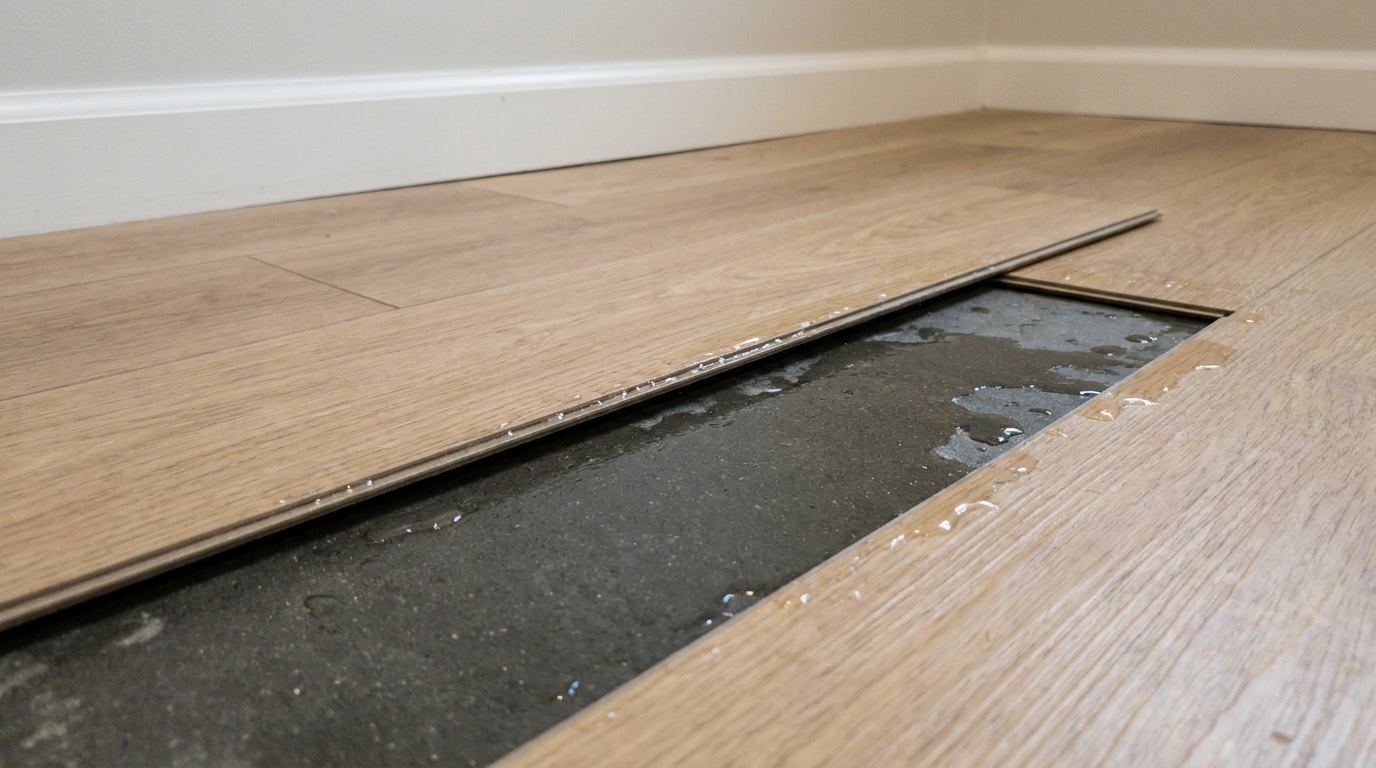
Lift what holds water. Move boxes and furniture off the floor. Pull back carpet, pad or plank flooring where the water shows, so the concrete can dry and you can see where the water gets in. Mold can hide on the underside of carpet and pad, and absorbent materials may have to be thrown away once mold takes hold. Hold off on new flooring until the water problem is fixed and the slab is dry.
Fix the outside first. Clean the gutters, and make sure each downspout empties at least 4 feet beyond the wall. Shape the soil so it falls away from the house at least 1 inch per foot, for at least 6 feet out. Check window wells too, since one that fills with water sits right against the foundation. These are the cheapest fixes, and handling roof and surface water this way can solve a basement water problem on its own.
Don't rely on sealing the floor. A sealer or coating on the inside won't stop water that's coming up from below. It can seem to work for a while, but the water is still there underneath. In time the coating breaks down, or the water finds another way in. A dehumidifier helps with damp air, but it isn't a fix for water coming in.
If it keeps coming, plan a drain. When water still comes up after the outside is fixed, the lasting fix is a drainage system that carries groundwater to a sump. Outside, that means digging around the foundation, the costliest route but also the most effective one. Inside, it means cutting out and replacing concrete along the edge of the slab. Which one fits depends on your walls and soil, so get a drainage contractor's assessment before you choose.
Your Next Step on Basement Floor Water in Spokane
Call us and we'll come take a look. The inspection and estimate are free, and you sign only if you go ahead.
Between wet spells, keep a simple log of each time it happens: the date, the weather, and the spot. That record helps you, and anyone you hire, tell which cause you're dealing with before money gets spent.
We cover Spokane Valley as well as Spokane, and Valley homeowners can start with our Spokane Valley water damage restoration page. If the water already reached drywall or flooring, that's water damage, and we handle that too through our water damage repair service.
Apex Restoration Team
Water Damage & Restoration Specialists
We're the Apex Restoration team — a family-owned, IICRC-certified crew handling water damage, mold, and abatement across Boise, the Treasure Valley, and Eastern Washington & North Idaho. We answer 24/7 and write these guides to help homeowners make calm, informed decisions when water, mold, or hazards show up.
Related Posts
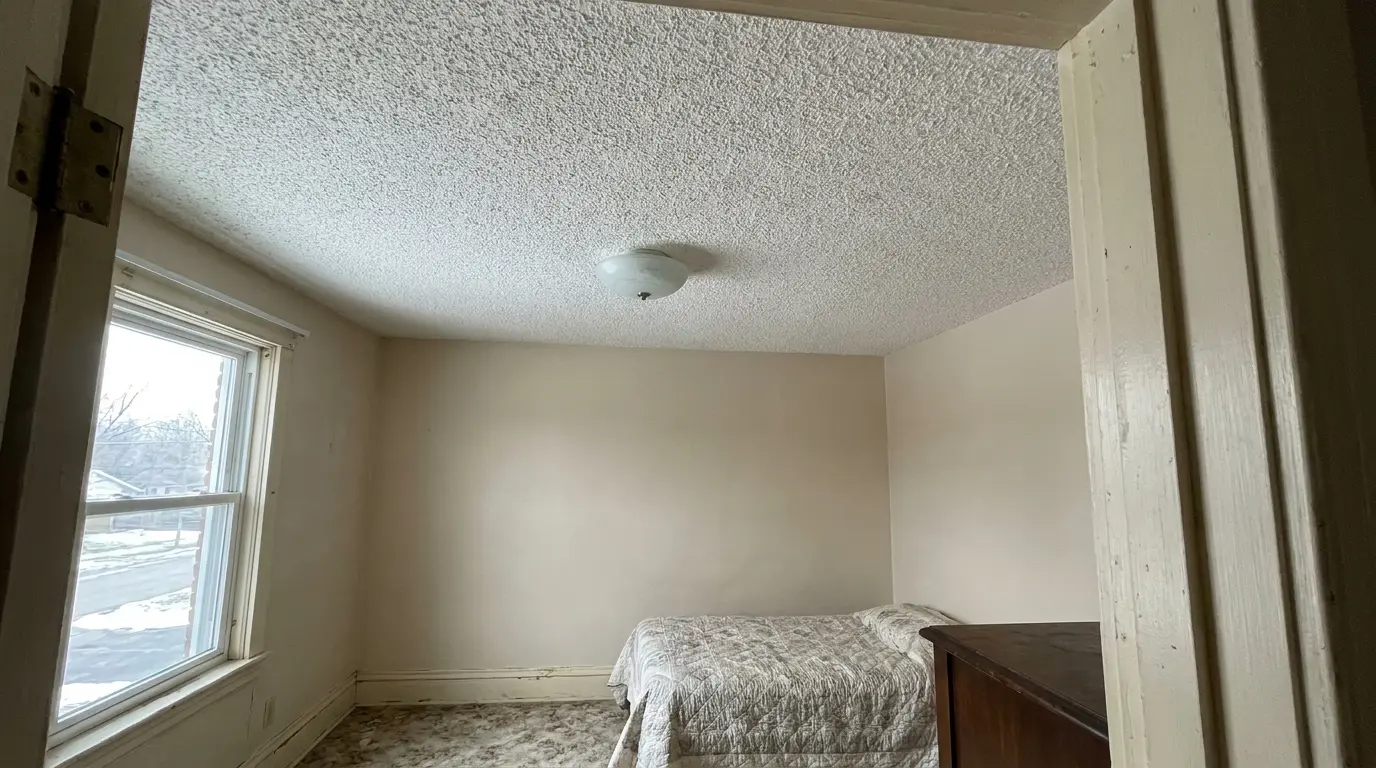
Does the Popcorn Ceiling in an Old Spokane House Have Asbestos?
A popcorn ceiling in an old Spokane house may hold asbestos, and only a lab can tell. Who should test it, when it's risky and who may legally remove it.
Why Do Basements Get Wet When Irrigation Starts in Meridian?
Canal seepage raises groundwater all irrigation season, and sprinklers can soak soil by your walls. How it gets into a Meridian basement and how to stop it.
Do You Need a Mold Inspection Before Buying a Boise Home?
No Idaho law requires a mold inspection. See when it's worth it on a Boise home, what the seller's disclosure asks about mold and how your deadline works.