
Why Do Basements Get Wet When Irrigation Starts in Meridian?
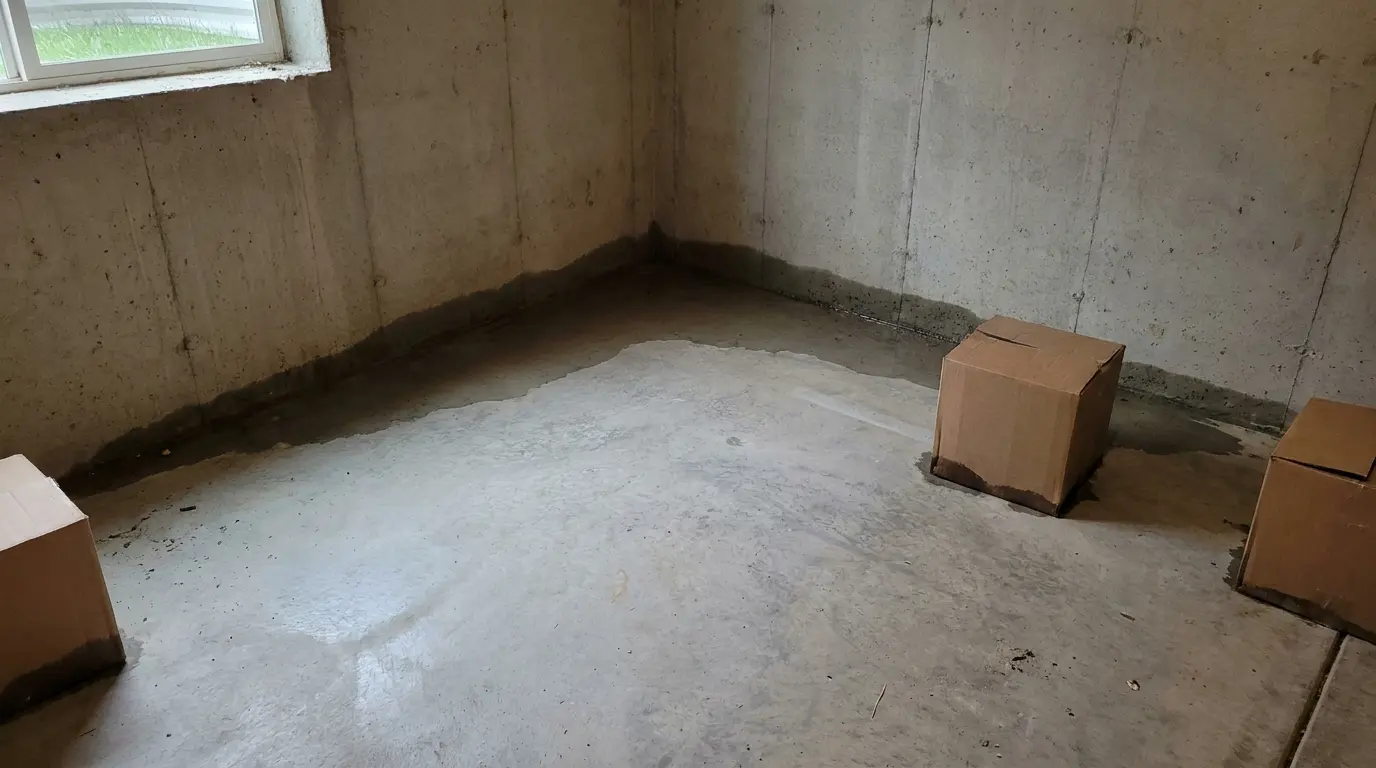
When a Meridian basement turns wet in irrigation season, the water is coming from two directions. Canals start carrying water in April, and what seeps out of them raises the shallow groundwater all summer. Meanwhile, sprinklers can soak the soil right beside the foundation. When the soil around the walls can't hold any more, water pushes in at the weak spots. Those are the joint where the wall meets the floor, cracks, and window wells.
That's why the trouble tends to build through the summer instead of showing up after a storm. It often eases once the water shuts off in October. If water is already standing on the floor, that's a job for water extraction. Then find the way in, because drying alone won't stop it from coming back.
Get Your Quote
Ready to handle this with a pro?
You're reading about Why Does Groundwater Under Meridian Homes Rise in Irrigation Season. Get a fast quote for water damage restoration service in Boise, ID from Apex Restoration.
Why Does Groundwater Under Meridian Homes Rise in Irrigation Season?
Because canal water soaks into the ground, and the canals run all summer. Seepage from canals and water soaking in from irrigation are major sources of the valley's shallow groundwater. Ada County's 2024 Regional Wells Study tracked wells in southwest Boise. Water levels in those wells tended to climb steadily while the New York Canal was running, peaking at the end of the irrigation season. Then they fell until the canal ran again the next spring.
That study measured wells in a different part of the county, not the soil beside a foundation. It can't tell you how high the water climbs under any one Meridian lot. Your soil, the slope of your yard and the depth of your basement decide whether the seasonal rise reaches it.
The water comes on in April. In 2026, the Nampa & Meridian Irrigation District (NMID) scheduled water into the Ridenbaugh Canal by April 8 and pressure irrigation by April 20. Its pressure systems usually shut down in early October. Settlers Irrigation District's season typically runs April 15 to October 15, depending on water supply.
Not every Meridian house has a basement. If yours sits over a crawl space, the same irrigation water can collect down there. Our guide to water in a crawl space covers that case.
What Lets Irrigation Water Into a Basement in Meridian?
Irrigation water usually takes one of four paths into a basement. We'd rule them out in this order, because the first ones cost the least to fix.
Sprinkler water pooling against the foundation. A head that sprays the wall, or a zone that soaks the bed beside the house, puts water right against the foundation. The ground should carry that water away. The 2020 Idaho Residential Code calls for new lots to drop at least 6 inches within the first 10 feet of the foundation. Soil backfilled against a basement wall often settles later, so ground that once drained can end up sloping toward the house.
A leaking irrigation line. Most Meridian subdivisions run pressure irrigation along the back lot lines, mostly fed by ditch water, according to the City of Meridian. A cracked pipe or a leaking valve, on that system or on your own sprinkler lines, can soak one patch of soil all season. For example, a leak near a back-lot valve can keep one corner of the yard soggy between watering days. The basement wall closest to it is the one likely to get wet.
Window wells and drains that can't keep up. A window well works like a drain sitting against the basement wall, and a poorly built one steers water toward the foundation. Not every basement has a drain around its footing. Those that do can clog with silt or roots, collapse, or lose their connection to the sump. If the sump pump itself has stopped, start with what to check when a sump pump isn't working.
Groundwater pushing up from below. If the seasonal rise reaches your basement, the soil around and under the slab fills with water. That water presses on the walls and floor from outside, a force called hydrostatic pressure. It finds the joint where the wall meets the floor and any crack in the slab or walls. Yard fixes can ease it but can't switch it off, which makes it the hardest path to fix.
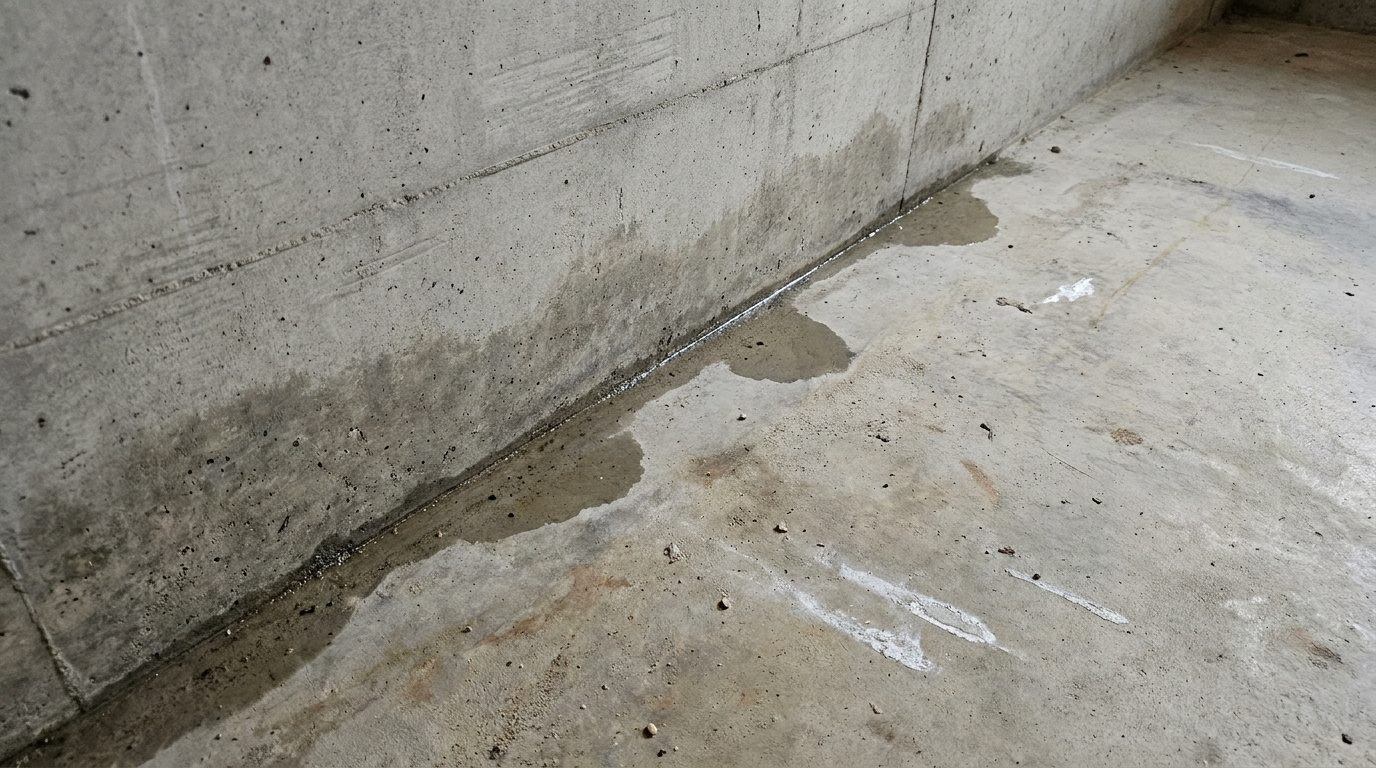
Water also wicks up through concrete on its own. That's why a ring of dampness along the base of the wall is common, even where you can't see a crack. It often shows at the joint with the floor.
How Can Meridian Homeowners Tell Irrigation Seepage From a Plumbing Leak?
Run three checks: the water meter, the calendar and the spot where the water shows. No single check proves the source, but together they narrow it down.
Start with the meter test from EPA's WaterSense program. Read your water meter, run no water for a two-hour stretch, then read it again. If the meter moved at all, you probably have a leak in the house's plumbing. Pressure irrigation is a separate system, so your house meter doesn't measure it. If your sprinklers run on city water instead, keep them off during the test.
A still meter doesn't prove canal seepage. A broken sprinkler line, an overwatered bed or ground that slopes toward the house all look the same from inside. It does tell you to look outside before anyone opens a wall hunting for a pipe.
Then check the calendar. Water tied to irrigation follows the season, not the weather. Say your basement stays dry all winter, turns damp in June and is at its worst by late September. That fits the groundwater pattern, not a pipe. A plumbing leak doesn't care what month it is. Water that shows up during or right after a storm points to basement flooding after a storm instead.
Keep a simple log: each date you find water, where it showed and whether the sprinklers had just run. Take photos too. They help if you end up talking to your homeowners association (HOA) or irrigation district.
Last, look at where the water is. Seepage shows up low, at the base of the walls and the floor joint, often on the side facing the wettest ground. A plumbing leak usually starts near a pipe, a fixture or an appliance, or drips from above. Water coming up through a floor drain points to a blocked sewer line, which is a different problem from seepage.
Summer condensation fools people too. Warm, humid air from an open window can condense on cool basement walls and floors and look a lot like a leak. When the signs still disagree, we use thermal imaging and moisture meters to find where the water went.
Get Your Quote
Ready to handle this with a pro?
You're reading about How Long Can Irrigation Water Sit in a Meridian Basement Before Mold Starts. Get a fast quote for water damage restoration service in Boise, ID from Apex Restoration.
How Long Can Irrigation Water Sit in a Meridian Basement Before Mold Starts?
Get it dry within 24 to 48 hours. That's the window in EPA's Brief Guide to Mold, Moisture and Your Home. When wet materials dry that fast, mold won't grow in most cases.
The catch with irrigation water is that it comes back. A floor you dry on Monday can be wet again after the next watering day, or as the groundwater keeps climbing through the summer. Every time it gets wet again, the clock starts over, and materials that never fully dry are where mold gets going.
Porous things soak it up first: carpet and pad, cardboard boxes, the bottom edge of drywall and wood that sits on the slab. Mold can hide on the back of drywall and the underside of carpet and pad, so a dry surface doesn't settle the question. Moldy carpet and other porous materials may have to be thrown out rather than cleaned.
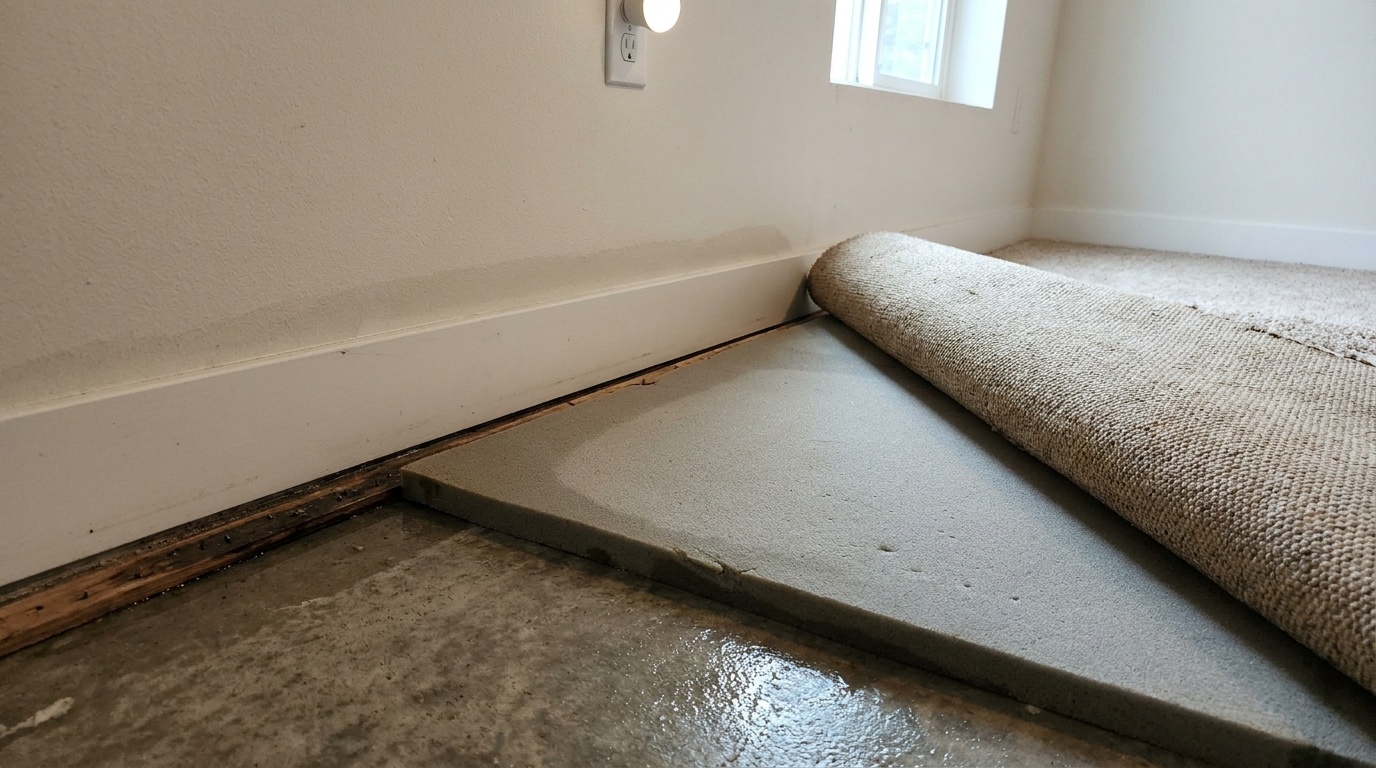
Cleaning mold without stopping the water doesn't last. Idaho's Department of Health and Welfare says mold will return if the moisture source isn't fixed. It suggests considering a professional once the moldy area is larger than 10 square feet. Past that size, or when water keeps soaking a finished room, it's mold remediation work.
Standing water brings a hazard of its own. If it touches outlets, cords, a furnace or a water heater, stay out of it. Turn the power off at the main breaker only if you can reach the panel without stepping in water. If you can't, have an electrician shut it off. Leave the power off until a qualified electrician has checked the equipment, as the CDC advises.
Then the water has to come out. Nationally, emergency extraction or pump-out can add $300 to $2,000 to a cleanup bill, depending on how much water there is. That range is from Angi's flooded basement cost guide, not our pricing, and our inspection is free.
How Do You Keep a Basement Dry Through Irrigation Season in Meridian?
Work from the outside in, cheap fixes first, and add a drainage system only if water still gets in. In a Meridian yard, the first fixes are about the sprinklers.
Check the system before the water comes on. Frost can damage an in-ground sprinkler system over the winter, so look it over each spring before you use it. A leak you fix in March can't soak your foundation all summer.
Keep sprinkler water off the house. Aim heads away from the foundation, and give the bed along the wall less water than the lawn. Watch one full cycle and look for spray hitting the siding or water pooling at the wall.
Fix the grade and the downspouts. Build settled soil back up so it slopes away from the house. Extend downspouts so they release water at least 4 feet from the wall, as University of Minnesota Extension advises.
Add drainage if water still gets in. Digging out and draining the outside of the foundation costs the most but works best. Inside, a channel along the top of the slab is the cheapest system, but it can't drain groundwater from under the floor. When water is coming up from below, the drain has to sit lower, beneath the slab edge or outside the footing. These systems usually empty into a sump that pumps the water out.
Two quick fixes don't hold up. A sealer or coating on the inside of the wall may work for a while. But the water is still there, and it eventually finds another way in. A dehumidifier helps with humidity and odor, but in a basement that keeps taking on water, it can pull moisture through the concrete faster.
If the basement is already finished, fix the water before anything else. An interior drain means cutting out concrete along the slab edge, so whatever covers the bottom of the walls has to come off. The walls need to be dry before insulation goes back in.
When the cause is a leaking irrigation line, the fix belongs to whoever owns that piece of it. The City of Meridian doesn't own or run pressure irrigation. It points residents to their HOA or to an online map on the city's irrigation page to find out who does. Where NMID owns a subdivision's system, it maintains the main line up to the first valve. The line from that valve to your sprinklers is yours. Settlers Irrigation District doesn't maintain private sprinkler systems or HOA-owned pressure systems.
Groundwater raised by canal seepage has no shutoff valve. That fix stays at your house, in the grading, the drains and the sump.
What to Do Next About Irrigation Water in a Meridian Basement
If your basement dries out after the water shuts off in October, you have until April to regrade, re-aim sprinklers and add drainage. Keep your log going into next season, so the pattern tells you which fix you need.
If you'd like a second set of eyes, our inspection is free. When water has already gotten in, we handle the extraction and the drying.
Apex Restoration Team
Water Damage & Restoration Specialists
We're the Apex Restoration team — a family-owned, IICRC-certified crew handling water damage, mold, and abatement across Boise, the Treasure Valley, and Eastern Washington & North Idaho. We answer 24/7 and write these guides to help homeowners make calm, informed decisions when water, mold, or hazards show up.
Related Posts
Does the Popcorn Ceiling in an Old Spokane House Have Asbestos?
A popcorn ceiling in an old Spokane house may hold asbestos, and only a lab can tell. Who should test it, when it's risky and who may legally remove it.
Why Is Water Coming Up Through the Basement Floor in Spokane?
Water rises through a basement floor when the soil under it is soaked and can't drain. Why older Spokane homes get it, when it's urgent and what to do.
Do You Need a Mold Inspection Before Buying a Boise Home?
No Idaho law requires a mold inspection. See when it's worth it on a Boise home, what the seller's disclosure asks about mold and how your deadline works.