
Why Is Your Sump Pump Not Working in Eagle, Idaho?
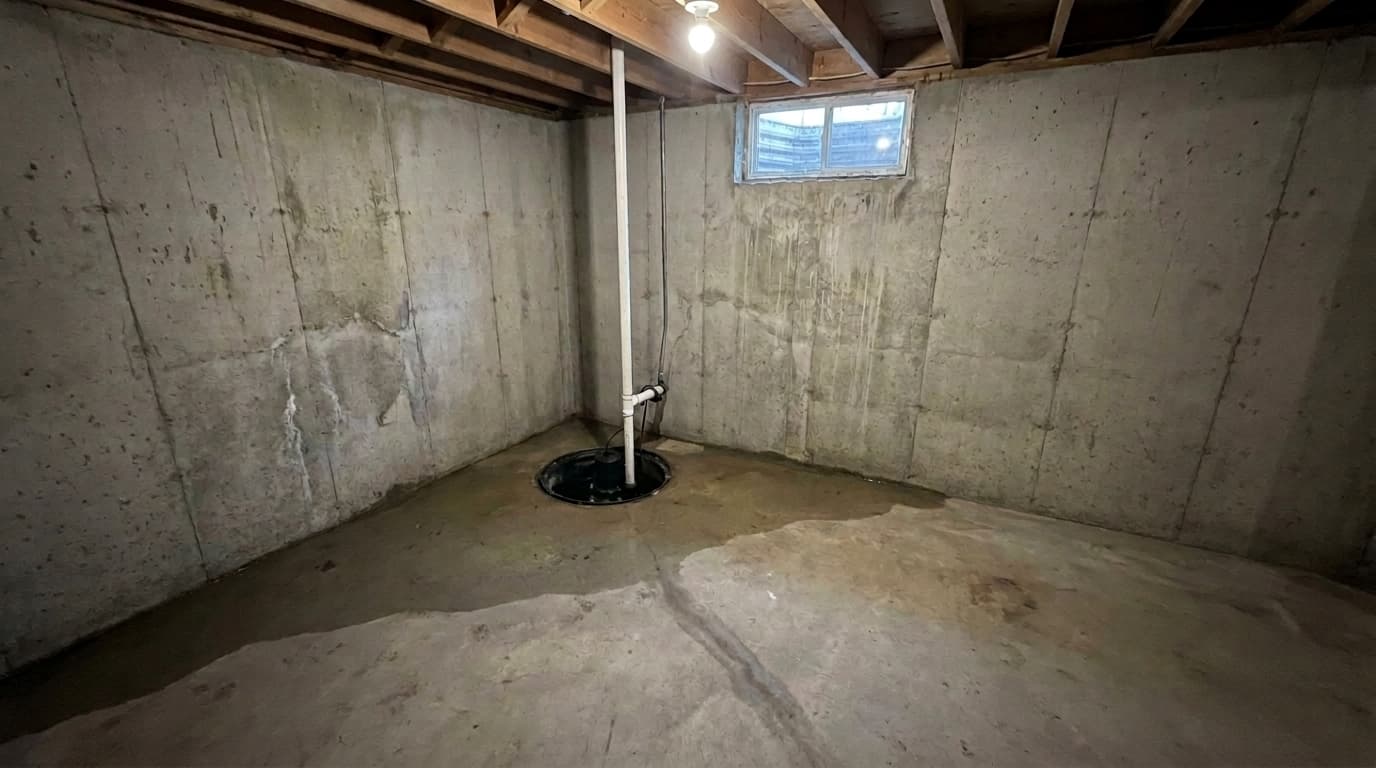
The pit is full, the water is not going down, and the pump is either silent or making a sound you have not heard before. You are at the top of the stairs in an Eagle basement doing arithmetic about how fast the water is rising.
If the basement is already taking water, that is what flood cleanup in Eagle is for. But the pump is a separate problem, and more solvable than most people expect — often something you can find, and sometimes fix, before a crew arrives.
Get Your Quote
Ready to handle this with a pro?
You're reading about How Do You Check Why a Sump Pump Stopped Working in an Eagle Basement. Get a fast quote for water damage restoration service in Boise, ID from Apex Restoration.
How Do You Check Why a Sump Pump Stopped Working in an Eagle Basement?
First, a decision that is not about the pump. If standing water is touching outlets, cords, the breaker panel or a plugged-in appliance, do not walk into it. Our guide to what to do in the first hours after a basement floods owns that call, and the drying that follows. This page starts at the pit.
One rule governs everything below. Unplug the pump before you touch it — the pump, the float switch, the intake, the pipe. South Dakota State University Extension's guide to flooding and sump pumps says it in one sentence, and most advice on this subject leaves it out. One how-to video with over a hundred thousand views has you confirm the pump is plugged in, then reach into the pit by hand. We are not going to tell you that. Pull the cord. If yours is hardwired, kill its breaker — and if you cannot identify it with certainty, call an electrician.
After that, order matters, and none of the guides we read gives one. Ours runs cheapest first.
Decide whether it should be running. A pump starts when water reaches the float's trigger level, not when there is water in the pit.
Check power. Plug seated, breaker on, GFCI not tripped. If there is a battery backup unit, check its battery.
Listen. Silent points at power or the switch. Humming means the motor has power and something is stopping the water.
Look at the float without touching it. A cord across it, or a pump leaning on the pit wall, holds it in place.
Go outside and watch the discharge. Almost nobody mentions this, and it settles the question fastest: motor running, nothing leaving the pipe in the yard, and the fault is downstream of the pump.
Only then lift the pump out — unplugged and gloved, by its handle, never by the pipe.
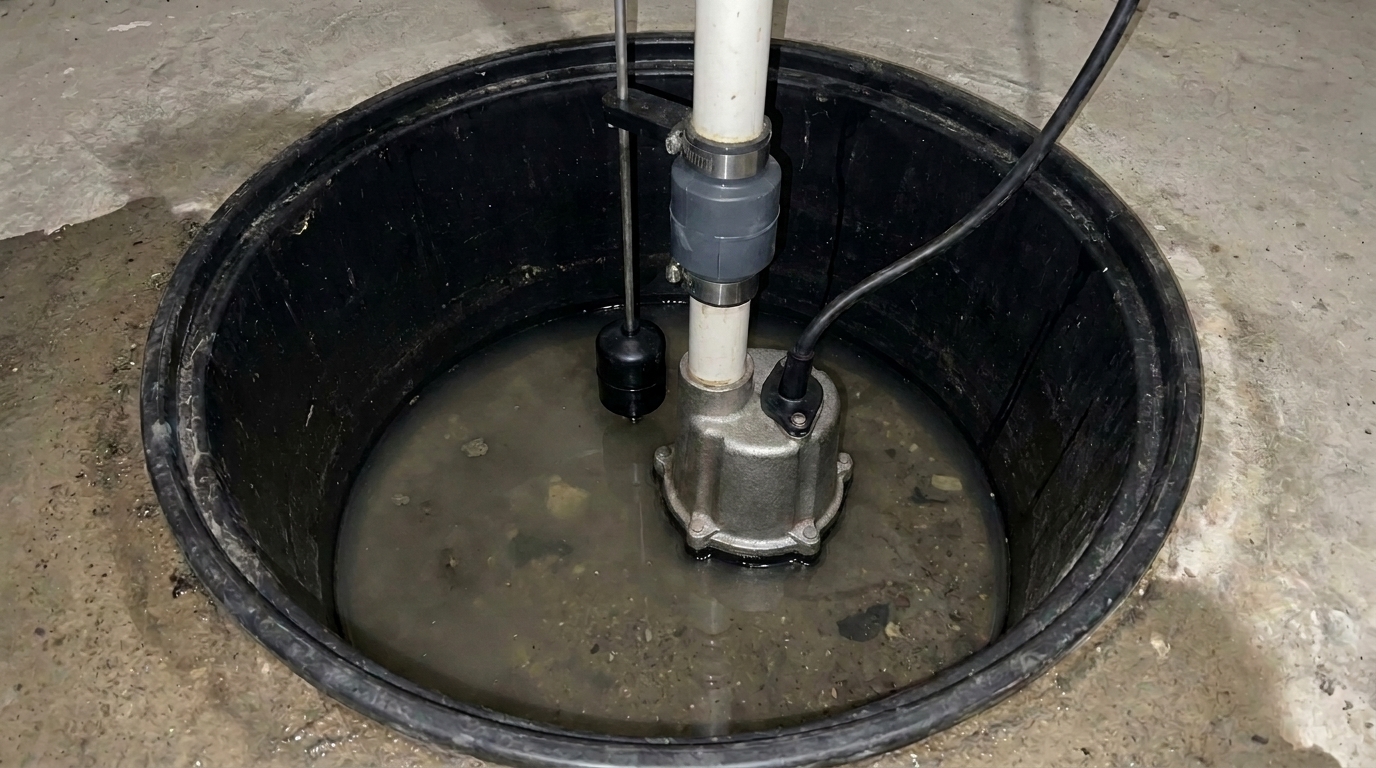
Pump, rod-style float switch, check valve on the discharge line, power cord. The cord comes out of the outlet before anything else does.
The GFCI is the step people misread. Not every pump is on one, but if yours is, check it before you assume the pump failed. A tripped GFCI is doing its job. Reset it once. If it trips again, stop — it is reporting a fault, and a second reset does not clear it.
Which Eagle Sump Pump Failures Can You Fix in Minutes, and Which Need a Crew?
We are a restoration company, so the temptation is to make all of this sound like our work. It is not — a good share of these failures are quick jobs with a nut driver and an old toothbrush.
The homeowner side: reseat a loose plug; reset a tripped breaker or GFCI, once; free a bound float; clear silt off the intake screen; pull and wash the check valve; drill a weep hole to break an airlock; move a discharge that dumps beside the foundation. All of them start with the cord out.
The other side of the line is shorter and firmer:
A GFCI or breaker that trips again after one reset. It is reporting a fault, not being fussy.
A pump that went fully under past its waterline, or an outlet or panel that got wet. The Electrical Safety Foundation International is blunt: water-damaged electrical equipment should be evaluated by a qualified electrician, and it stays a shock and fire risk even after it looks dry.
A motor that hums with a clear intake, a working check valve and an open discharge. That is a replacement, not a repair.
A discharge line blocked or frozen along its buried run. You cannot see it or reach it.
A pit filling faster than a working pump can clear it. That is weather, and it puts you into storm damage restoration rather than pump repair.
What we do is the other half — the water that already left the pit. Extraction, drying, and documenting the loss for the claim; our technicians are IICRC-certified and we work with carriers and adjusters directly. Water from a failed sump pump is not clean, and our breakdown of the water damage categories puts these failures in Category 2.
Can an Eagle Homeowner Fix a Sump Pump Float Switch That Quit Working?
Often yes, and often for nothing. The float switch is the most common failure point on a sump pump, and the most useful advice we found was not to replace anything.
The symptom is specific. Water climbs well above the pump and nothing happens — but nudge the float with a stick and it fires up, empties the pit and shuts off properly. One homeowner described exactly that. The motor is healthy; the switch is not reading.
The most upvoted answer in that thread was to clean the whole float assembly before buying anything: an old toothbrush, a wire brush, a screwdriver for the grime. Silt and grease make a float sticky long before it goes broken. Unplugged, gloved, and out on a bench, it is a short job.
Three things bind a float, all visible: a cord over the float rod, a pump that has vibrated until it leans on the pit wall, and silt in a pit that never had a lid. Unplugged, a broom handle moves a float without putting a hand in the water.
If cleaning does not do it, replace the float, then the switch, then the pump — in that order, and with the cord out. Then confirm: pour in a bucket of water and watch it start and stop on its own, twice.
Get Your Quote
Ready to handle this with a pro?
You're reading about Why Does an Eagle Sump Pump Hum but Stop Pumping, and How Do You Clear It. Get a fast quote for water damage restoration service in Boise, ID from Apex Restoration.
Why Does an Eagle Sump Pump Hum but Stop Pumping, and How Do You Clear It?
A humming pump is better news than a silent one: the motor has power. Three things stop the water — an airlock, a blockage at the intake or the impeller, and a motor at the end of its life. The first is the one most articles skip.
An airlock is a pocket of air trapped in the discharge line between the pump and the check valve. The pump pushes, the air compresses, and nothing moves. A quick test confirms it: unplugged, loosen the coupling just below the valve, enough to break the seal. If you hear air rush out, that was it.
The permanent fix is a weep hole, and first the confusion worth clearing: the check valve stops water coming back down, the weep hole lets air out, and the hole goes below the valve. It is a 1/8-inch hole in the discharge pipe between pump and valve, angled downward so the water it releases sprays into the pit. It is permanent, so be certain of the pipe, and drill it with the cord out.
No rush of air means the blockage side. Unplugged, gloved, and out of the pit, check the intake screen for silt and gravel, then turn the pump over and look at the impeller — one repair demonstration turned up a rock jammed in it. In an Eagle winter there is a fourth possibility, outside the house.
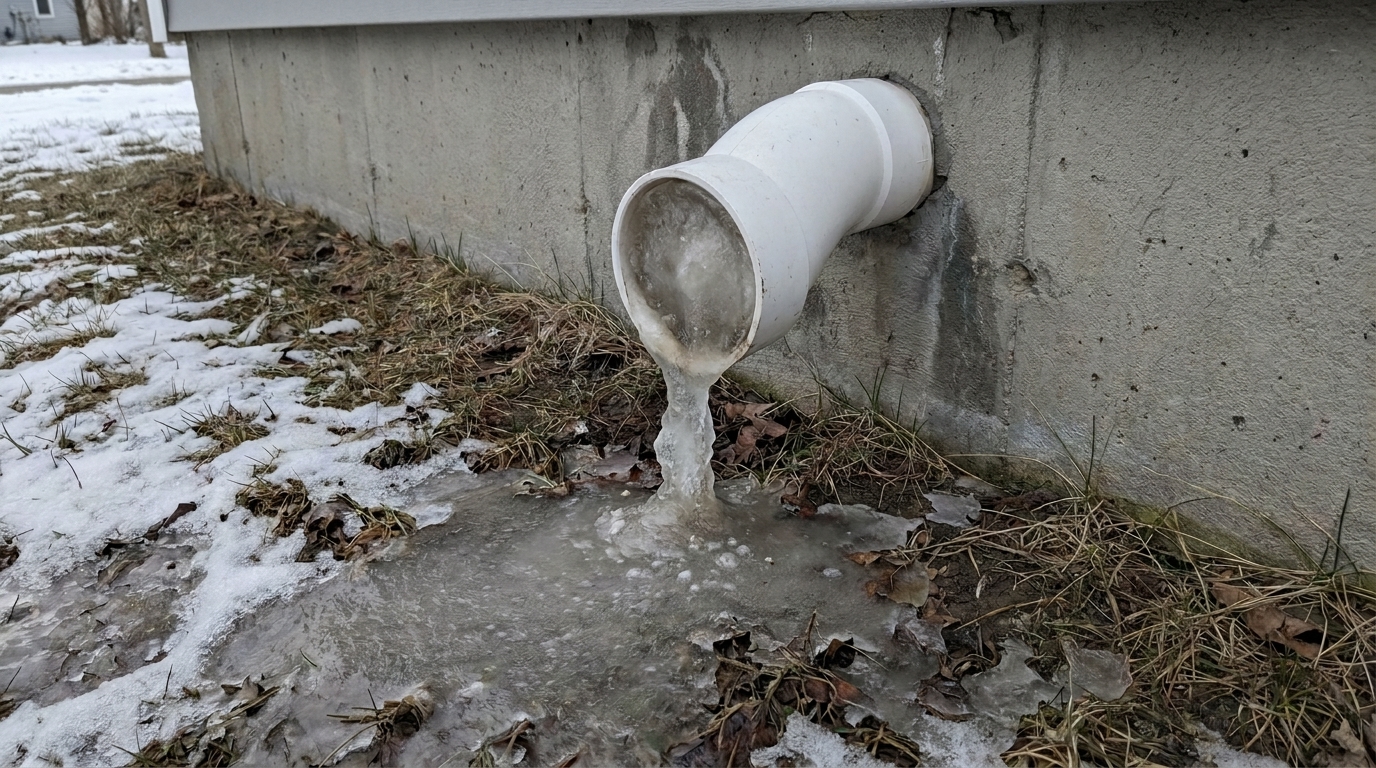
The outlet end on a cold morning — icing up and restricted, not yet closed. A pump pushing against this runs and runs and moves almost nothing.
An outlet that ices over gives the water almost nowhere to go. It runs, the water goes up, meets the restriction and comes back, and the motor works against a nearly closed line until its thermal cutout shuts it off. Clearing an outlet you can see and reach is homeowner work; ice inside a buried run is not.
Why Does Water Run Back Into an Eagle Sump Pit After the Pump Stops?
Because gravity is waiting in the pipe. The discharge line rises out of the sump pit before it turns down to grade, so when the pump stops there is a column of water above it with nowhere to go but back. The check valve is the only thing in its way.
When it fails, the water returns, the float trips again, and the pump moves the same water twice. That is short-cycling, and a pump doing double the work it was installed for wears out early.
Three ways it fails. Stuck closed is the cruelest, because everything sounds right: the pump runs, the pit does not empty, nothing comes out in the yard. One homeowner chased that past midnight before posting the answer to their own thread. Stuck open, usually debris holding the flap, gives you backflow instead. Missing or fitted backwards is easiest to check: the arrow on the valve body should point away from the pump.
Pulling one is a clamp job. Unplugged and gloved, back off the band clamps above and below, slide it out, and look inside: clay and grit build up around the seat. Work the flap with a screwdriver — it has to open and close. If the pit refills fast, leave it alone; once the valve is off you are racing the next cycle.
Which Backup Systems Protect an Eagle Basement When the Sump Pump Quits?
A sump pump is a single point of failure holding up a finished basement. FEMA's flood-preparation guidance names two things to do before a flood rather than during one: install a check valve, and choose a sump pump with a battery. These four are not interchangeable.
A battery backup pump. A second pump in the same pit, its own float set higher, its own motor. One assumption to correct: you cannot run your existing pump off a battery or a computer UPS, because an AC pump draws far too much. It is the only option that covers a power outage and a dead primary pump at once.
A second AC pump in the same pit, float set higher. Insurance against the primary failing, and no help in an outage — both are on the same dead circuit.
A water-powered backup. It moves sump water on household water pressure and needs no electricity. It also needs municipal water pressure, so it is a non-starter on a well.
A generator. Covers the outage and nothing else. If the pump has failed, a generator powers a failed pump.
The generator is the only item on that list that can hurt you. Ready.gov's power-outage guidance sets the rules: outdoors, at least twenty feet from windows, doors and an attached garage; kept dry, because touching a wet generator or anything connected to one can shock you; and always connected to appliances with heavy-duty extension cords — a cord from the generator to the pump, never from the generator into a wall outlet. Carbon monoxide detectors on every level belong to the same rule.
The cheapest protection is not a pump: a water alarm in the pit catches a failure while it is still only a full pit. Installing a backup pump is a plumber's job; an alarm is not — it drops into the pit and runs on a battery. Ours is what happens when none of it was there. We work in Eagle and across Boise and the rest of the Treasure Valley, and repairing a house after a basement flooding event costs more than the equipment that would have prevented it.
Get Your Quote
Ready to handle this with a pro?
You're reading about When Should an Eagle Homeowner Test a Sump Pump Before Spring Runoff. Get a fast quote for water damage restoration service in Boise, ID from Apex Restoration.
When Should an Eagle Homeowner Test a Sump Pump Before Spring Runoff?
Before the melt, not during it. North Dakota State University Extension puts the annual check ahead of the snow going, and adds the part that matters more: if the pump has been running a lot, have a backup ready. A pump that barely ran all season is the one that does not start.
That rhythm is local. Eagle sits on ground the ancestral Boise River laid down. The Idaho Department of Water Resources, in its groundwater study of the Dry Creek area at Eagle, describes the pattern: where natural recharge drives the system, the water level rises with spring snowmelt runoff and peaks in early summer, then declines until the next melt. None of that is a statement about your basement. It does mean a pump here can sit untouched through a dry year and then be asked to run every day through a wet spring.
South Dakota State University Extension's version of the test is three checks. Start outside and make sure the discharge outlet is clear. Then, unplugged, take the lid off, look at the intake and feel it for debris, gloves on. Plug it back in, fill the pit slowly and watch the float the whole way up. Do it twice.
The verdict is by ear: it should start and stop on its own both times. If it sounds like it is pumping gravel, or the float is sluggish reaching its trigger, the pump or the float is near the end. NDSU adds that briefly running a pump dry during a test does no damage.
The Bottom Line on a Sump Pump That Stops Working in Eagle
The sequence is most of the value here: listen, then power, then the float, then the intake, then the check valve, then walk outside and look at the discharge. Most of that costs nothing and takes less time than waiting for a crew.
The rule that does not bend is the one at the top. Unplug the pump before you touch it, and do not walk into a room where standing water is meeting electricity. Everything else here can be weighed against your own comfort with tools. Those two cannot.
If the pit already won and there is water across the floor, that part is ours — extraction, drying, and the documentation your insurer will ask for, same-day where we can get there. Whatever you decide about the pump, photograph the water before anything moves.
Apex Restoration Team
Water Damage & Restoration Specialists
We're the Apex Restoration team — a family-owned, IICRC-certified crew handling water damage, mold, and abatement across Boise, the Treasure Valley, and Eastern Washington & North Idaho. We answer 24/7 and write these guides to help homeowners make calm, informed decisions when water, mold, or hazards show up.
Related Posts
Does Homeowners Insurance Cover Mold Removal in Caldwell?
Homeowners insurance can pay for mold removal in a Caldwell home when the mold traces back to a covered water event, often only up to a limit. Here's how that limit often works, what an adjuster weighs, and what to tell your insurer.
What Should You Do When a Star Garage Floods?
When a water heater or washer floods a Star garage, stay clear of anything electrical the water reached, stop it at the source, and move it away from the house wall. Here's what to check next, and which board Idaho's code calls for when that wall is repaired.
How Do You Find a Water Leak in a Middleton Wall?
A leak inside a Middleton wall can show up in the water bill, a faint running sound or a bubbling paint seam before any stain appears. Here's how to narrow it down, what the City's meter rules mean for you, and when opening the wall makes sense.