
Water Damage Categories Explained: What Every Homeowner Needs to Know
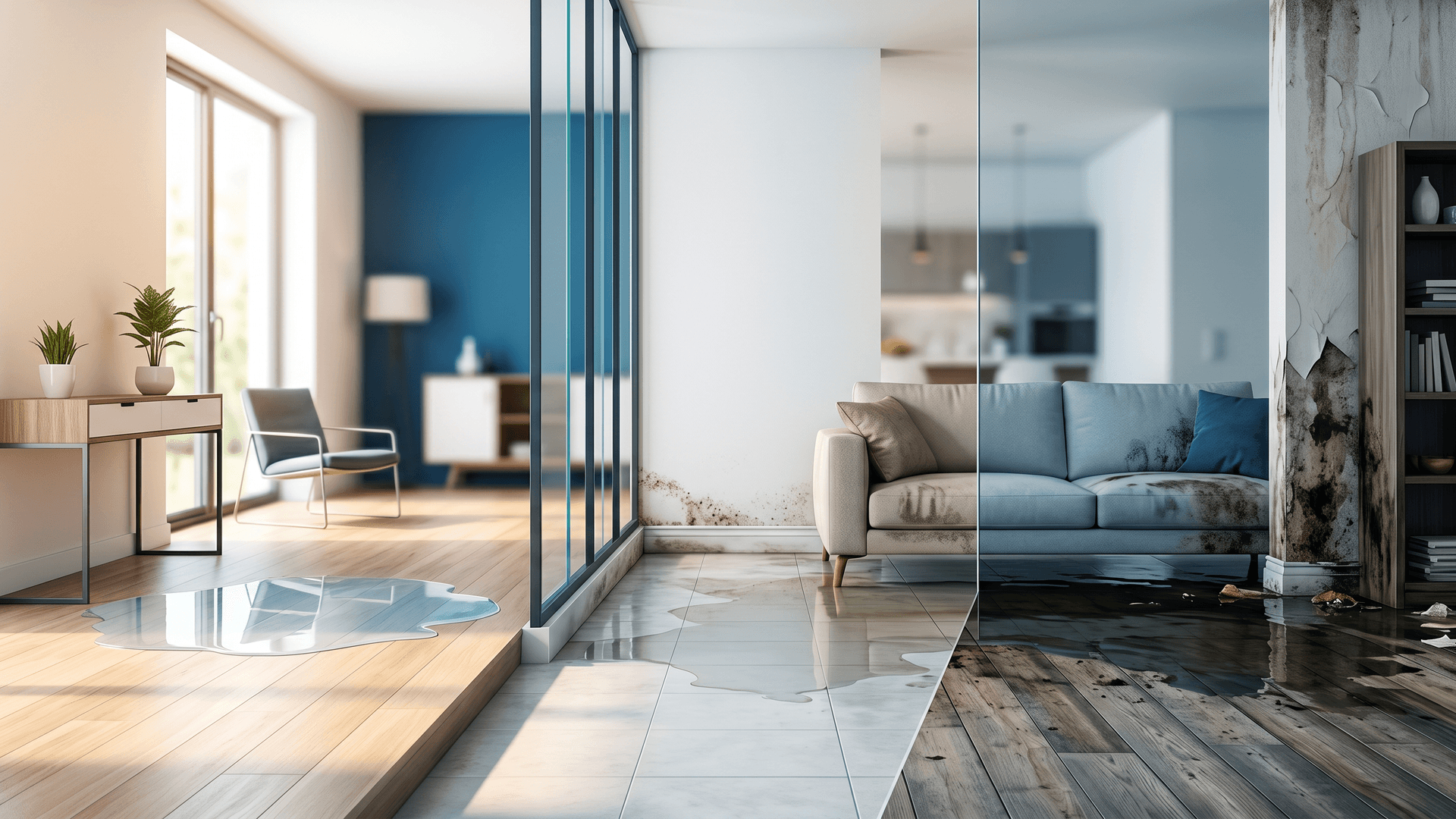
When water invades your home, not all damage is treated equally — and the category assigned to your water damage can mean thousands of dollars of difference in your restoration bill and insurance payout. Restoration contractors and insurers use a standardized classification system governed by the IICRC S500 standard to determine how dangerous the water is, what cleanup methods are required, and what your claim is worth.
Understanding these categories before you call a contractor or file a claim isn't just helpful — it's one of the most powerful ways to protect yourself financially. This guide breaks down every category in plain language, exposes common misclassification tactics, and gives you the tools to advocate for yourself every step of the way.
Get Your Quote
Ready to handle this with a pro?
You're reading about What Are the Three Water Damage Categories and Why Do They Matter. Get a fast quote for water damage restoration service in Boise, ID from Apex Restoration.
What Are the Three Water Damage Categories and Why Do They Matter?
The IICRC S500 Standard: The Rulebook Behind Every Restoration Job
The IICRC S500 is the official industry standard governing water damage restoration practices and category definitions, written by the Institute of Inspection, Cleaning and Restoration Certification. It serves as a continuing education framework for certified restoration professionals and is the benchmark every legitimate contractor should be working from.
Critically, some insurance policies directly reference the ANSI/IICRC S500, making it a legally relevant document in claims disputes. Knowing this standard exists gives you a credible reference point when challenging contractor estimates or insurer decisions — even if the full document is subscription-based and difficult to access independently. As outlined in IICRC S500 key terms and water categories, understanding the standard's language is one of the most effective tools homeowners have in a dispute.
Categories vs. Classes: Two Different Things You Must Not Confuse
Category describes the contamination level of the water source — essentially, how dirty or dangerous the water is. Class describes the extent and rate of evaporation the damage creates, meaning how deeply moisture has been absorbed into building materials.
Confusing the two is extremely common and can lead to misreading estimates or misunderstanding why costs differ between jobs. Both category and class together drive the restoration plan, equipment needs, and final cost — so you need to understand both. Research on water damage in Swedish public buildings highlights how consistently misunderstood these distinctions are even among building professionals.
How Water Damage Category Directly Drives Your Estimate
Restoration companies use category and class designations as line-item inputs in estimating software like Xactimate. Higher categories require more protective equipment, specialized disposal, and longer labor hours — all of which appear as separate charges on your invoice.
Homeowners who understand this connection can review itemized invoices and spot charges that don't match the assigned category. Always request a detailed Xactimate invoice, not just a summary total.
What Is Category 1 Water Damage and When Does It Become Dangerous?
Category 1 Clean Water: Sources and Initial Safety Profile
Category 1 water originates from a sanitary source and poses no immediate health threat at the time of loss. Common sources include broken supply lines, overflowing sinks with no contaminants, malfunctioning appliances, and burst water heaters.
A burst water heater is a frequently misclassified source — because the water originates from a clean supply line, it is definitively Category 1 per the IICRC S500. Be cautious of contractors who classify a water heater burst as Category 2 without documented justification; this is a known upcharging tactic. The Frisco water damage categories guide provides a clear breakdown of how each source maps to its correct classification.
The 24–48 Hour Rule: When Clean Water Turns Dangerous
Category 1 water does not stay clean indefinitely. Bacteria begins to proliferate within 24 to 48 hours of exposure to building materials, dirt, and ambient air — effectively upgrading the water to Category 2 and changing the required remediation protocols.
This escalation has direct implications for insurance claims: delayed reporting or slow contractor response can shift your damage into a higher-cost, higher-dispute category. Document the time of loss immediately and push for rapid response to preserve Category 1 status and simpler remediation.
Category 1 DIY Cleanup: What's Reasonable and What's Risky
Minor Category 1 incidents with no structural saturation may be manageable with consumer-grade wet vacuums and fans if addressed within hours. Once drywall, subfloor, or insulation is saturated, however, professional drying equipment is needed to prevent mold growth within 24–72 hours.
Even for clean water, wear rubber boots and gloves as a minimum precaution before entering a water-damaged space. Document everything with photos and timestamps before beginning any cleanup.
What Is Category 2 Gray Water and How Should It Be Handled?
Category 2 Gray Water: Sources and Contamination Profile
Category 2 water contains significant contamination and has the potential to cause discomfort or illness upon exposure. Sources include washing machine and dishwasher overflows, toilet overflows with urine only, sump pump failures, and aquarium leaks.
Importantly, category is defined by the source of the water, not what surfaces it contacts during travel — a key IICRC S500 principle that prevents contractors from upgrading Category 1 simply because it flowed across a dirty floor. Exposure risks include gastrointestinal illness and skin irritation, with children, elderly individuals, and immunocompromised people facing heightened risk.
DIY vs. Professional Remediation for Category 2 Damage
The restoration community is divided on DIY for minor Category 2 incidents, but the consensus shifts firmly toward professional help when structural materials are saturated. Mold can establish within 24–48 hours in wet drywall, insulation, or wood framing — materials that cannot be adequately dried with household fans.
Montgomery College's guidance on mold and water damage reinforces that moisture persisting in walls or floors after 48 hours requires professional moisture mapping and drying to avoid future mold remediation costs that can easily dwarf the original water damage bill.
When Category 2 Escalates to Category 3
Gray water left standing or absorbed into porous materials for more than 24–48 hours can escalate to Category 3 contamination levels. Time, temperature, and material porosity all accelerate bacterial and pathogen growth.
This escalation changes disposal requirements, PPE levels for workers, and the scope of demolition needed. Prompt water extraction is the single most effective way to prevent Category 2 from becoming a Category 3 remediation job.
Get Your Quote
Ready to handle this with a pro?
You're reading about What Is Category 3 Black Water and Why Is It the Most Serious. Get a fast quote for water damage restoration service in Boise, ID from Apex Restoration.
What Is Category 3 Black Water and Why Is It the Most Serious?
Category 3 Black Water: Sources, Pathogens, and Health Risks
Category 3 water is grossly contaminated and contains pathogens including bacteria such as E. coli and Salmonella, viruses, and parasites capable of causing serious illness. Primary sources include sewage backups, septic system failures, rising floodwaters from rivers or storms, and water from beyond the toilet trap.
Flash flooding is a frequently overlooked Category 3 trigger — stormwater carries agricultural runoff, sewage overflow, and chemical contaminants that make it immediately hazardous. Flood damage remediation guidelines from the University of Michigan confirm that floodwater should always be treated as grossly contaminated regardless of its apparent clarity.
Required PPE and Safety Protocols for Category 3 Environments
IICRC-certified restoration professionals working Category 3 jobs are required to wear full Tyvek suits, respirators rated at minimum N95 (often P100), face shields, and chemical-resistant gloves. Homeowners who must briefly enter a Category 3 space before professionals arrive should wear rubber boots, heavy gloves, and an N95 mask — and avoid touching eyes, nose, or mouth.
All porous materials that contact Category 3 water — drywall, carpet, insulation, upholstered furniture — are typically considered unsalvageable and must be removed. Sewage cleanup of this scope requires licensed professionals in most jurisdictions, and attempting it without proper equipment creates serious secondary health risks.
Insurance, Costs, and Timelines for Category 3 Damage
Category 3 remediation is the most expensive water damage scenario, with costs ranging from a few thousand dollars for isolated sewage backups to $20,000–$50,000+ for flood-affected homes. Timelines typically range from 5 to 10 days for drying alone, with full reconstruction adding weeks.
Some insurance policies exclude flood-sourced Category 3 damage under standard homeowner policies, requiring separate flood insurance through FEMA's National Flood Insurance Program. Understanding whether your policy cites the ANSI/IICRC S500 helps you verify whether your insurer's scope of work aligns with industry standards. Homeowners navigating disputed claims may benefit from reviewing guidance on settling insurance claims after a disaster, particularly when insurers downgrade legitimate Category 3 losses.
What Are the Four Classes of Water Damage and How Do They Affect Drying?
Classes 1 Through 4: Evaporation Load and Material Absorption
Water damage class is defined by the potential rate of evaporation and the humidity load the damage creates — not by contamination level. Class 1 involves minimal absorption such as water on a concrete floor; Class 2 affects an entire room with moisture wicking into walls; Class 3 saturates walls, ceilings, and insulation; Class 4 involves specialty drying for hardwood, plaster, or concrete.
Class determines the number and type of drying equipment deployed — dehumidifiers, air movers, desiccant systems — and directly affects daily rental and labor costs on your estimate. A Class 4 job in a hardwood-floored home will cost significantly more than a Class 1 job in the same category because of equipment intensity and extended drying time. When flooring is saturated, our team relies on moisture meters to determine how aggressively materials must be dried before they can be saved.
How Class and Category Combine to Set Restoration Scope
A Category 1, Class 1 event — a small clean water spill on concrete — is the simplest and least expensive scenario. A Category 3, Class 3 event such as a sewage backup saturating walls and subfloor represents the most complex and costly combination.
Restoration professionals assess both dimensions on-site using moisture meters and thermal imaging before writing an estimate. Ask your contractor to state both the category and class assignment in writing before work begins.
Why Misclassifying Class Inflates Your Bill
Some contractors assign a higher class than moisture readings support in order to justify more equipment on-site. Request to see moisture meter readings and psychrometric logs that document the evaporation load used to justify the class assignment — any reputable contractor will have these.
Independent moisture assessments are available and can serve as a second opinion if you suspect overclassification. Understanding class definitions empowers you to ask specific, informed questions that honest contractors will have no trouble answering.
How Do You Dispute a Water Damage Category Classification?
Understanding Why Misclassification Happens and Who Benefits
Misclassification most commonly involves upgrading Category 1 to Category 2 without documented justification — a tactic that increases billable labor, materials, and disposal fees. Insurers may also downgrade a legitimate Category 3 claim to reduce payout, particularly for flood-adjacent events.
The financial stakes are significant: the difference between a Category 1 and Category 3 remediation on the same square footage can exceed $10,000. According to water damage prevention resources from the Insurance Information organization, homeowners who document losses thoroughly and understand their policy language are far better positioned to dispute unfavorable classifications.
Step-by-Step: How to Challenge a Category Assignment
Request a fully itemized Xactimate invoice from your contractor or insurer's adjuster — line items should reflect the category assigned.
Identify the stated water source and cross-reference it against IICRC S500 category definitions; if the source is a supply line or clean appliance, it is Category 1 by definition.
Cite IICRC S500 Section 10.4.1, which establishes that category is determined by the source of the water, not what it contacts in transit.
Submit a written dispute referencing the IICRC S500 and request a re-inspection with an independent IICRC-certified hygienist if the insurer's scope conflicts with the standard.
Protecting Yourself Before and After a Water Loss Event
Keep a home inventory and photograph all areas of your home annually so pre-loss conditions are documented. Report water losses to your insurer immediately — delayed reporting can be used to justify category escalation due to elapsed time.
Thorough documentation of pre-loss conditions and the exact time of loss is one of the strongest protections you have, which is why accurate records matter from the moment a loss occurs. If your policy cites ANSI/IICRC S500, you have a contractual basis to demand that standard be followed throughout the remediation process. We recommend consulting a water damage restoration professional for a second opinion before signing off on any insurer-directed scope of work.
Get Your Quote
Ready to handle this with a pro?
You're reading about What Should You Do Right Now If You're Dealing With Water Damage. Get a fast quote for water damage restoration service in Boise, ID from Apex Restoration.
What Should You Do Right Now If You're Dealing With Water Damage?
Immediate Steps by Category to Minimize Damage and Protect Your Claim
Category 1: Stop the source, document with photos and timestamps, begin extraction within hours, and report to your insurer the same day to preserve clean-water status.
Category 2: Avoid contact with the water, document the source clearly, begin extraction immediately, and call a certified restoration professional if any structural materials are wet.
Category 3: Evacuate the affected area, do not attempt cleanup without proper PPE, contact a licensed flood cleanup or sewage remediation company immediately, and notify your insurer before any work begins.
Regardless of category, the 24–48 hour window is your most critical asset. Acting within it can prevent category escalation, mold growth, and claim disputes that drag on for months.
Finding Qualified Help and Knowing What to Ask
Look for contractors certified by the IICRC, which requires demonstrated knowledge of the S500 standard and ongoing continuing education. Ask every contractor: "What category and class are you assigning this job, and what is your documentation?" — a qualified professional will answer without hesitation.
If you are in the Pacific Northwest, our team provides certified water damage restoration in Spokane, restoration services in Coeur d'Alene, water damage help in Post Falls, and restoration in Spokane Valley. The right contractor will educate you, not overwhelm you — transparency about category, class, and cost is a hallmark of reputable water damage repair professionals.
The Bottom Line: Knowledge Is Your Best Protection
Water damage categories are not just technical jargon — they are the financial and procedural foundation of every restoration job and insurance claim. Understanding the three categories, four classes, the IICRC S500 standard, and the 24–48 hour escalation rule puts you in a position to make informed decisions under pressure.
Misclassification is real, it is financially harmful, and it is disputable — but only if you know what to look for. Whether your damage is minor or catastrophic, we have seen that acting quickly, documenting thoroughly, and asking informed questions are the three actions most likely to result in a fair outcome.
Related Posts
Does Homeowners Insurance Cover Mold Removal in Caldwell?
Homeowners insurance can pay for mold removal in a Caldwell home when the mold traces back to a covered water event, often only up to a limit. Here's how that limit often works, what an adjuster weighs, and what to tell your insurer.
What Should You Do When a Star Garage Floods?
When a water heater or washer floods a Star garage, stay clear of anything electrical the water reached, stop it at the source, and move it away from the house wall. Here's what to check next, and which board Idaho's code calls for when that wall is repaired.
How Do You Find a Water Leak in a Middleton Wall?
A leak inside a Middleton wall can show up in the water bill, a faint running sound or a bubbling paint seam before any stain appears. Here's how to narrow it down, what the City's meter rules mean for you, and when opening the wall makes sense.