
Does Homeowners Insurance Cover Mold Removal in Caldwell?
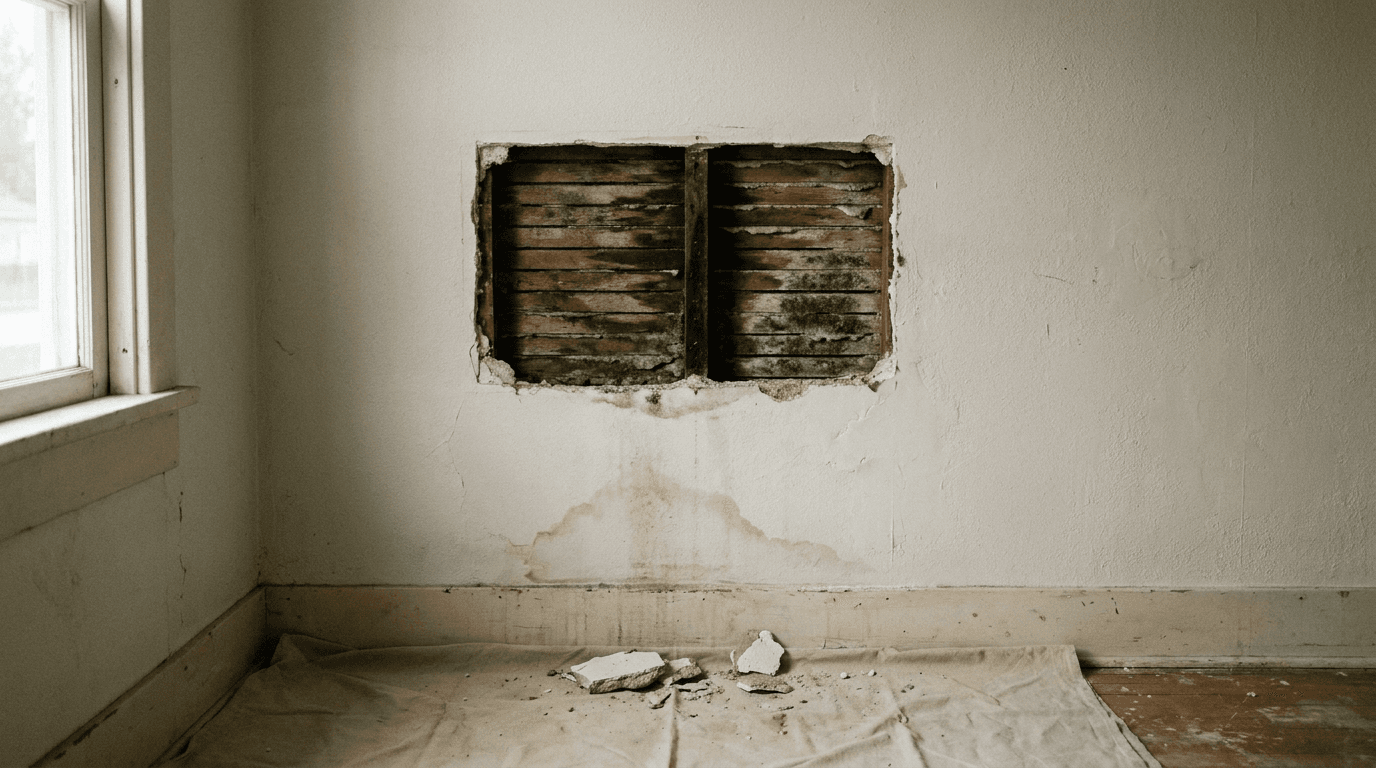
Sometimes, and often only up to a limit. Homeowners insurance can pay for mold removal in a Caldwell home when the mold traces back to a covered water event, such as water that suddenly escapes from a plumbing line or an appliance. The Insurance Information Institute puts the general rule this way: mold is a home maintenance issue that standard policies generally don't cover, but when the growth is the direct result of a covered peril such as a burst pipe, the cost of removing it may be covered.
We're a restoration company, not an insurer or an agent, so we can't tell you what your policy will pay. We can show how the mold wording in a typical policy usually works, so you know what to check in yours. For the removal itself, our mold remediation page walks through how we do the work.
Get Your Quote
Ready to handle this with a pro?
You're reading about How Does a Caldwell Mold Claim Work Against Your Policy's Sublimit. Get a fast quote for water damage restoration service in Boise, ID from Apex Restoration.
How Does a Caldwell Mold Claim Work Against Your Policy's Sublimit?
A mold claim tied to water damage usually has two parts. If the water damage is covered, it's paid under your dwelling coverage, the policy's main limit for the house. The mold part is often held to a separate, smaller limit: the mold sublimit.
That limit may come from a mold endorsement. ISO (Insurance Services Office) publishes standard policy forms that insurers can use as written or adapt, and its optional endorsement HO 04 27, "Limited Fungi, Wet or Dry Rot, or Bacteria Coverage," limits what the insurer pays for the mold damage itself, for removing the mold, for tearing out and replacing parts of the house to reach it, and for testing when there's reason to believe mold is present.
In the 2002 and 2005 versions of that endorsement that carriers have filed, three details decide how the limit behaves (newer versions and carriers' own forms may word them differently):
It sits inside your dwelling limit. The endorsement says it doesn't increase the limit that applies to the damaged property.
It doesn't cap the water damage. Covered damage that mold didn't cause isn't held to the mold limit, except where the mold made the loss bigger.
It's one limit, however many claims. The amount is the most the endorsement pays in total, no matter how many mold claims are made.
Original supply lines are a common failure in older downtown Caldwell homes. Say one gives out behind the plaster. Under those versions, drying the wall and repairing the soaked plaster and framing are water damage, while removing the growth, opening more of the wall to reach it, mold testing and any part of the job the growth made bigger draw down the mold limit.
If your policy has a mold limit, the amount is shown in a mold endorsement or elsewhere in the policy. For the limits many policies carry and what removal tends to cost here, see our guide to how much mold removal costs in Boise.
What Does Resulting Damage Mean on a Caldwell Homeowners Policy?
"Resulting damage" is the everyday name for policy language that ties damage to its cause. In ISO's standard HO-3 form it appears as "results from" and "ensuing loss," and other policies word it their own way. It's one thing an adjuster weighs on a mold claim, not the whole decision.
In that form (the Insurance Information Institute posts a sample copy of the HO-3), mold is on the list of causes of loss the policy doesn't insure. The form then carves part of it back: mold hidden inside walls, ceilings or floors is insured if it results from water that escaped accidentally from a plumbing, heating, air-conditioning or sprinkler system, or from a household appliance. A separate sentence covers ensuing loss that no other part of the policy rules out.
So under that form, the question isn't whether there's mold. It's the chain behind it: the growth, the water that fed it, and where that water came from. A chain that ends at a split supply line can hold. One that ends at humidity, ground water or a sump pump, which that form doesn't count as part of a plumbing system, falls outside the carve-back.
Take mold behind the plaster in an older Caldwell home. Traced to an original supply line that gave out, the chain runs back to a plumbing failure. Traced to a crawlspace near Indian Creek that stays damp with no plumbing leak, it runs back to the ground, which the last section takes up. ISO's mold endorsement, if your policy carries it, rewrites this part of the form, and in the filed versions described above it keeps the same cause-first logic.
How Does a Caldwell Insurer Weigh a Burst Pipe Against a Slow Leak for Mold Coverage?
Under the wording in ISO's mold endorsement, usually by the evidence of when the water started, where it came from and who knew about it, rather than by a flat rule that sudden is in and slow is out. Other policies may draw that line differently. Two Caldwell houses show the difference.
House one: a burst supply line. On a Saturday morning, the supply line under a north-side Caldwell kitchen sink splits. Water runs into the cabinet base until someone closes the shutoff valve. The homeowner reports it that day and gets drying started, and when the wet drywall behind the cabinet is cut out within days, there's growth on its back face.
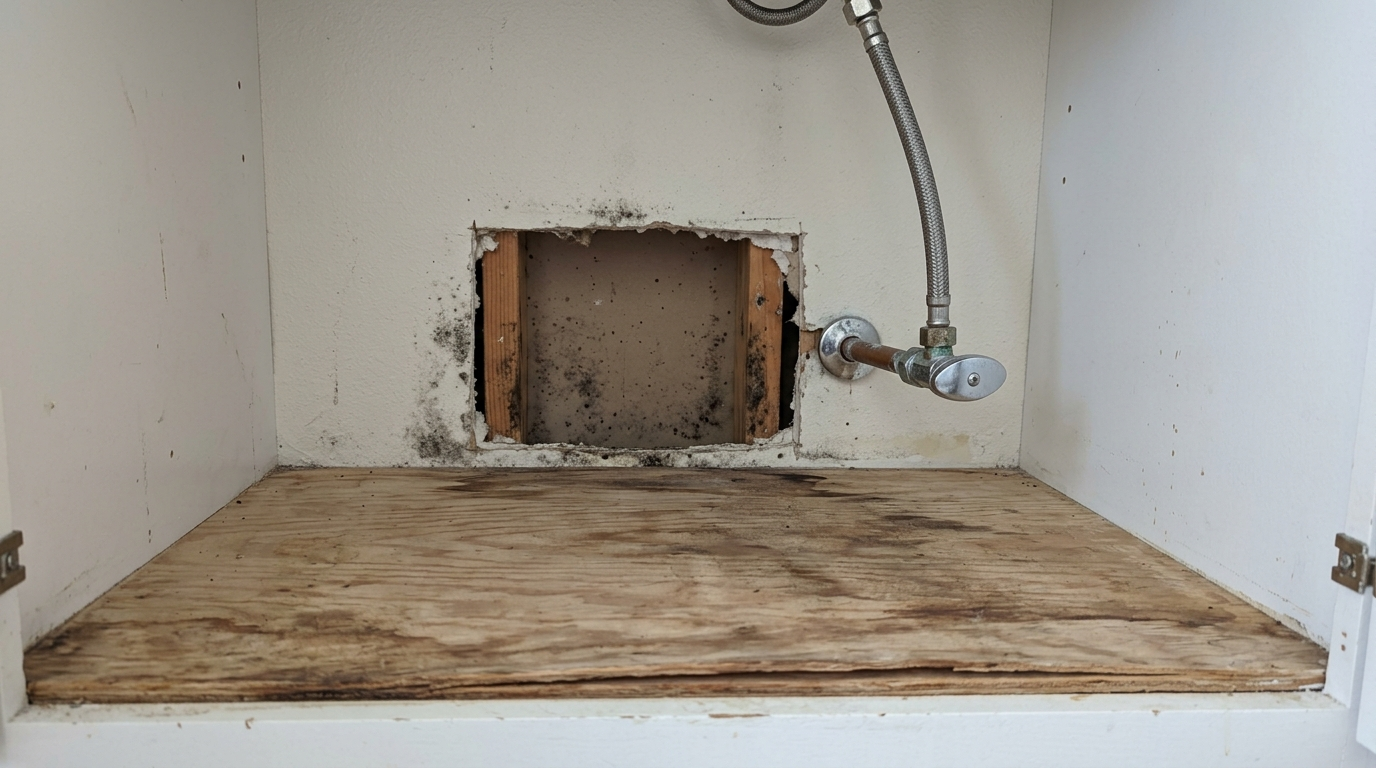
That claim shows a dated, accidental discharge from a plumbing system, growth hidden inside the wall, a prompt report and steps taken to protect the house: close to the case the carve-back above describes. The questions left are narrower. Was any of the growth there before, and does the policy cap mold?
House two: a slow seep. In an older downtown Caldwell home, a fitting on the supply line to an upstairs bathroom starts to weep inside the wall. Nobody sees it. About three weeks later a stain shows on the plaster below, and when the wall is opened the framing is dark, with growth on it.
If a policy carries ISO's mold endorsement, it does the weighing here. Both filed versions exclude damage from water that seeps or leaks repeatedly "over a period of weeks, months or years," unless the seepage and the damage were unknown to everyone insured under the policy and hidden inside the walls, ceilings or floors. A seep that stayed hidden, that nobody knew about and that was reported once the stain appeared may fit that exception. The same seep behind a stain someone saw and painted over may not.
Under that wording, what separates them is evidence: how far the staining and rot have spread, the state of the fitting, moisture readings, and whether anyone saw signs earlier. Neither house is decided by the mold alone. Your own policy may word its time limit differently, so read its seepage language.
Get Your Quote
Ready to handle this with a pro?
You're reading about What Happens When a Caldwell Mold Bill Runs Past the Policy's Sublimit. Get a fast quote for water damage restoration service in Boise, ID from Apex Restoration.
What Happens When a Caldwell Mold Bill Runs Past the Policy's Sublimit?
The mold portion above the limit is generally yours to pay, unless your policy carries more mold coverage. In the endorsement versions described earlier, though, the water damage isn't held to the mold limit, so on a large Caldwell mold job the split matters.
Under that wording, the estimate gets divided: water damage, paid within your dwelling coverage, and mold, including any increase the mold caused, counted against the limit. Where that line falls decides how much of the bill ends up above the limit.
Three things help:
Ask to see the split. Ask your adjuster which line items went against the mold limit and which against your dwelling coverage, and compare that with your contractor's estimate.
Use the policy's own process if you disagree. The National Association of Insurance Commissioners' consumer guide to home insurance says to try to resolve it with your insurer first, without feeling rushed to agree; having your contractor meet with you and the adjuster might help. If you still disagree about the claim's value, check your policy for an appraisal clause. The guide also lists an attorney, a public adjuster (who charges a fee) and your state insurance department's consumer services staff.
Look ahead. The same guide notes you may be able to buy an endorsement for mold damage, since most homeowners policies offer limited or no coverage for it. Ask your agent before your policy renews.
Should You Tell Your Insurer About Mold Before You Claim in Caldwell?
If the mold is tied to water damage you may want covered, yes: tell your insurer or agent promptly, and include the mold. Whether to file a claim at all is your decision, made with your own policy and your agent.
Notice is a duty, not a courtesy. ISO's standard HO-3 lists prompt notice to the insurer or agent among your duties after a loss, along with protecting the property from further damage, and says the insurer has no duty to provide coverage if a failure to meet those duties prejudices it. NAIC's guide, linked above, walks through the claim process.
What waiting can cost. The form lets the insurer ask to see the damaged property, and a late report can mean it's already been torn out. Mold that keeps spreading after you knew about the water can run into the policy's neglect exclusion, which turns on whether you used all reasonable means to save and preserve the property. And the longer the gap, the harder it is to show when the water started, which is what house two turned on.
Tell them about the mold, too. You'll find advice online to call every leak sudden, or to say it "just happened" no matter when it started. Don't follow it. ISO's form provides no coverage to anyone insured under the policy if an insured intentionally conceals or misrepresents a material fact. Describe what you found the way you found it.
The worry about your record is fair. NAIC's guide says most insurers report homeowners claims to private nationwide databases such as CLUE (the Comprehensive Loss Underwriting Exchange), and that how often you file and the types of claims you file often affect your premium and whether your insurer renews your policy. Ask your agent how a claim would affect your premium at renewal, and how your insurer records a call about possible damage. Neither answer changes the notice duty on a loss you plan to claim.
What we won't do is tell you to wait, to leave the mold out, or to describe a loss differently from how it happened.
Why Do Some Caldwell Mold Claim Documents Carry More Weight Than Others?
Because a mold claim under ISO's wording usually comes down to two questions, when the water got in and where it came from, some documents answer them while others only show that mold exists. ISO's standard HO-3 lets the insurer ask for a sworn proof of loss stating the time and cause of loss, ask to see the damaged property and request records.
What carries weight, and why:
Readings taken while the water was there. Dated moisture readings and a map of where the water went show the event's extent at a known time, before drying erased it. In older Caldwell homes near Cleveland Boulevard, where plaster dries more slowly than drywall, readings across the drying period show the water leaving.
The failed part, or the repair record that names it. A supply line that split and a fitting that wept for months tell different stories about time and cause, so keep what the plumber removes if you can.
Dated photos from before anything was moved or torn out. They show what the adjuster may never see in person.
What carries less:
A mold test on its own. A sample shows what was there the day it was taken, not where the water came from or when.
Anything made after the evidence is gone. An account written once the wet material has been hauled away, undated photos, or an estimate that doesn't name a cause.
Credible evidence is made at the time, by the people who saw the damage, and kept as it was. We use thermal imaging and moisture meters to find where the water went, and we work directly with the carrier and the adjuster on the claim and the documentation.
Get Your Quote
Ready to handle this with a pro?
You're reading about When Does a Caldwell Mold Claim Get Denied After a Covered Water Loss. Get a fast quote for water damage restoration service in Boise, ID from Apex Restoration.
When Does a Caldwell Mold Claim Get Denied After a Covered Water Loss?
Even when the water damage is accepted, the mold part can be denied or cut back. Here's how that can happen.
The growth was there first. ISO's endorsement covers mold that results from a covered peril during the policy period. In older downtown Caldwell homes near Indian Creek, a basement with poor airflow can hold moisture long enough for mold to follow. Growth like that, found when a pipe later fails, can be treated as an older, separate problem.
The water came from the ground. Homes near Indian Creek and the Boise River can sit on damp ground, and irrigation season may make it wetter. A Caldwell basement or crawlspace that's wet with no plumbing leak points to ground water. ISO's standard HO-3 excludes water below the surface of the ground, including water that seeps through a foundation, so mold fed by it doesn't ride on the plumbing carve-back. Outside water is its own coverage question, covered in our guide to what homeowners insurance covers for water damage in Idaho.
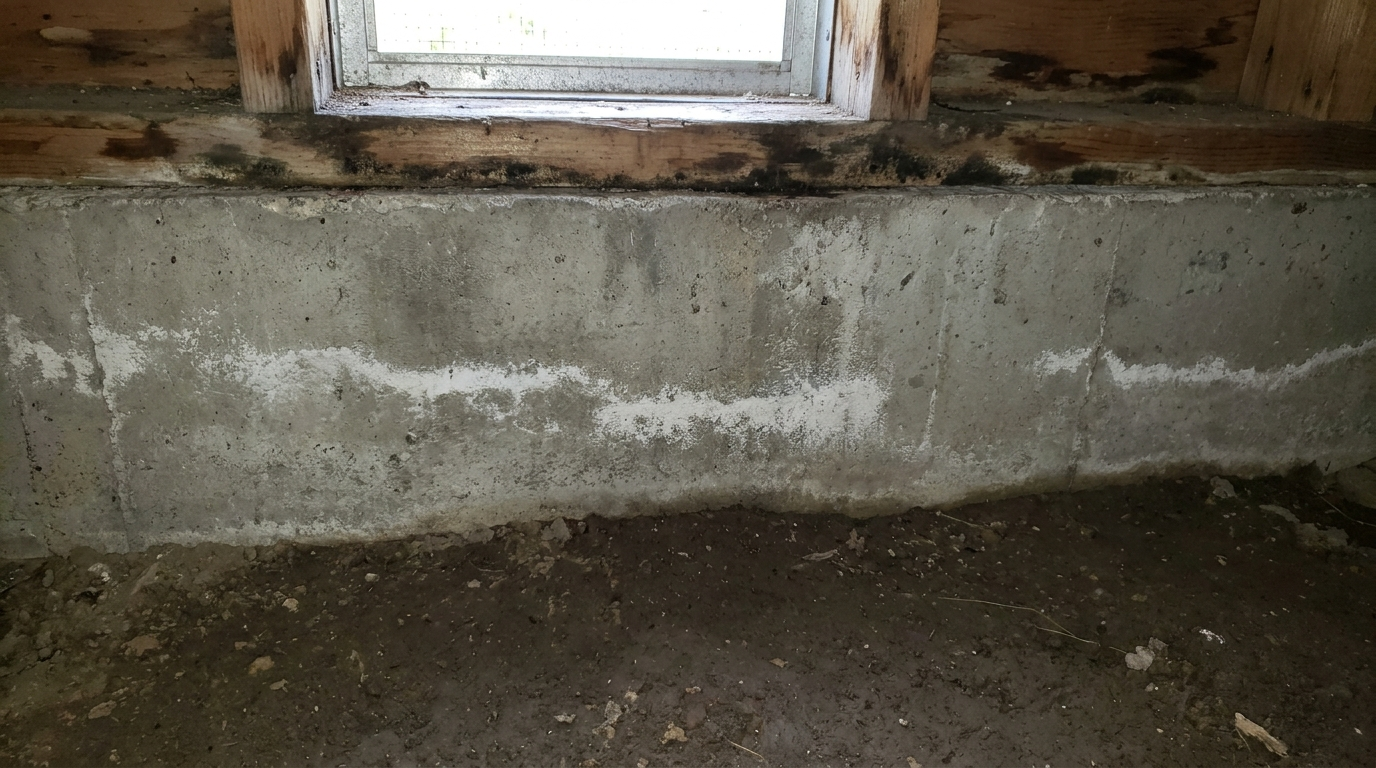
The house wasn't protected. Both filed versions of the endorsement cover mold only if all reasonable means were used to save and preserve the property at and after the time of the loss, and the standard HO-3 excludes neglect in the same terms. Wet drywall left in place for weeks after a repair is the kind of gap that can cost the mold part of a claim.
Someone knew. If the seepage or the damage was known, the exception for leaks unknown to everyone insured no longer fits.
If you get a denial, ask your insurer to point to the exact provision it relied on, and read that wording in your own policy, since it can differ from ISO's. Whatever the coverage answer, the moisture behind the mold has to be found and stopped before the area is rebuilt. We answer 24/7 in Caldwell and across the Treasure Valley, and our page for water damage restoration in nearby Nampa covers the same work.
Final Thoughts
Homeowners insurance can pay for mold removal when the mold traces back to a covered water event, often only up to a limit. Your policy's wording decides.
In both filed versions of the optional mold endorsement, the limit sits inside your dwelling limit and doesn't cap water damage that mold didn't cause, except where mold made the loss bigger.
"Resulting damage" language ties the mold to its cause. It's one thing an adjuster weighs, not the whole decision.
Under ISO's mold endorsement, a burst line and a slow seep are usually weighed on evidence: when the water started, where it came from and whether anyone knew.
Past the limit, the mold portion is generally yours to pay. Ask to see how the bill was split.
Report a loss you may claim promptly, include the mold, and describe it as it happened. Whether to file is your decision.
Documents that show when the water got in and where it came from usually carry more weight than documents that only show mold.
A Caldwell basement or crawlspace that's wet with no plumbing leak points to ground water, which ISO's standard HO-3 excludes.
Apex Restoration Team
Water Damage & Restoration Specialists
We're the Apex Restoration team — a family-owned, IICRC-certified crew handling water damage, mold, and abatement across Boise, the Treasure Valley, and Eastern Washington & North Idaho. We answer 24/7 and write these guides to help homeowners make calm, informed decisions when water, mold, or hazards show up.
Related Posts
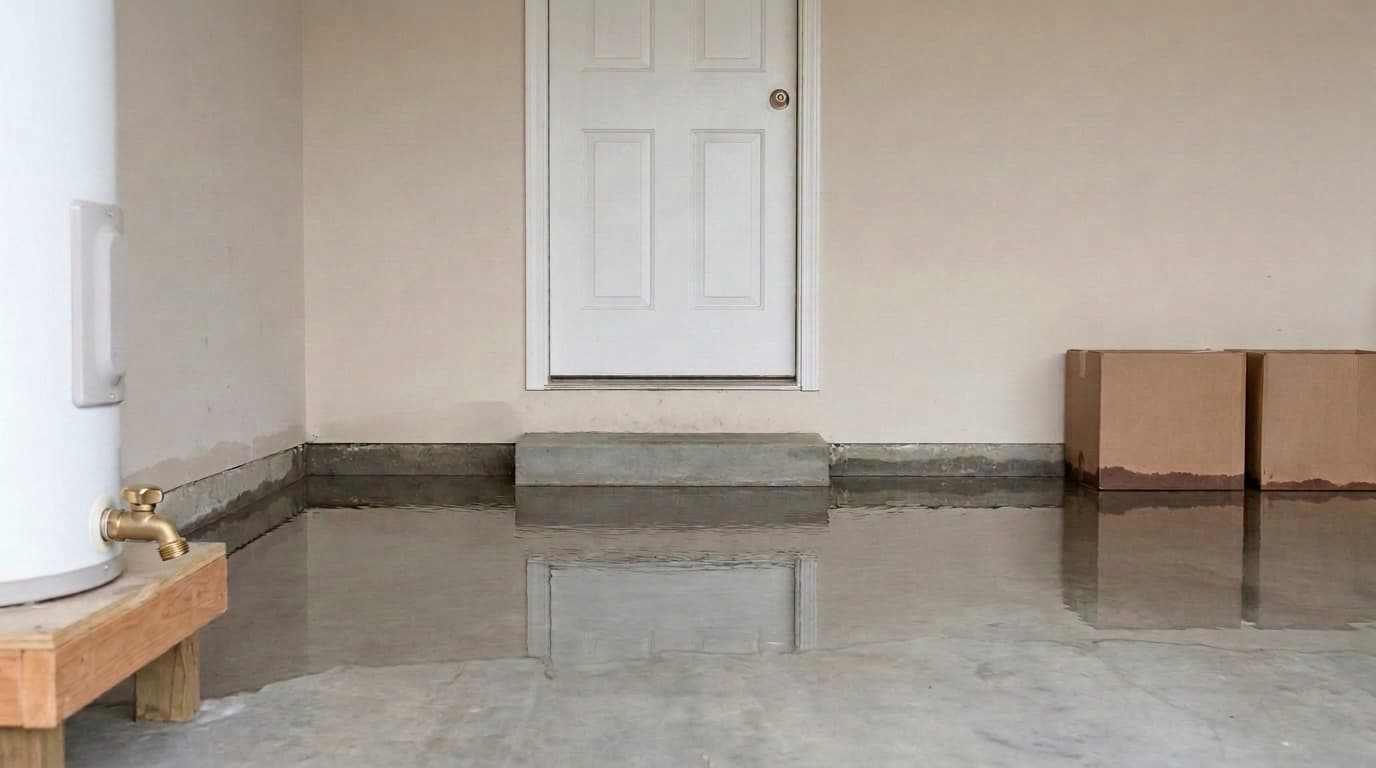
What Should You Do When a Star Garage Floods?
When a water heater or washer floods a Star garage, stay clear of anything electrical the water reached, stop it at the source, and move it away from the house wall. Here's what to check next, and which board Idaho's code calls for when that wall is repaired.
How Do You Find a Water Leak in a Middleton Wall?
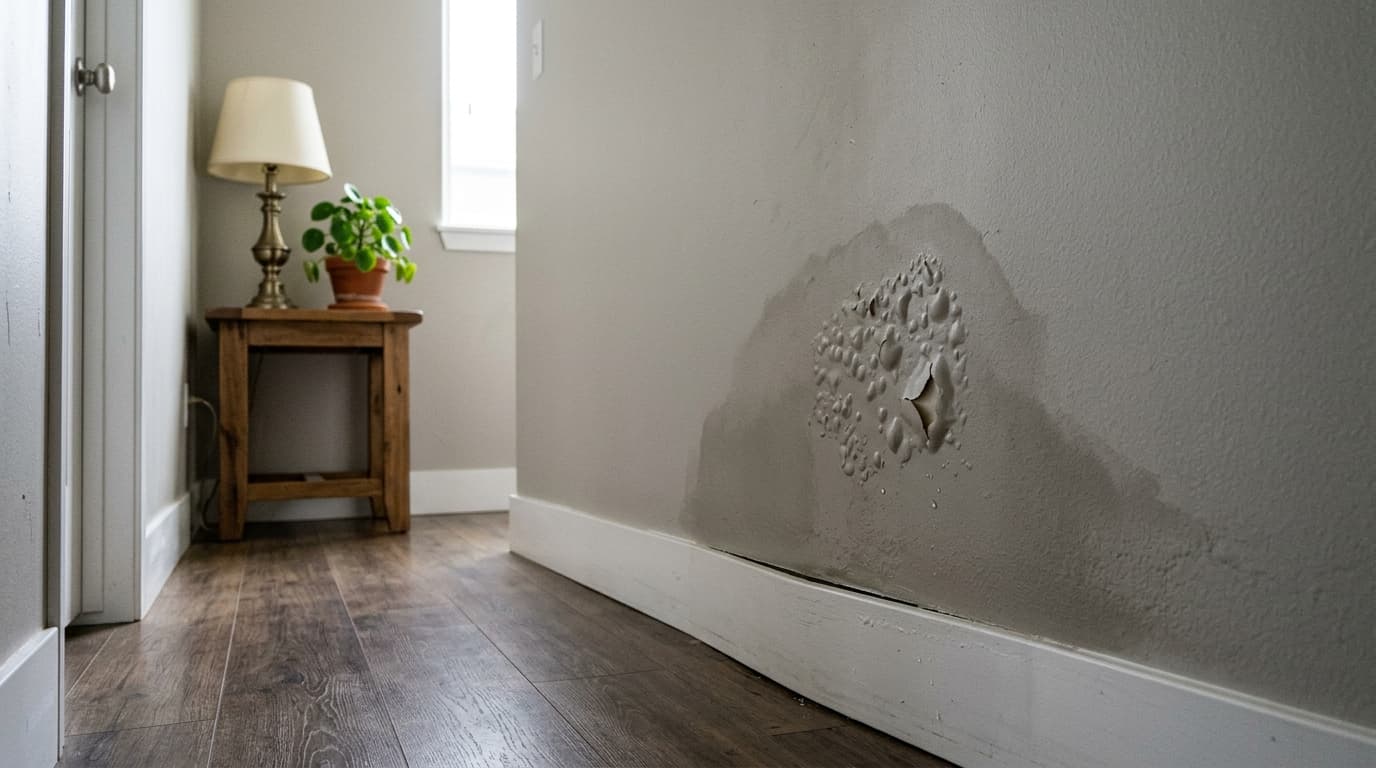
A leak inside a Middleton wall can show up in the water bill, a faint running sound or a bubbling paint seam before any stain appears. Here's how to narrow it down, what the City's meter rules mean for you, and when opening the wall makes sense.
Is Your Garden City Water Softener Leaking Onto the Slab?
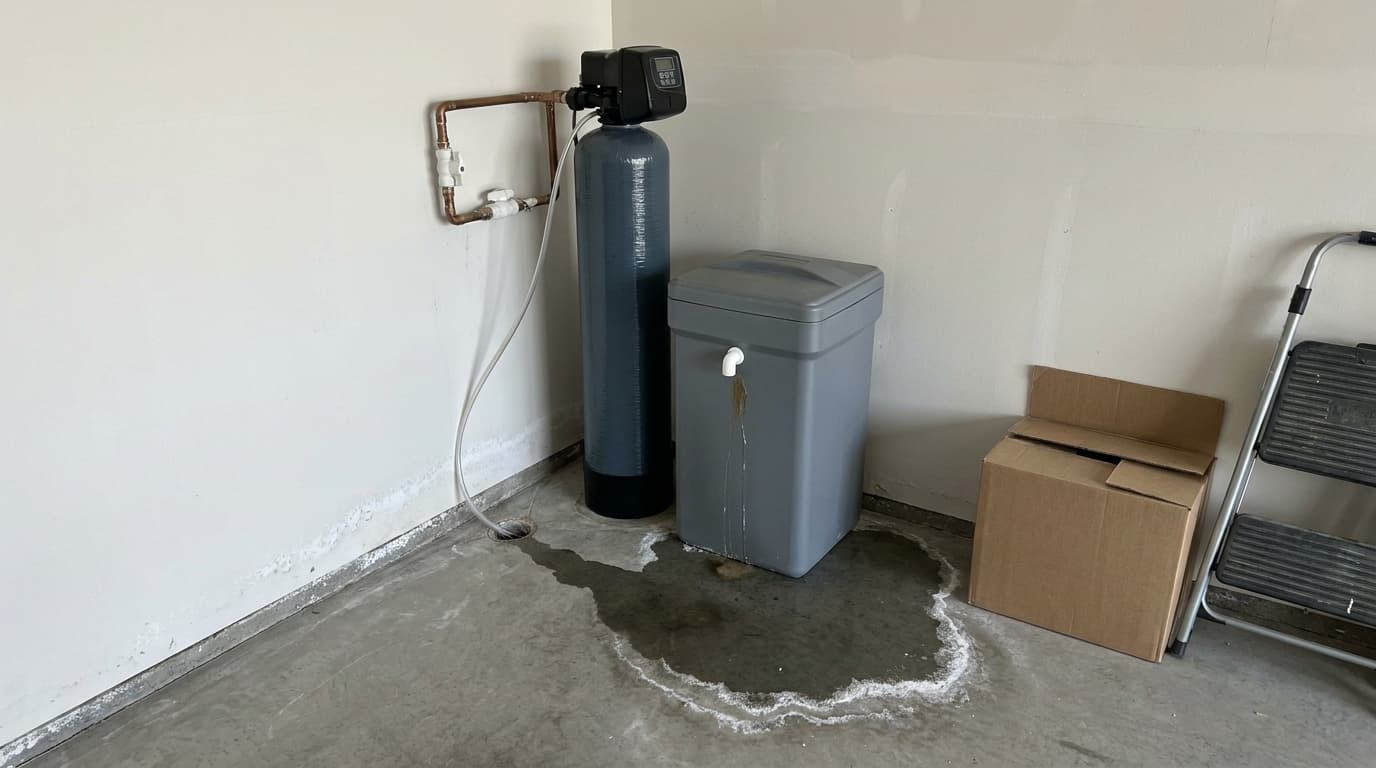
A leaking water softener is often a small repair, but brine is salt water, and the salt stays behind when a leak dries. Here is how to trace the leak, stop it safely and spot salt damage in Garden City drywall and framing.