
Do You Need a Mold Inspection Before Buying a Boise Home?
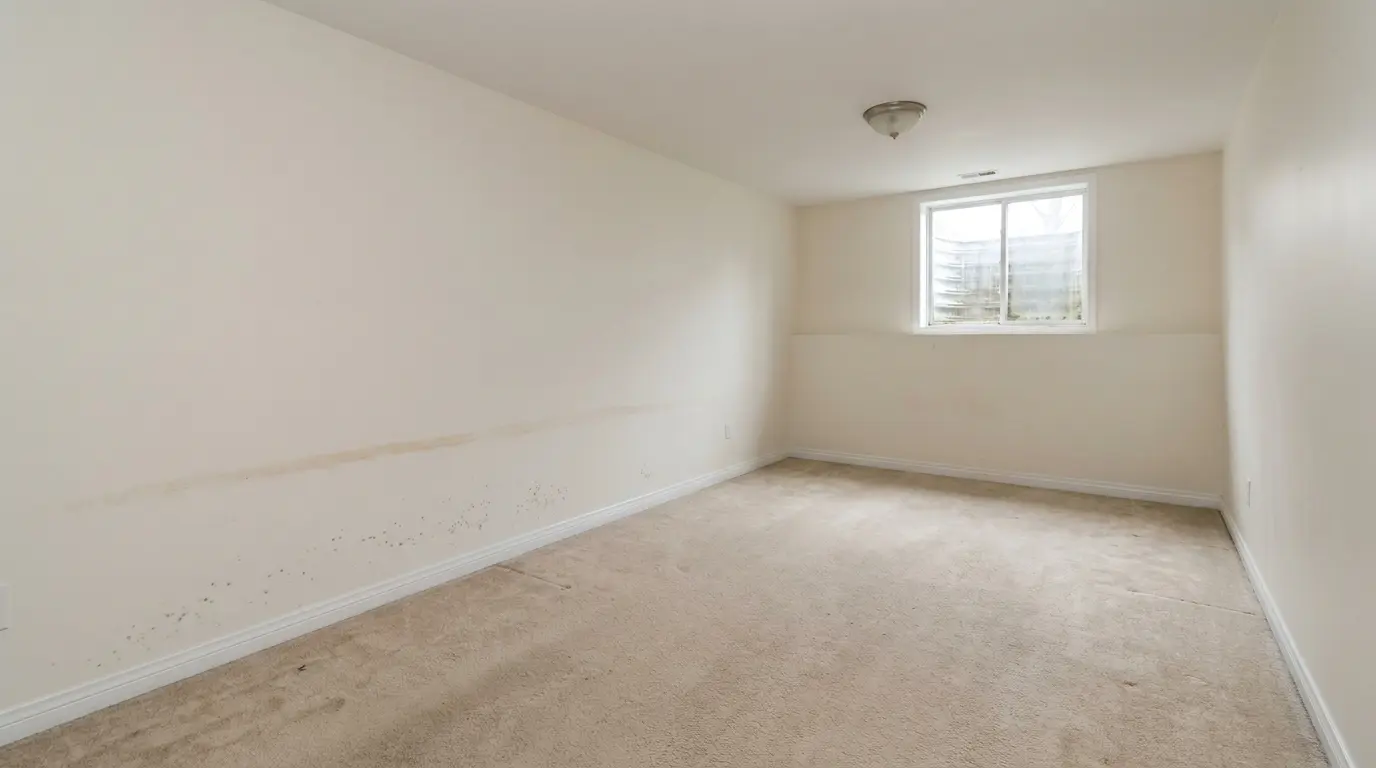
Not on every house. No federal or Idaho law requires a mold inspection, as the Idaho Department of Health and Welfare notes, so the decision is yours. Book one when the house gives you a reason to suspect hidden water.
A mold inspection is its own service, separate from the general home inspection. It looks for hidden moisture and the mold that moisture feeds, and it can include lab samples.
Get Your Quote
Ready to handle this with a pro?
You're reading about When Is a Mold Inspection Worth Ordering Before You Buy a Boise Home. Get a fast quote for water damage restoration service in Boise, ID from Apex Restoration.
When Is a Mold Inspection Worth Ordering Before You Buy a Boise Home?
It's worth ordering when something points to moisture you can't explain. A moldy smell with no visible source is a reason to suspect hidden mold, according to EPA's Brief Guide to Mold, Moisture and Your Home. Other flags show up on a showing or in the inspection report. Look for water stains on ceilings, walls or window sills. Watch for condensation on windows or pipes, and for stains in the cabinet floor under a sink.
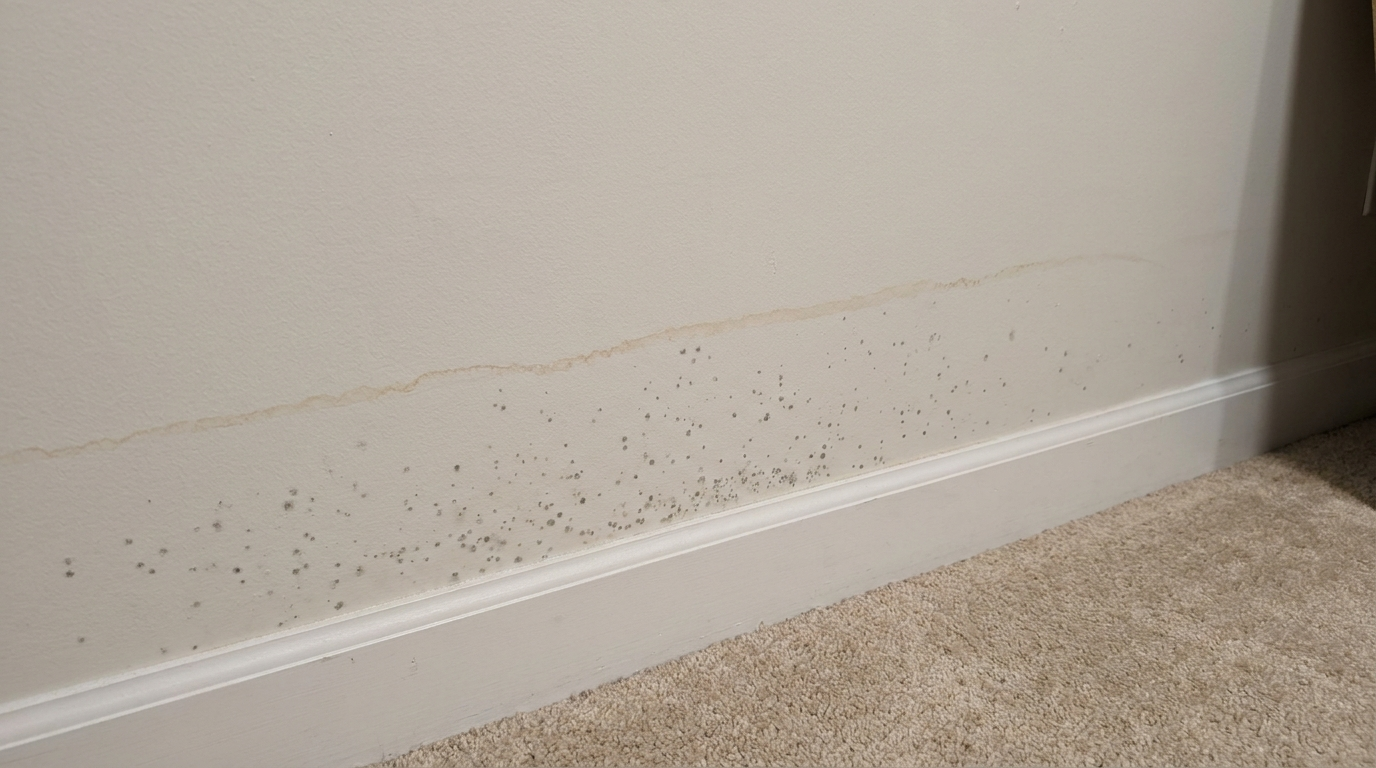
Paperwork can point the way too. Disclosure answers or inspection notes about past mold, basement water, plumbing leaks or drainage tell you where to look. For example, say the seller lists a past basement water problem, and the basement now has fresh paint and new carpet. Nothing may be wrong, but that's the kind of house where a closer look is worth booking.
Health is the other reason. Some people react to mold more than others, especially people with allergies, asthma or a weakened immune system. If someone like that is moving in, the case for an inspection gets stronger.
Don't count on the general home inspection to settle it. An inspector who follows the American Society of Home Inspectors' standard of practice isn't required to determine whether mold is present. That standard doesn't require reporting concealed conditions either. Check your inspection agreement for what yours covers, and treat any note about moisture as your cue.
Boise's weather won't make the call for you. Boise is semi-arid, with a little over eleven inches of rain and melted snow a year at the airport, according to the National Weather Service. Mold can still grow anywhere water lingers, such as a slow leak, condensation or a damp basement. So on a Boise house, the real question is that house's water history.
Sometimes a test only confirms what you already know. In most cases testing isn't needed, Idaho's Department of Health and Welfare says, because you can often see or smell mold. If you can see it growing and know the water source, you need the damage sized up and a cleanup price before your deadline.
What Happens During a Mold Inspection on a Home You Are Buying in Boise?
A typical visit is a close look at moisture, with lab samples only where there's a reason to take them:
Background. You tell the inspector about the smell, the stain, the disclosure answers and anything the home inspector flagged.
A visual check. The inspector looks where water collects: bathrooms, under sinks, closets, around windows and doors, and the basement or crawl space. Hidden spots count too, like the back of drywall, the underside of carpet pad and walls behind furniture.
Moisture readings. A moisture meter checks walls and floors. Some inspectors add a thermal camera to spot damp areas behind surfaces.
Samples, if warranted. When the visual check suggests mold is likely, the inspector may take air samples, or surface samples with a swab or tape, for a lab.
A written report. It records what was found and what the inspector recommends.
We use thermal imaging and moisture meters to find where the water went. On a house you're buying, read that part of any report first: where the moisture is, what it reached and whether it's still wet.
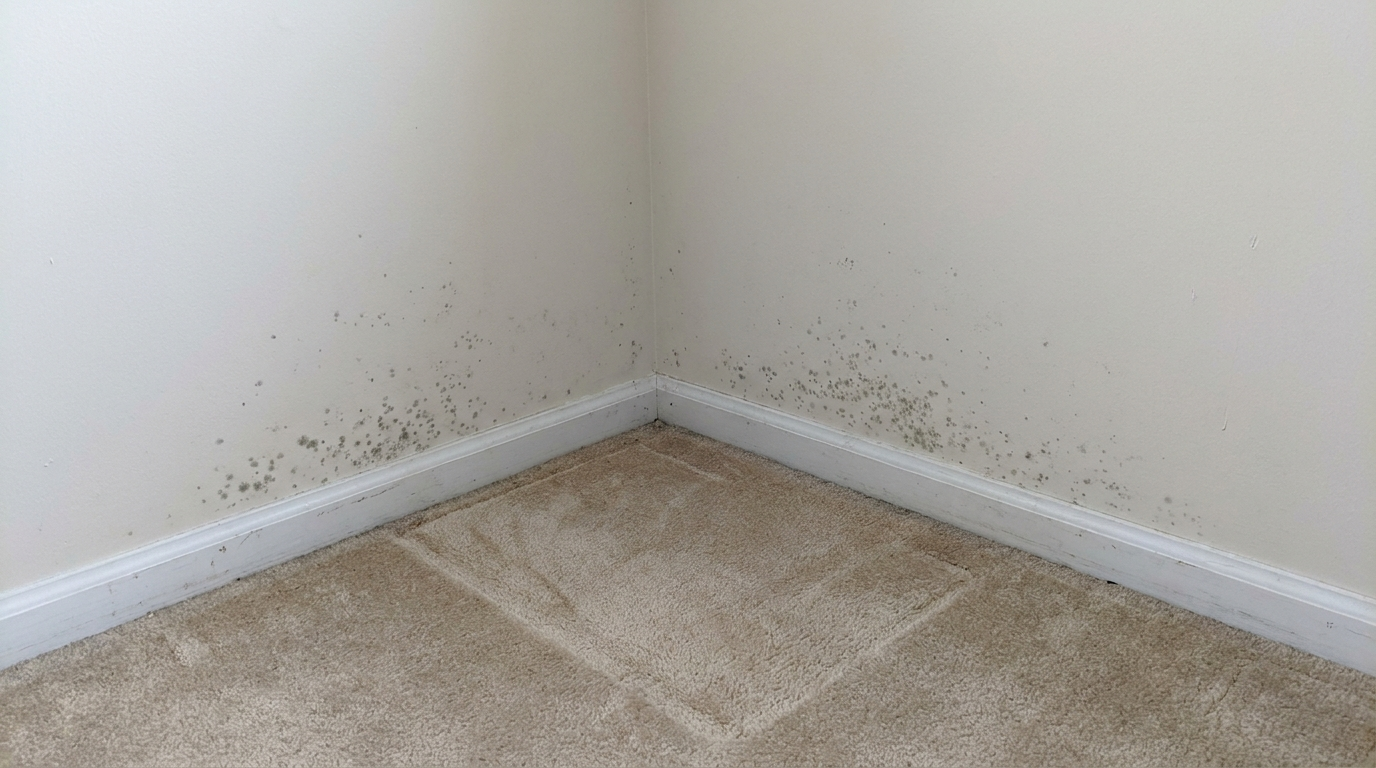
Expect any air sample to find some spores. No home is spore-free, and there are no EPA or other federal limits for mold to hold a result against. So a lab number alone can't tell you whether a house passes or fails. A store-bought test kit runs into the same wall. Whoever takes your samples should have real experience planning them and reading the results, so ask who will interpret yours.
On a house you don't own yet, your purchase agreement sets the rules for the visit. If it's the RE-21 from the Idaho Association of REALTORS (January 2024 edition), the seller has to make the house available. The seller also has to have the utilities on. You, in turn, must repair any damage your inspections cause. So don't open walls or peel back wallpaper. Disturbing hidden mold, like mold growing behind wallpaper, can release a large burst of spores. Lab results take time, so book any sampling early.
What Does the Seller's Disclosure Tell Boise Buyers About Mold?
It tells you what the seller knows about mold and water, as far as the form asks. On the RE-21, when Idaho law requires a disclosure, the seller must provide the Seller's Property Condition Disclosure Form or another acceptable form. That form is the RE-25. Its January 2023 edition asks four questions about mold:
Whether the seller has had the house inspected for mold.
If so, whether you can get a copy of that report.
Whether the seller knows of mold problems anywhere inside, such as walls, floors, ceilings, basement, crawl spaces or attics, or mold damage to the structure.
Whether any water damage or mold problem has ever been remediated or repaired.
The form also asks about water getting in and moisture damage, from flooding and seepage to condensation, sewer backups and leaking pipes. If yours is a later edition, its questions may differ, so read the one you're handed.
The RE-25 isn't the only form allowed. Idaho Code 55-2506 lets a seller use another form that includes the statute's required information. The disclosure form written into Idaho Code 55-2508 never uses the word mold. It asks about basement water, plumbing and drainage, among other items. It also asks whether the seller knows of "hazardous materials or pest infestations" but doesn't say whether mold counts as one. It ends with a catch-all for any other problem the seller knows about.
Whichever form you get, it reports what the seller knows, not what an inspection would find. Idaho Code 55-2507 requires a disclosure form to say so, and to say it is not a substitute for any inspections. The statute's own form adds that the seller hasn't inspected hard-to-reach areas such as the foundation or roof, unless the seller says otherwise. So a "no" doesn't rule mold out. For example, a seller can honestly answer no and still not know about a slow leak behind a finished wall.
The answers worth chasing are the ones that describe something: a leak, a wet basement, mold, a past repair or a mold report on file. Ask the seller in writing what happened, when, and who fixed it, and ask for a copy of any report. Do it before your inspection deadline, while the answers can still shape your inspections.
Under Idaho Code 55-2509, the seller has 10 days after accepting your offer to deliver the signed form. If it reaches you after you're under contract, Idaho Code 55-2515 lets you rescind within three business days of receiving it. The notice must be written, signed and dated. It must also identify a specific objection to something the form discloses. The seller or the seller's agent must receive it within those three business days, by personal delivery, mail or fax. If you rescind this way, your deposits come back. Note the day you or your agent receive the form, because the clock starts there. Your agent or an attorney can tell you how this applies to your sale.
Some sales come with no condition form at all, because Idaho Code 55-2505 exempts several kinds of transfers. One is a newly built home no one has lived in. Another is a sale by a lender that took the home through foreclosure or a deed in lieu. A transfer from a decedent's estate is exempt too. On a never-occupied new build, the seller still answers the form's annexation and city-service questions, but none about condition. On those sales, your own inspections carry more of the load.
Get Your Quote
Ready to handle this with a pro?
You're reading about Who Orders and Pays for a Mold Inspection on a Boise Home Purchase. Get a fast quote for water damage restoration service in Boise, ID from Apex Restoration.
Who Orders and Pays for a Mold Inspection on a Boise Home Purchase?
You do, unless your contract says otherwise. Under the RE-21, the inspections you choose are at your expense. The form also urges buyers to pick their own qualified professionals. If the seller agrees to pay instead, get that written into the contract.
Your general inspection deadline is the number of business days written into your contract. If that blank is left empty, it's five business days from acceptance. By then, the inspections need to be done, and any written notice of problems or termination must reach the seller. Say your offer is accepted with that blank empty. Five business days then has to cover booking, the visit, any lab results and your decision. Book inspections the day your offer is accepted.
The RE-21 also has lines for reserving extra time on specific inspections, each with its own deadline. A reserved line with its days left blank gets 10 business days from acceptance. If mold is already on your mind, ask your agent before you make the offer whether to reserve one for it. Your own contract controls, so check its numbers before you rely on them.
Ask for a written report. If you ask the seller for repairs, the seller can request the relevant sections of it.
As for price, the average mold inspection runs $300 to $650 nationally, according to HomeGuide's cost page dated 2023. If mold is found, the cleanup is a separate cost, which we break down in what mold removal costs in Boise.
What Can You Do if a Boise Mold Inspection Finds a Problem Before Closing?
You have four ways to go while your inspection window is open. You can ask the seller to fix it, negotiate a different deal, accept the house as it is or walk away. Asking, negotiating and walking away all run through a written notice to the seller before your deadline.
On the RE-21, a written notice ending the contract over an unsatisfactory inspection gets your earnest money back. A notice listing problems gives the seller three business days, if that blank is empty, to agree to fix them or decline. Silence counts as declining, and the seller is free to say no. After a decline, you get three business days from the seller's response, again if that blank is empty. In that time you can negotiate, go ahead without the repair, or end the contract and get your earnest money back.
Miss your deadline, and the form treats you as having finished that inspection. It also treats you as having taken on its repairs and given up your right to back out over it. The RE-21 also carries a mold clause. Once you close, you take on full responsibility and risk for anything that may result from mold. You also agree to hold the seller and the agents on both sides harmless. What that means in a dispute is for an attorney to say. Either way, settle mold questions before you close.
If mold turns up, the fix starts with the water, because mold comes back when the moisture source isn't fixed. For example, if the report traces mold under a bathroom sink to a slow drain leak, the leak gets repaired first, then the cleanup. A cleanup isn't finished until the water problem is fully fixed and no visible mold or moldy odor remains, by EPA's guidance.
If the seller agrees to fix it, the RE-21 gives you a walkthrough to confirm the agreed repairs are done. It isn't a second chance to back out. If the work falls short, your recourse is to tell the seller, who must correct it.
If the cleanup lands on you, our mold remediation crews work across Boise and follow IICRC standards on every job. For weighing a repair against a credit or walking away, see what to do when mold turns up during a home purchase.
Key Takeaways on Mold Inspections for Boise Home Buyers
Make the call with what's in front of you: the seller's answers, the home inspector's notes, and what you saw and smelled at the showing. If any of it points to water you can't explain, order the mold inspection. If none of it does, you can pass on it.
If a Boise house you're under contract on has you uneasy, call us while your inspection window is still open. That leaves time to act on what we find.
Apex Restoration Team
Water Damage & Restoration Specialists
We're the Apex Restoration team — a family-owned, IICRC-certified crew handling water damage, mold, and abatement across Boise, the Treasure Valley, and Eastern Washington & North Idaho. We answer 24/7 and write these guides to help homeowners make calm, informed decisions when water, mold, or hazards show up.
Related Posts
Does the Popcorn Ceiling in an Old Spokane House Have Asbestos?
A popcorn ceiling in an old Spokane house may hold asbestos, and only a lab can tell. Who should test it, when it's risky and who may legally remove it.
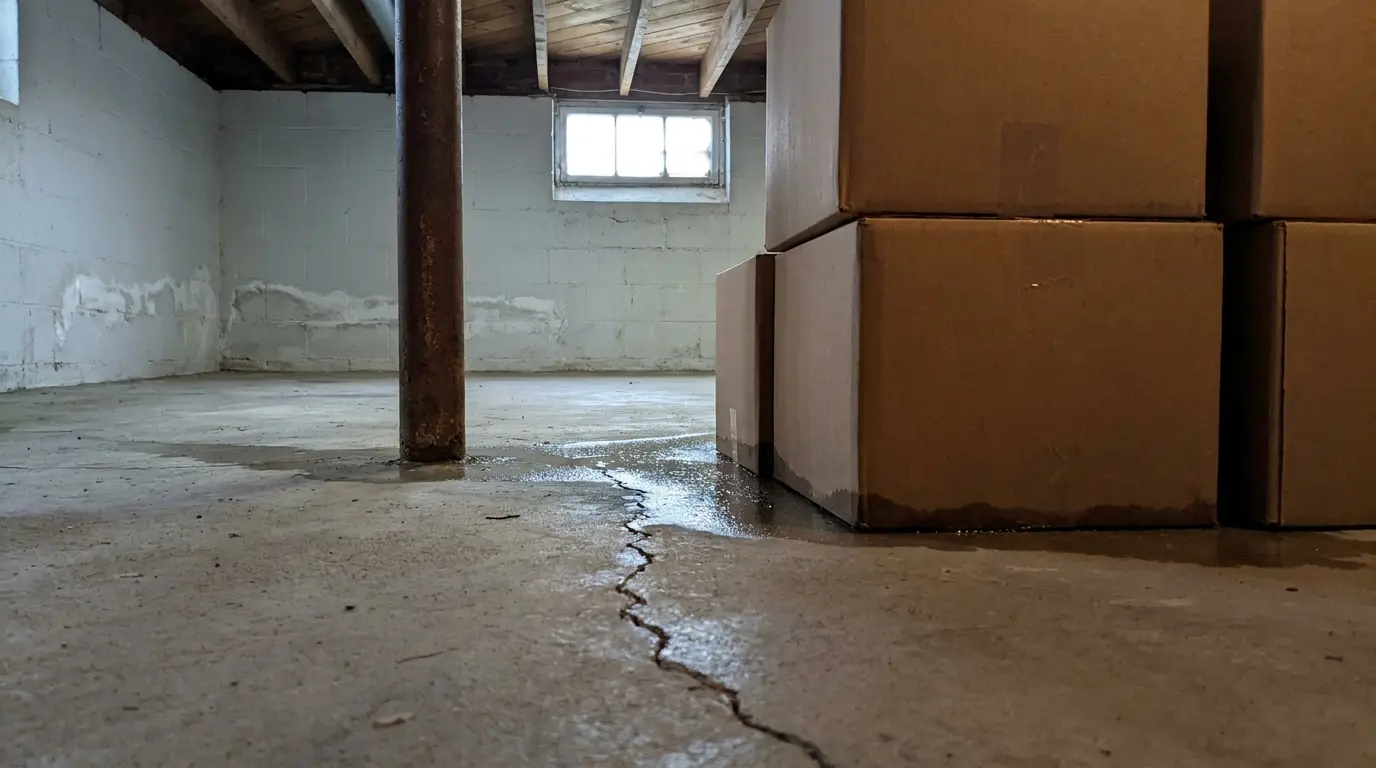
Why Is Water Coming Up Through the Basement Floor in Spokane?
Water rises through a basement floor when the soil under it is soaked and can't drain. Why older Spokane homes get it, when it's urgent and what to do.
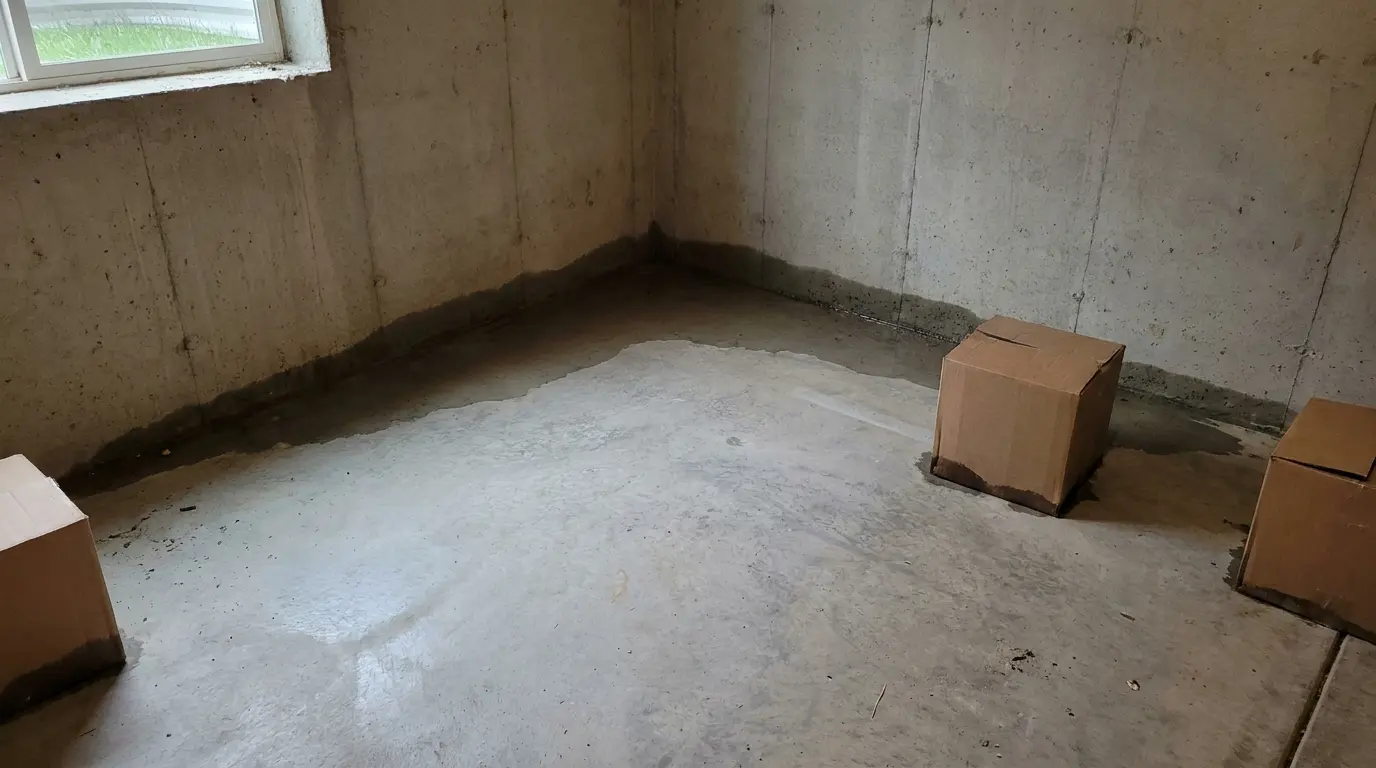
Why Do Basements Get Wet When Irrigation Starts in Meridian?
Canal seepage raises groundwater all irrigation season, and sprinklers can soak soil by your walls. How it gets into a Meridian basement and how to stop it.