
Musty Smell in Basement Spokane: Causes and How to Fix It
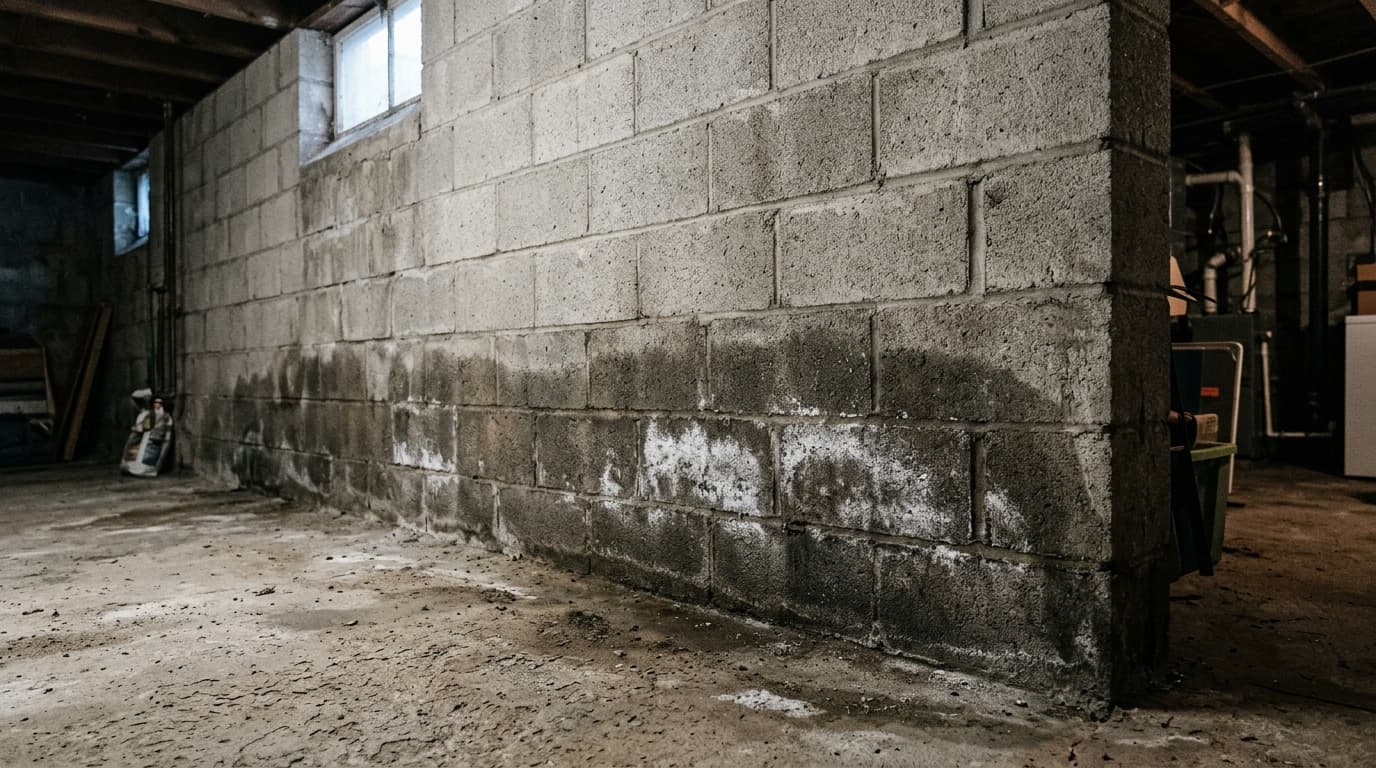
Dealing with a musty smell in a basement at your Spokane home? We can help. It does not matter if you are on the South Hill, out in Spokane Valley, or over in Coeur d'Alene. Here are the causes, how to find the source, and what to do about it.
Start with the key point. A musty smell is a water problem, not a smell problem. That is the whole reason it is so hard to get rid of. It is the kind of thing people live with for years. Nothing looks broken. Every article tells you to buy a dehumidifier. So you buy one, the smell fades a little, and the real problem keeps going behind the wall.
We do water damage restoration in Spokane. A musty basement is one of the most common calls we get that did not start with an emergency.
Get Your Quote
Ready to handle this with a pro?
You're reading about What Causes a Musty Smell in a Spokane Basement. Get a fast quote for water damage restoration service in Boise, ID from Apex Restoration.
What Causes a Musty Smell in a Spokane Basement?
The smell comes from the growth itself. As mold feeds, it gives off gases. Those gases move through air much more easily than spores do. That is why you can smell a problem you cannot see. The EPA notes that in closed-up spaces like basements, molds "can produce a strong musty odor."
But the smell is only the symptom. The cause is always water. University of Minnesota Extension's guide to water in basements narrows it down to three sources. This is the most useful way we have found to think about it:
Water from outside. Rain or groundwater.
Water made inside the house. Humidifiers, a dryer that vents indoors, showers, cooking. Also water still drying out of newer concrete.
Damp outside air that gets in and turns back into water on cool surfaces.
Those three get in four ways. Water flows in. It soaks up through concrete. It moves through walls as vapor. Or it rides in on moving air.
That sounds technical until you see what it explains. The damp band around the bottom of a basement wall? That is water soaking up through the concrete. UMN puts numbers on how far it can climb, based on what your house sits on. Less than a few inches in gravel. One to eight feet in sand. Twelve to twenty feet in clay.
The outside-water side is easy to underrate. UMN's number is worth sitting with. In a one-inch rain, 1,250 gallons fall on the roof of a 2,000-square-foot house. A downspout dumping that next to your foundation is not a small thing.
How Do You Find the Source of a Musty Smell in a Spokane Basement?
The smell alone will not point you anywhere. What helps is noticing when it is worst. Each source has its own pattern.
Worst after rain or during snowmelt. That points to water from outside. Grading, gutters, downspouts, window wells, or a failed drain line.
Worst when the furnace first kicks on. That points to something near the mechanical room or the ducts. Or to air being pulled from a damp spot into the rest of the house.
The same all year with no pattern. That points to water made inside, or vapor coming up through the slab and walls. This one gets missed most.
Strongest at one wall, not the whole room. That means the problem is in that wall, not in the basement air.
There is also a free test worth doing before you spend a dime. NDSU Extension's Ken Hellevang suggests taping a three-by-three-foot sheet of plastic to the floor or wall. Wait a few days. If water collects under the plastic, or the concrete under it darkens, water is coming through from the ground side. If the plastic stays dry and water forms on the room side instead, you have damp air turning to water. That is a completely different fix.
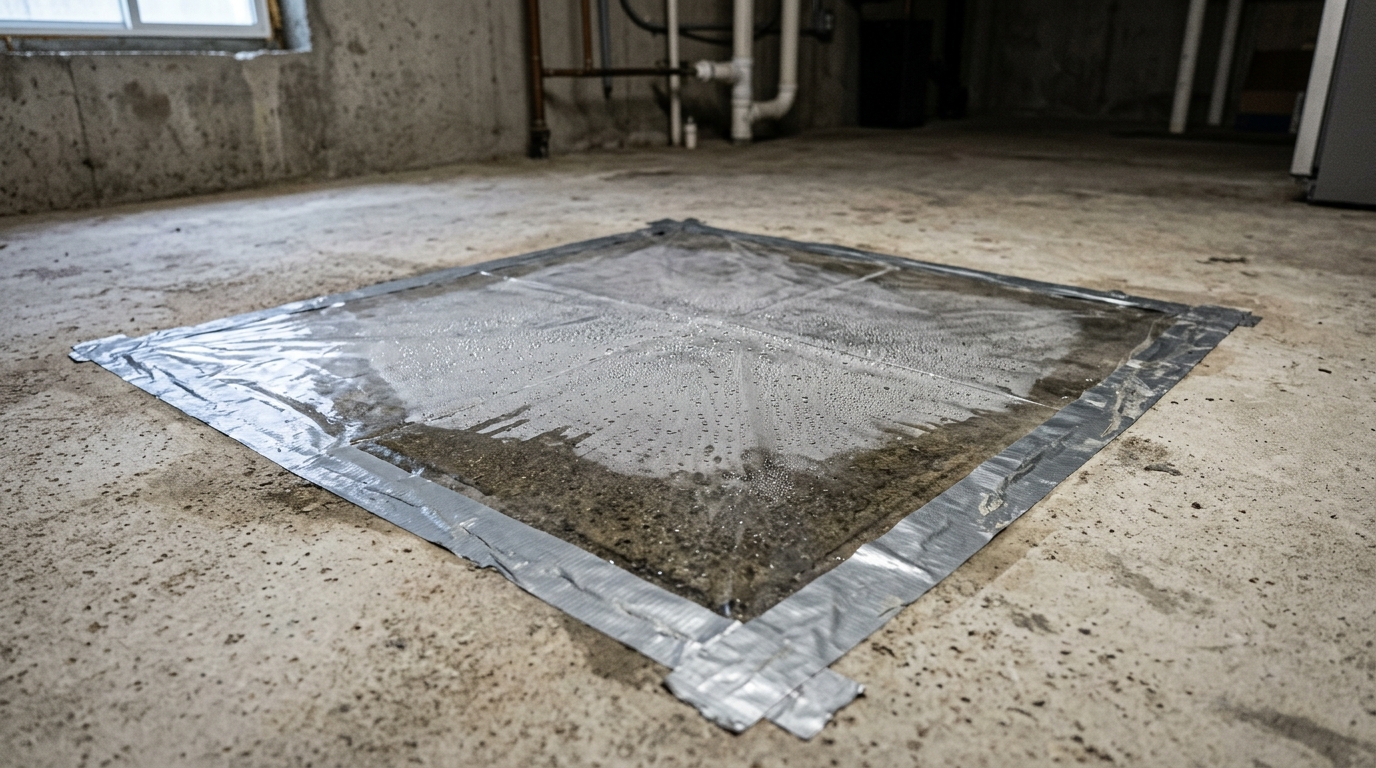
The plastic sheet test after a few days. Water under the sheet and dark concrete mean it is coming up through the slab. Drops on the room side instead would point to damp air.
That one test separates two problems that smell exactly alike and are fixed in opposite ways.
Does a Musty Smell Always Mean Mold in a Spokane Basement?
Not always. But it always means water. And in a basement, that difference matters less than people hope. We went through what actually separates mold from mildew elsewhere. The short version is that where it is growing matters more than what it is called.
Some musty smells come from damp things that are not growing anything yet. Cardboard. Old carpet and padding. Stored paper and cloth. All of them hold smell. Others come from the soil itself, pulled in through an open sump pit or a crack.
UMN lists odor alongside a longer set of warning signs. White crusty deposits on concrete. Flaking concrete. A damp band at the base of block walls. Staining or bubbling on wall coverings.
What we would not do is pay to find out which it is. NC State Extension says mold testing is usually not useful for homeowners. Spores are in every building. A positive result tells you nothing new. The better question is not "is it mold." It is "where is the water." Answer that and you fix both.
Get Your Quote
Ready to handle this with a pro?
You're reading about Why Does a Spokane Basement Smell Musty When the Heat Comes On. Get a fast quote for water damage restoration service in Boise, ID from Apex Restoration.
Why Does a Spokane Basement Smell Musty When the Heat Comes On?
Because your house works like a chimney. And in Spokane it starts pulling hard in October.
UMN explains it simply. Warm air rises. That puts the basement under suction. It pulls damp air in through any crack or opening in the foundation, including an open sump pit. The same pressure pushes that air up through the house. NDSU spells out the result: air moves from wall cavities, basements and crawl spaces into the living space.
So the smell you notice upstairs in late fall is often not new. It is the same basement water you had all summer. The heating season is now spreading it through the house.
Spokane's dry summers make this sneaky. Dry August air holds the smell down while the water stays in the materials. So the problem seems to appear overnight. It has really been building for months.
Two cheap fixes follow. If your sump pit is open, cover it. UMN and UGA both call for a sealed, child-safe lid. An open pit is a direct hole to the soil. And if the smell is strongest at the vents rather than in the basement, the air path matters as much as the water.
Will a Dehumidifier Fix a Musty Smell in a Spokane Basement?
This is where almost every article gets it wrong. The honest answer has two halves.
A dehumidifier helps with the symptom. UGA Extension's mold and moisture checklist is clear. Check indoor humidity with a meter. If it is over 50 percent, consider running one. Lower humidity really does make growth harder.
But it does not fix anything. And in a wet basement it can hurt. UMN is unusually direct here, and we have not seen a single competitor mention it: "if a dehumidifier is used in a basement with moisture problems, it may cause greater damage. By drying out the basement air, moisture is drawn into the basement more rapidly causing efflorescence and spalling of concrete and further damage to interior finishes."
The logic is worth following. Water moves from wet toward dry. If you dry the air on the inside of a wall that is wet on the outside, you widen that gap. So you pull more water through the concrete, not less. You are not stopping the water. You are speeding it up and catching it in a bucket.
The same warning goes for the other popular shortcut. UMN notes that a waterproof paint or coating on the inside "seems to work for a time in some cases." But "the water is still there." Sooner or later those coatings fail, or the water just finds another way in.
Run the dehumidifier if the humidity is high. Just do not think it fixed anything.
How Do You Get Rid of a Musty Smell in a Spokane Basement for Good?
UMN's order is the right one. It goes cheapest first on purpose. Work through it in order instead of jumping to the expensive end.
Cut the water you are making inside. Vent the dryer outside. Vent the bathroom. Stop running a humidifier in a damp basement. This costs almost nothing and gets skipped constantly.
Do not open windows on a warm damp day. That air turns back into water on cool basement walls and floors. UMN notes that people often read that as a leak in the wall.
Fix the grading, gutters and downspouts. This is where most basement water problems actually get solved. UMN gives real numbers. Slope the ground away from the house at least one inch per foot for at least six feet. Run at least one downspout per 50 feet of roof edge. Extend the discharge at least four feet from the wall. A downspout with no extension, they note, is worse than no downspout at all. It dumps the whole roof in one spot next to your basement.
Only then look at a drain system. Inside or outside. This is the costly end. Doing it before the three steps above often means paying to manage water you could have redirected for far less.
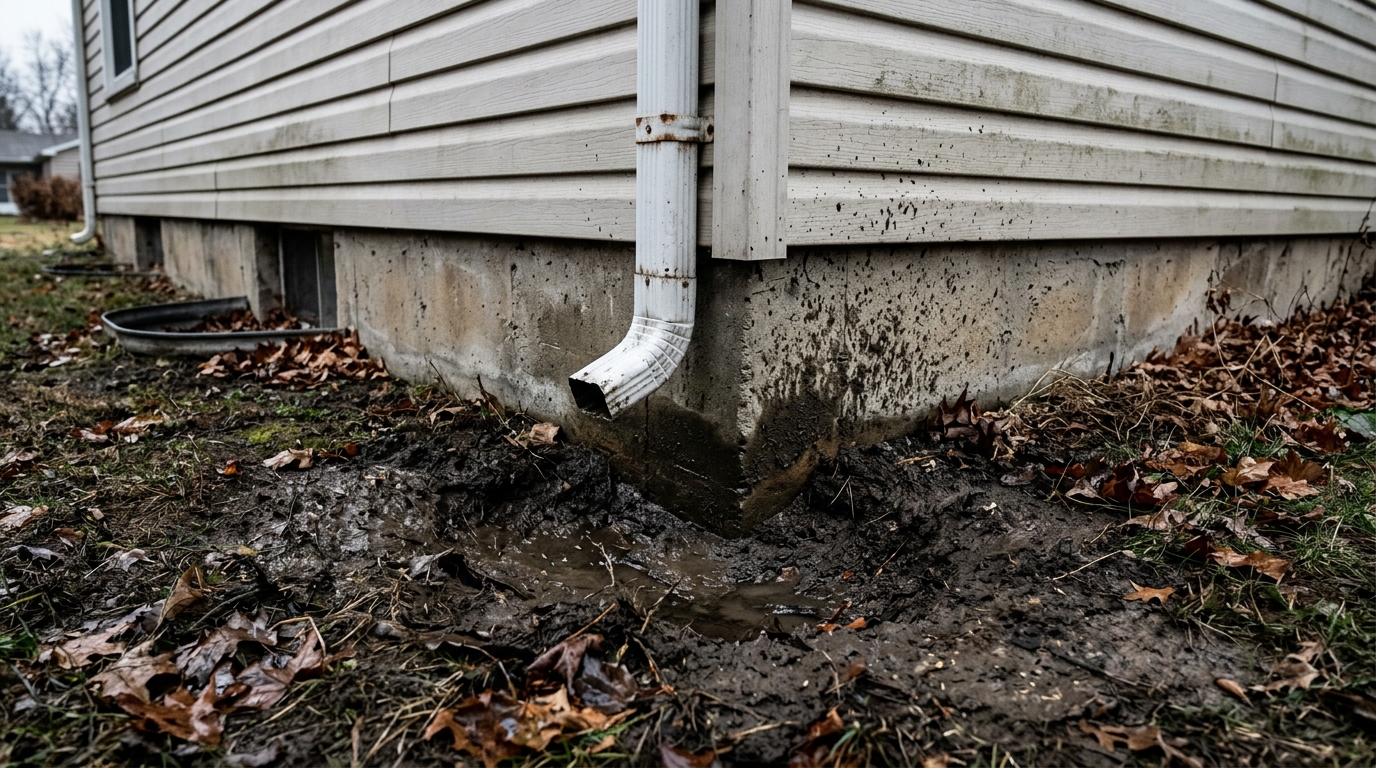
A downspout with no extension, dumping the roof's water right against the foundation. UMN's point is that this is worse than having no downspout at all.
Two things on that list are Spokane-specific. Our runoff comes as melting snow as much as rain. So grading and downspout extensions have to work when the ground is frozen and water is sheeting off instead of soaking in. And window wells, which UMN calls "like a drain right next to the basement wall," fill with snow all winter and then let it go all at once in a thaw.
Get Your Quote
Ready to handle this with a pro?
You're reading about When Should Spokane Homeowners Worry About a Musty Basement Smell. Get a fast quote for water damage restoration service in Boise, ID from Apex Restoration.
When Should Spokane Homeowners Worry About a Musty Basement Smell?
Most musty basements are a water problem you can work through yourself using the order above. The point where we would rather you called someone is narrower than the internet suggests.
Work through it yourself when the smell is general rather than in one spot, nothing looks wet, things feel dry to the touch, and you have not done the cheap steps yet. Start at the top of that list.
Get it looked at when any of these are true:
There is standing water, or water running from a wall.
The smell is strong at one wall or one part of the floor. That means it is in the wall, not the air.
Finished materials are involved. Carpet and padding, framed walls, ceiling tile. Soft materials that got wet do not recover just because you dried the room.
It followed a water event. A failed sump pump, a burst pipe, snowmelt through a window well.
The smell got worse when the heat came on. That means it is moving through the house now.
Anyone in the house has asthma or bad allergies.
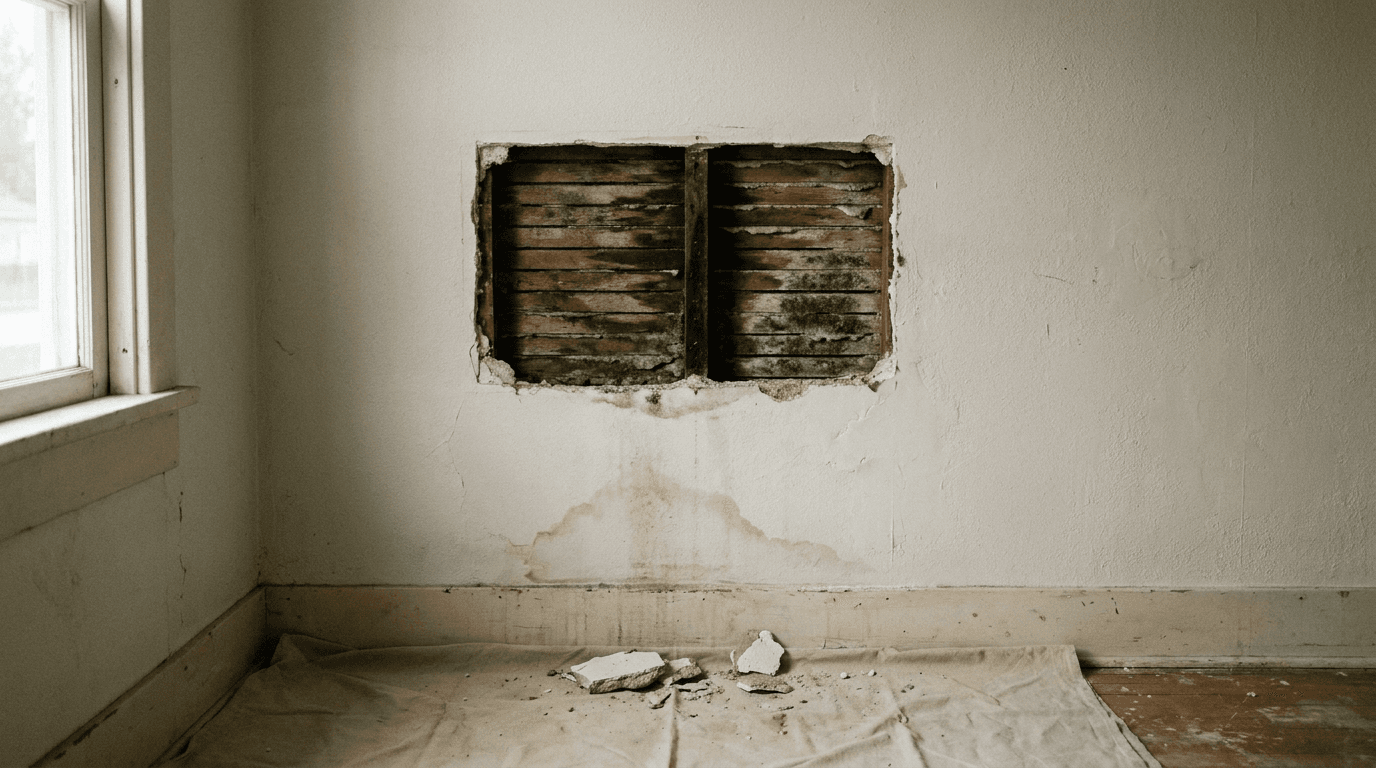
When it does cross that line, the work is not covering up a smell. It is finding the water, stopping it, taking out soft material that cannot dry in place, and drying the space to a number you can measure. That is what our mold cleanup work involves. It starts with the water, not the growth. Take out growth without fixing the water and you just book the next visit. If the smell traces back to one water event rather than steady damp, how a leak turns into a mold problem covers that in more detail. And if it is coming from one wall rather than the whole room, checking behind the drywall is the next step.
The Bottom Line on a Musty Smell in a Spokane Basement
The smell comes from growth. But it is a water problem in disguise. There are only three places the water can come from. Outside as liquid. Inside from your own household. Or out of damp air landing on cool surfaces. The plastic sheet test tells the ground-side ones from the air-side ones for the price of a roll of tape.
Fix it cheapest first. Cut the water you make indoors. Stop airing the place out on damp days. Then fix grading, gutters and downspouts before anyone sells you a drain system. Run a dehumidifier if humidity is over 50 percent. Just do not believe it solved anything, and know that in a truly wet basement it can pull water through the walls faster.
In Spokane, watch the timing. If the basement smelled fine all August and turned musty in October, nothing new broke. The heating season simply started moving air that was already carrying it. That is a good moment to find the source instead of covering it up.
Apex Restoration Team
Water Damage & Restoration Specialists
We're the Apex Restoration team — a family-owned, IICRC-certified crew handling water damage, mold, and abatement across Boise, the Treasure Valley, and Eastern Washington & North Idaho. We answer 24/7 and write these guides to help homeowners make calm, informed decisions when water, mold, or hazards show up.
Related Posts
Does Homeowners Insurance Cover Mold Removal in Caldwell?
Homeowners insurance can pay for mold removal in a Caldwell home when the mold traces back to a covered water event, often only up to a limit. Here's how that limit often works, what an adjuster weighs, and what to tell your insurer.
What Should You Do When a Star Garage Floods?
When a water heater or washer floods a Star garage, stay clear of anything electrical the water reached, stop it at the source, and move it away from the house wall. Here's what to check next, and which board Idaho's code calls for when that wall is repaired.
How Do You Find a Water Leak in a Middleton Wall?
A leak inside a Middleton wall can show up in the water bill, a faint running sound or a bubbling paint seam before any stain appears. Here's how to narrow it down, what the City's meter rules mean for you, and when opening the wall makes sense.