
Signs of Mold Behind Drywall Spokane: How to Check a Wall

Worried about the signs of mold behind drywall in your Spokane home? We can help. Whether you are on the South Hill, out in Spokane Valley, or over in Coeur d'Alene, here is what to look for, what it means, and when to open the wall.
Search this topic and you get the same soft list every time. A musty smell. Some staining. Maybe peeling paint. All of it is true. None of it settles anything. You are standing in front of a wall trying to decide whether to cut into it. A list of maybes does not help.
We handle water damage restoration in Spokane, and opening walls is a normal part of the job. Here is what actually tells us something, what does not, and the numbers that settle it.
Get Your Quote
Ready to handle this with a pro?
You're reading about What Are the First Signs of Mold Behind Spokane Drywall. Get a fast quote for water damage restoration service in Boise, ID from Apex Restoration.
What Are the First Signs of Mold Behind Spokane Drywall?
The signs worth trusting are tied to water. Water is the thing you can measure. Growth comes after it.
A musty smell with nothing to see. Usually the earliest warning. Also the one people talk themselves out of.
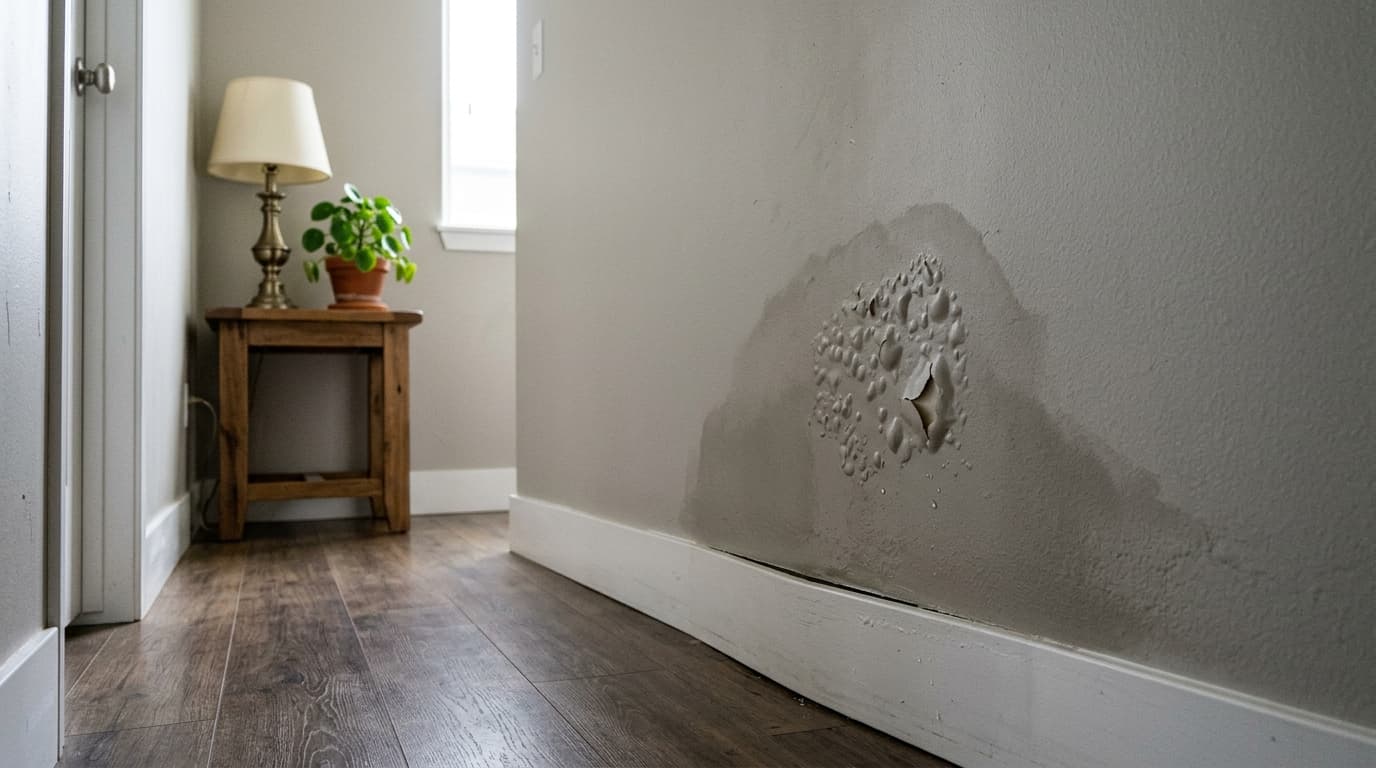
Paint or wallpaper bubbling or lifting in one patch, not across the whole wall. Paint lets go where the wall behind it is wet.
A stain that comes back after you paint over it. If it bleeds through fresh paint, something is feeding it from behind.
Drywall that feels soft or cool when you press it. Or a crack opening along a taped seam.
Baseboard pulling away from the wall, or trim curling at the bottom.
Sagging or bowing. UGA Extension's mold and moisture checklist lists staining, sagging, bowing and wet spots as what to look for on walls.
One thing is missing from that list on purpose. Symptoms. Plenty of pages will tell you that sneezing means mold in your walls. People do react to mold, and that is real. But working backward from how you feel to one wall in your house is a guess. Look at the building instead.
How Do You Tell Mold Behind Drywall From a Water Stain in Spokane?
This is the question we would rather you asked. The two look alike and mean different things. It is also worth knowing that the mold-versus-mildew question people reach for first is not the one that decides what to do.
A water stain is a record. Mold behind drywall is a live problem. A stain tells you water was there once. It might be from a pipe fixed two winters ago. The wall may have dried out and stayed dry. Old stains are common in older Spokane homes. Most of them are history.
What tells them apart:
Edges. An old dry stain often has a hard edge. One still being fed can show a softer edge, or a second faint ring outside the first. Treat this as a hint, not a test.
Feel. A stain on solid drywall is flat and firm. Where growth has set in behind it, the board gets soft.
Smell. An old dry stain does not smell. If a stained spot also smells musty, the water never left.
Repeat visits. A stain that comes back after painting is the clearest sign of all.
The honest answer is that you cannot fully tell from the outside. Neither can we. That is why the next part matters.
Where Do You Find Mold Behind Drywall in a Spokane Home?
Growth follows water. In Spokane, water gets into walls in a few predictable ways.
Pipes inside outside walls. Spokane gets 132 nights a year below freezing. About 31 of those drop to 20 degrees or colder. A pipe running through an outside wall can freeze and split. The water goes straight into the wall. Nothing shows on the painted side for a while. That makes this the worst version.
Under and around windows. Bad flashing and old seals let water into the wall below the sill. UGA's checklist calls out looking for peeling drywall near window frames.
Walls shared with a bathroom or kitchen. A slow drip wets the wall from the plumbing side. The first thing you see is often in the next room over.
The bottom of basement walls. Water creeps up from the floor slab. The damage sits low. The wall looks fine at eye level.
The cold side of outside walls in winter. Warm damp indoor air pushes into the wall and hits cold sheathing. It turns back into water there. Growth starts on the back of the drywall. It can run a whole winter before it shows.
That last one is the one we see most in Spokane's older core neighborhoods. Many homes on the South Hill, in Browne's Addition and around West Central have been insulated and sealed up since they were built. When you add a plastic vapor barrier to a wall that used to dry out, the wall can start holding water it used to shed.
Get Your Quote
Ready to handle this with a pro?
You're reading about Why Does Mold Behind Drywall Stay Hidden in Spokane Homes. Get a fast quote for water damage restoration service in Boise, ID from Apex Restoration.
Why Does Mold Behind Drywall Stay Hidden in Spokane Homes?
Because drywall only shows you one side. You are looking at the paint. The growth is on the back.
North Dakota State University Extension spells out how this works. In guidance from farm engineer Ken Hellevang on drying out a house, he notes that "mold will grow in closed wall cavities, such as on the back of drywall." And here is the line that matters most: "building materials may be wet even though they appear dry on the surface."
Two things follow from that. Together they answer the fair question of why you should care about something you cannot see.
First, the inside of the wall is not sealed off from you. Hellevang notes that "air moves from wall cavities, basements and crawl spaces into the living space." What is in the wall does not stay in the wall.
Second, and this keeps it in proportion. Growth starts long before the wood is in trouble. Hellevang says keeping wood at 15 percent water content or less holds mold back. But wood "may not decay until exceeding a moisture content of about 20 percent." So "mold growth likely will occur in wall cavities at moisture levels below decay-causing levels." Your wall can be growing mold while the wood inside it is still solid. That is a reason to deal with it early. It is not a reason to panic about the house falling down.
Can You Smell Mold Behind Drywall in a Spokane Basement?
Often, yes. It is usually the first thing anyone notices.
The smell travels out of a wall even when nothing has reached the surface. If you smell something musty near one wall and see nothing, that pairing tells you a lot. It means the gases are coming from inside the wall.
Here is a way to narrow it down with no tools. Use the outlets. Electrical boxes and switch plates on an outside wall open right into the wall cavity. They are the closest thing to a vent that wall has. We do this on most calls where someone can smell something but cannot place it. Work along the wall at outlet height. See if one spot smells stronger than the rest of the room.
Two cautions. If the whole basement smells musty and no single wall stands out, that is a different problem. See tracing a musty Spokane basement to its source instead of treating it as a wall issue. And our dry summers hide the smell. August air is dry enough that a wet wall may say nothing until the furnace runs in October and the house closes up.
How Do You Look for Mold Behind Drywall in a Spokane Home?
Here is the part almost every article gets wrong. So we will be blunt about it.
A moisture meter does not find mold. NDSU is clear: the meters "only measure moisture content; they do not determine if mold is present." And "meters are not available to detect mold growth." A meter is still the best tool you can put on a wall. Just know what it tells you. It finds the water. The water is what predicts the growth.
Store-bought test kits are not the answer either. Hellevang says kits from stores or online "do not provide accurate information." He does not recommend homeowners test for mold at all. UGA's checklist lands in the same place: "generally there is no need for a mold test. Once you identify the source of moisture and repair it, that should resolve the problem."
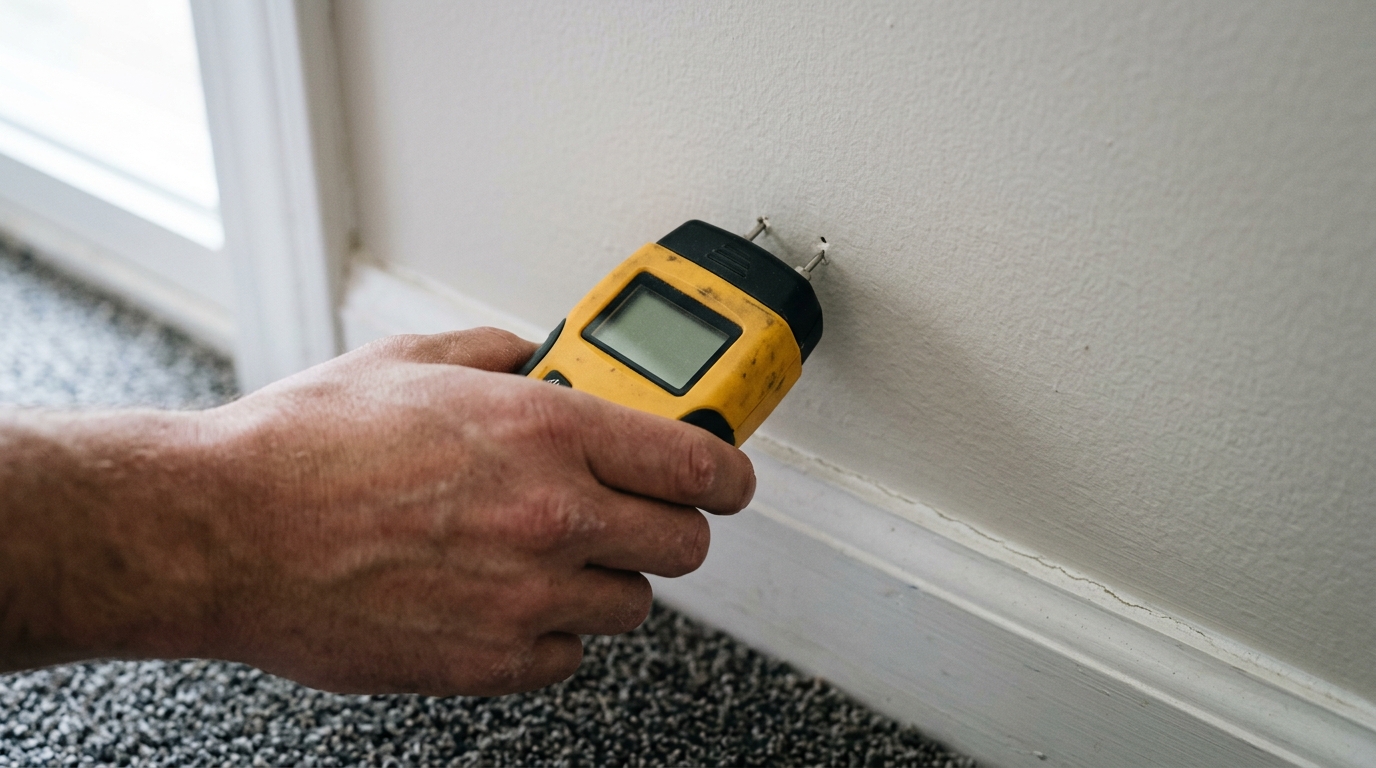
A meter finds the water, not the growth. One reading tells you nothing by itself. What helps is the difference between this wall and one you know is dry.
Here is what is actually worth doing, in order:
Check the humidity. UGA keeps it simple. Read indoor humidity with a meter or humidistat. If it is over 50 percent, consider running a dehumidifier.
Meter the wall, and compare. One reading means nothing. Take readings across the wall you suspect. Then take some on a wall you know is dry. Look at the gap between them.
Look behind vinyl wallpaper. UGA's checklist calls this out. Our own reason for flagging it: vinyl acts like a plastic sheet in the wrong place. It holds water against the drywall instead of letting it dry.
Test the bathroom fan. UGA's version is free and takes ten seconds. Run the fan. Hold one sheet of toilet paper up to it. If the paper does not stick, the fan is not moving much air. Worth fixing before you look anywhere else.
Look where you can already see inside. Pull an outlet cover. Look at the back of the cabinet under the sink. Lift a corner of carpet by the wall. Check above a drop ceiling tile.
If the humidity is normal, the meter matches your dry wall, and there is no smell, you have done a thorough check. The answer is probably no.
Get Your Quote
Ready to handle this with a pro?
You're reading about When Should Spokane Homeowners Cut Into Drywall to Find Mold. Get a fast quote for water damage restoration service in Boise, ID from Apex Restoration.
When Should Spokane Homeowners Cut Into Drywall to Find Mold?
Cutting is how you know for sure. It is also permanent. So it helps to know when it is worth doing.
Do not cut yet if all you have is an old dry stain with no smell and a normal meter reading. Or a musty basement with no single wall standing out. Or a hunch based on how someone feels. None of those tells you where to cut. A hole in the wrong place answers nothing.
It is fair to open the wall when the meter shows a clear wet spot you cannot explain. Or a stain has come back through fresh paint. Or the board has gone soft. Or you had a known leak in that wall and never confirmed it dried.
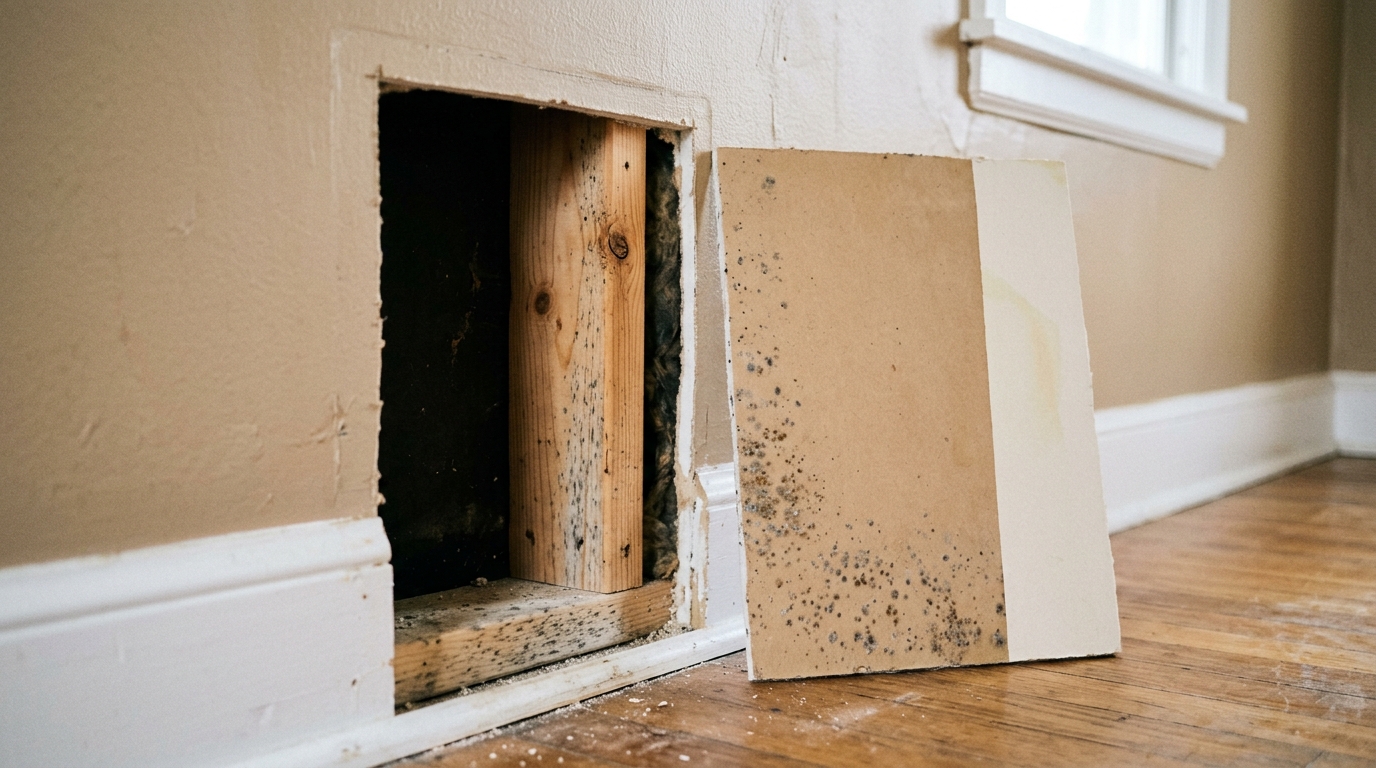
The same piece of drywall, turned over. The painted side showed almost nothing. The back is where the growth was. This is what catching it early looks like.
If you do cut, two things matter. Keep the opening small and low, where water collects. And close off the room first. This is not about drama. Disturbing growth is exactly how it spreads to the rest of the house. UGA's checklist opens with that same warning. Looking for mold can spread it, which is a real risk for anyone in the house with asthma or allergies.
The point where we would rather you called us is simple. If the opening shows the wet area is bigger than the hole, stop. At that stage the useful work is not naming the growth. It is finding the water and drying the wall to a number you can check. Fifteen percent or less, measured, not guessed. That is what our mold cleanup work is for. It starts with the water, not the growth. Take out growth without fixing the water and you just book the next visit. If the wall got wet from a leak rather than from damp air, how a leak turns into a mold problem covers that in more detail.
The Bottom Line on Mold Behind Drywall in Spokane
The soft signs everyone lists are real. A musty smell, staining, peeling paint. But they are a reason to look closer, not an answer. What turns them into an answer is water. Measured, compared to a dry wall, and explained.
Keep three numbers in mind. Indoor humidity over 50 percent needs a dehumidifier. Wet stuff should dry within 24 to 48 hours. Wood at 15 percent water content or less is the target that keeps mold from taking hold, and it sits below the point where the wood itself is at risk.
In Spokane, watch for a wall that got wet in winter. A split pipe in an outside wall. Or a season of warm indoor air turning to water against cold sheathing. Both put water on the back of the drywall where nothing shows. If you can smell it and cannot find it, or a stain keeps coming back through the paint, that wall is worth a proper look before the heat comes on again.
Apex Restoration Team
Water Damage & Restoration Specialists
We're the Apex Restoration team — a family-owned, IICRC-certified crew handling water damage, mold, and abatement across Boise, the Treasure Valley, and Eastern Washington & North Idaho. We answer 24/7 and write these guides to help homeowners make calm, informed decisions when water, mold, or hazards show up.
Related Posts
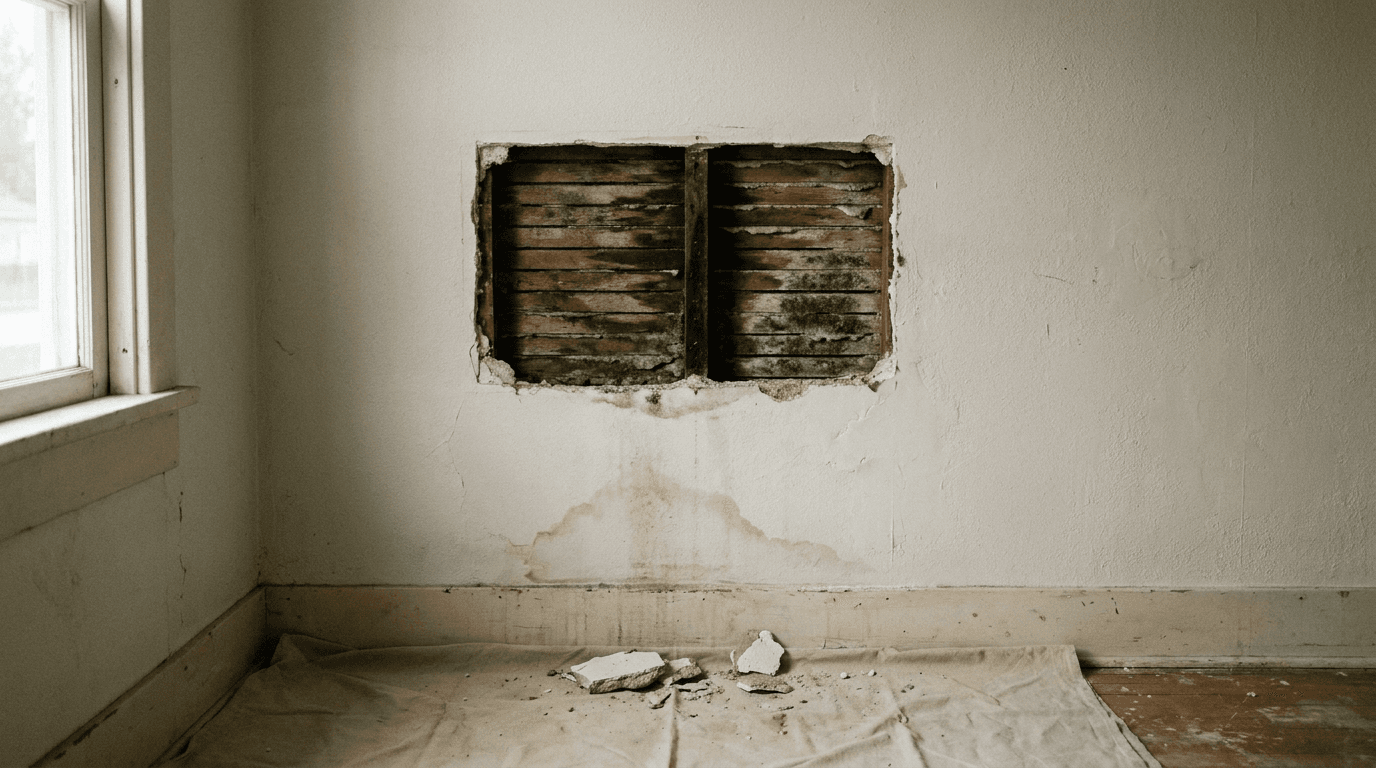
Does Homeowners Insurance Cover Mold Removal in Caldwell?
Homeowners insurance can pay for mold removal in a Caldwell home when the mold traces back to a covered water event, often only up to a limit. Here's how that limit often works, what an adjuster weighs, and what to tell your insurer.
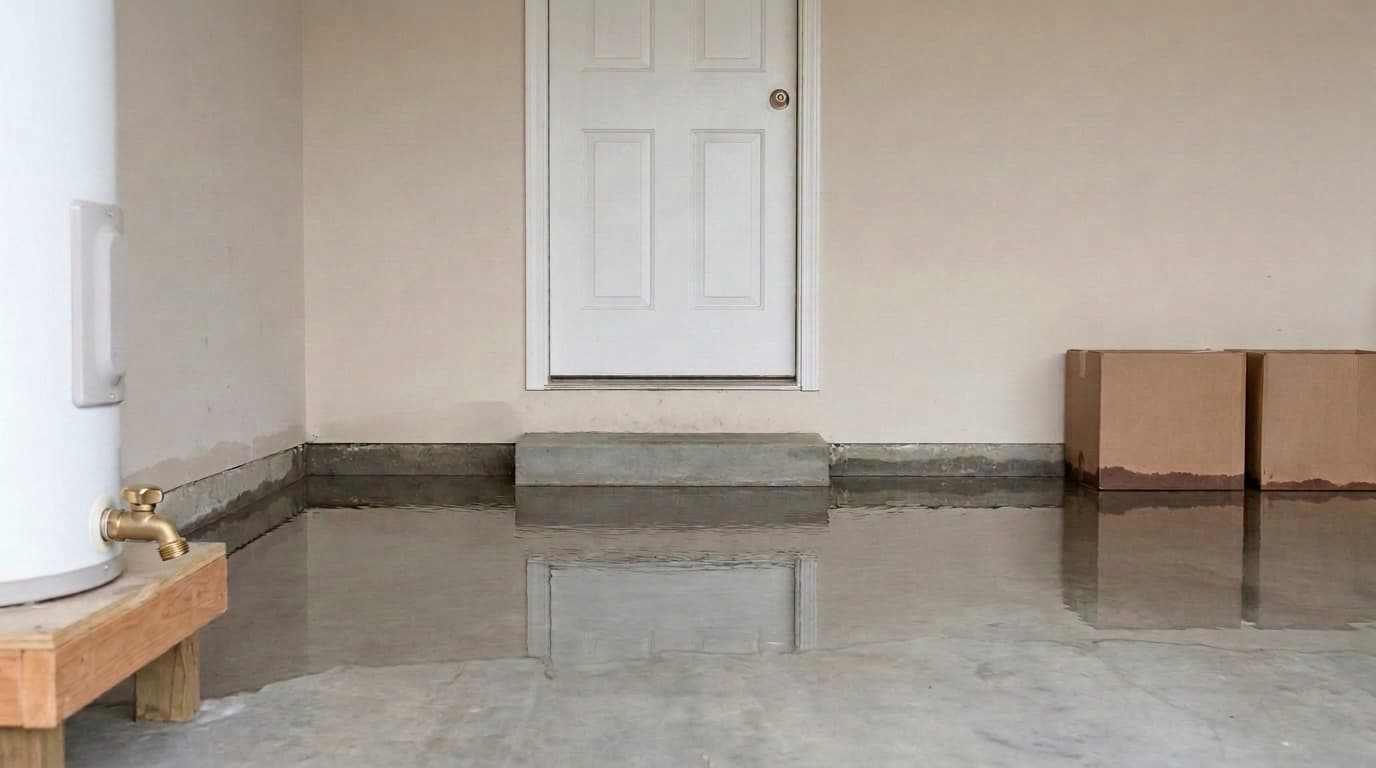
What Should You Do When a Star Garage Floods?
When a water heater or washer floods a Star garage, stay clear of anything electrical the water reached, stop it at the source, and move it away from the house wall. Here's what to check next, and which board Idaho's code calls for when that wall is repaired.
How Do You Find a Water Leak in a Middleton Wall?
A leak inside a Middleton wall can show up in the water bill, a faint running sound or a bubbling paint seam before any stain appears. Here's how to narrow it down, what the City's meter rules mean for you, and when opening the wall makes sense.