
Do You Need a Permit to Repair Fire Damage in Eagle?
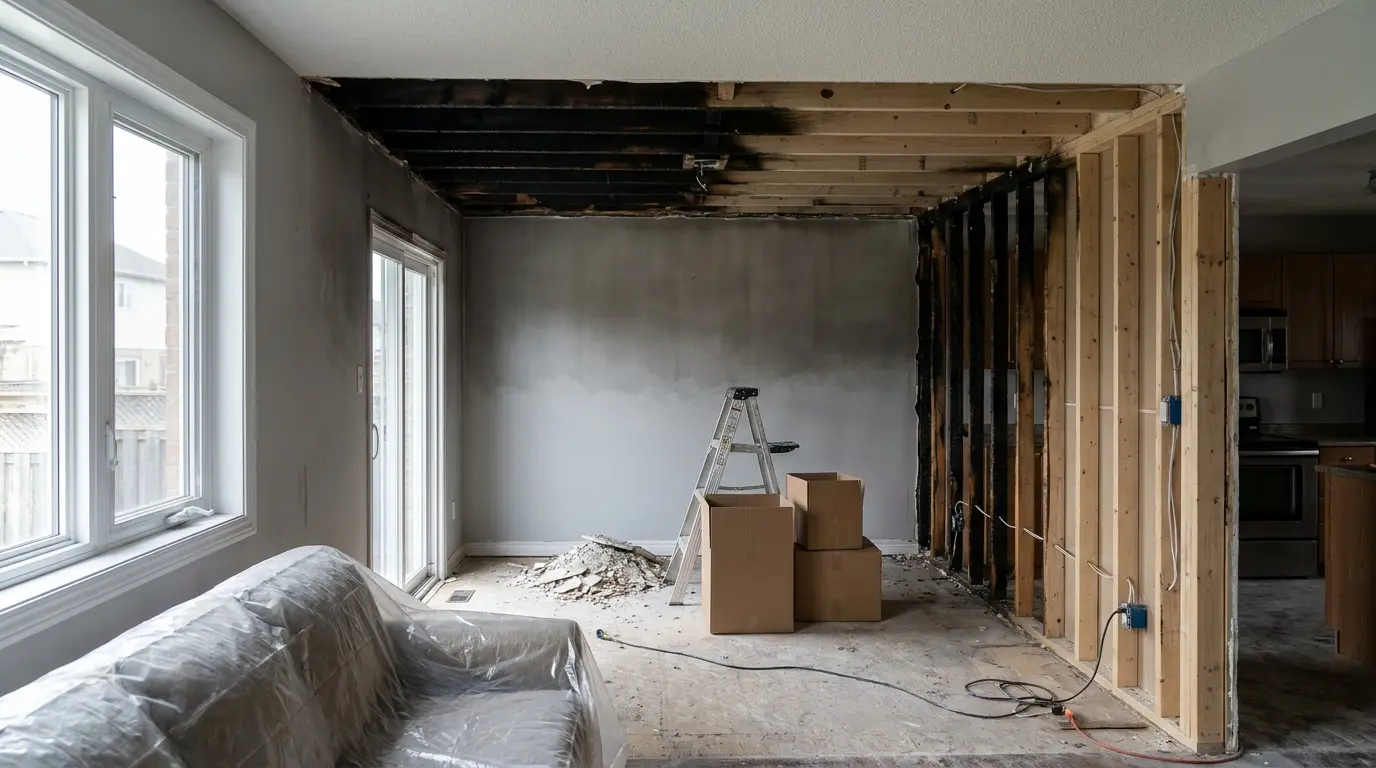
Yes, plan on needing one. A fire repair is a repair, and the City of Eagle Building Division lists repair, along with replacement, removal and demolition, among the work on a house that needs a building permit. You can still fix some things without one, because Eagle's code lets ordinary repairs go ahead with no application or notice. An ordinary repair can't include cutting away a wall or part of one, cutting or removing a structural beam or load-bearing support, or removing or changing a required way out, though, and it can't include adding, altering, replacing or relocating gas piping, combustion vents, electric wiring or mechanical work.
Below, we walk through where Eagle draws that line, the narrow emergency rule, the floodplain review some homes get, how long a permit lasts and who deals with the city. Our part of a fire job is the fire damage restoration that comes before the rebuild, and the rebuild itself is carried out by a reconstruction partner.
Get Your Quote
Ready to handle this with a pro?
You're reading about Does Repairing Fire Damage in an Eagle Home Need a Building Permit. Get a fast quote for water damage restoration service in Boise, ID from Apex Restoration.
Does Repairing Fire Damage in an Eagle Home Need a Building Permit?
In the city's own terms, yes. The Building Division's list of work that needs a building permit runs from "New Construction" to "Repair", "Removal" and "Demolition", and it covers "every Residential and Commercial structure" in the city. The list doesn't single out fire damage, so a fire repair falls under "Repair".
That's why the city puts the question before the work. A building permit, in its words, "gives you legal permission to start construction of a building project in accordance with approved drawings and specifications". One exception is the ordinary repair, which needs no application, and the next section shows what it leaves out.
Two limits apply to everything below. These are the City of Eagle's rules, so if you aren't sure whether your address falls under the city or the county, ask the Building Division. And the code online is a published copy; the official version sits with the city, so confirm anything that matters for your project with the Building Division.
Which Fire Repairs Need an Eagle Building Permit, and Which Are Ordinary Repairs?
Eagle's code lets ordinary repairs go ahead with no application or notice to the building official, then fences off what an ordinary repair can't include. Under section R105.2.2 of Eagle City Code 7-1A-4, the city's amendments to the International Residential Code, a job is not an ordinary repair if it involves:
cutting away any wall, partition or portion of one
removing or cutting any structural beam or load-bearing support
removing or changing a required means of egress (a required way out of the house), or rearranging parts of the structure in a way that affects egress
adding, altering, replacing or relocating gas piping, combustion vents, electric wiring or mechanical work, or other work affecting public health or general safety
Hold a fire job up against that list. For example, replacing a charred floor joist, or a stud in a wall that carries load, is structural work, and removing or changing an exit door that serves as the house's required way out is on the list too. Cutting out burned drywall is less clear: the section excludes "the cutting away of any wall, partition or portion thereof" without saying whether that reaches a wall's drywall, so ask the Building Division before it comes out. The last item, the systems behind the walls, gets its own section below.
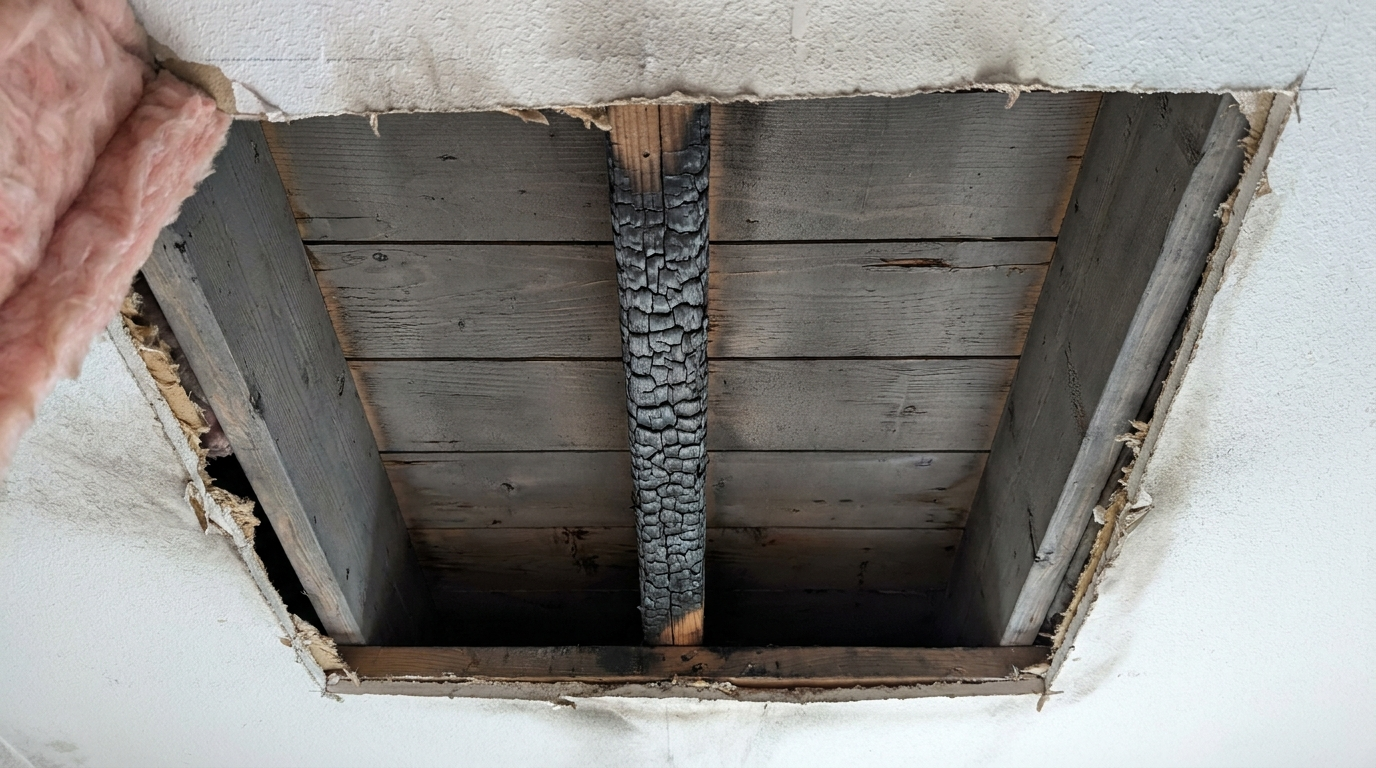
What stays ordinary? Beyond "ordinary repairs to structures", the section's only examples are replacing lamps and plugging approved portable electrical equipment into approved, permanently installed receptacles. It doesn't spell out which smaller fire repairs count, and the city's advice for anything in between is direct: "Never guess if you need a permit or not."
Two related cases have their own guides. If the fire reached the wall between an attached garage and the house, that wall's drywall has a code requirement of its own, set out in our Star garage wall repair guide. And if the materials coming out might contain asbestos, testing comes before demolition, which our guide to asbestos in older Boise homes walks through.
Can Emergency Equipment Repairs Start Before the Permit Application After a Fire in Eagle?
Yes, for equipment, and only when the work has to happen in an emergency. Eagle's emergency repair rule, section R105.2.1, reads in full: "Where equipment replacements and repairs must be performed in an emergency situation, the permit application shall be submitted within the next working business day or at a time required by the building official."
Three things follow from that sentence. The rule changes the timing, not the requirement: the application still goes in, by the next working business day unless the building official sets a different time. It covers equipment replacements and repairs, not the building around them, so it doesn't reach structural repairs, tear-out or the rebuild. And it turns on an emergency, a word the sentence doesn't define.
For example, replacing a charred load-bearing stud or cutting away a burned wall isn't equipment work, so the emergency rule doesn't cover either. Section R105.2.2 keeps both out of ordinary repairs, so they follow the normal order, with the permit before the work. The emergency rule doesn't list which equipment or situations qualify, so ask the Building Division how it applies to your job, before the work if you can, and file by the next working business day or whatever time the building official sets.
Get Your Quote
Ready to handle this with a pro?
You're reading about Do Wiring, Gas and Mechanical Replacements After a Fire Count as Ordinary Repairs Under Eagle's Code. Get a fast quote for water damage restoration service in Boise, ID from Apex Restoration.
Do Wiring, Gas and Mechanical Replacements After a Fire Count as Ordinary Repairs Under Eagle's Code?
No. Eagle's ordinary-repair section ends with this line: "nor shall ordinary repairs include addition to, alter of, replacement or relocation of any, gas piping, combustion vent, electric wiring or mechanical or other work affecting public health or general safety." So replacing fire-damaged wiring, a gas line or a combustion vent (such as the flue that takes a gas furnace's or water heater's exhaust outside) is a replacement under that line, and the ordinary-repair exemption doesn't reach it.
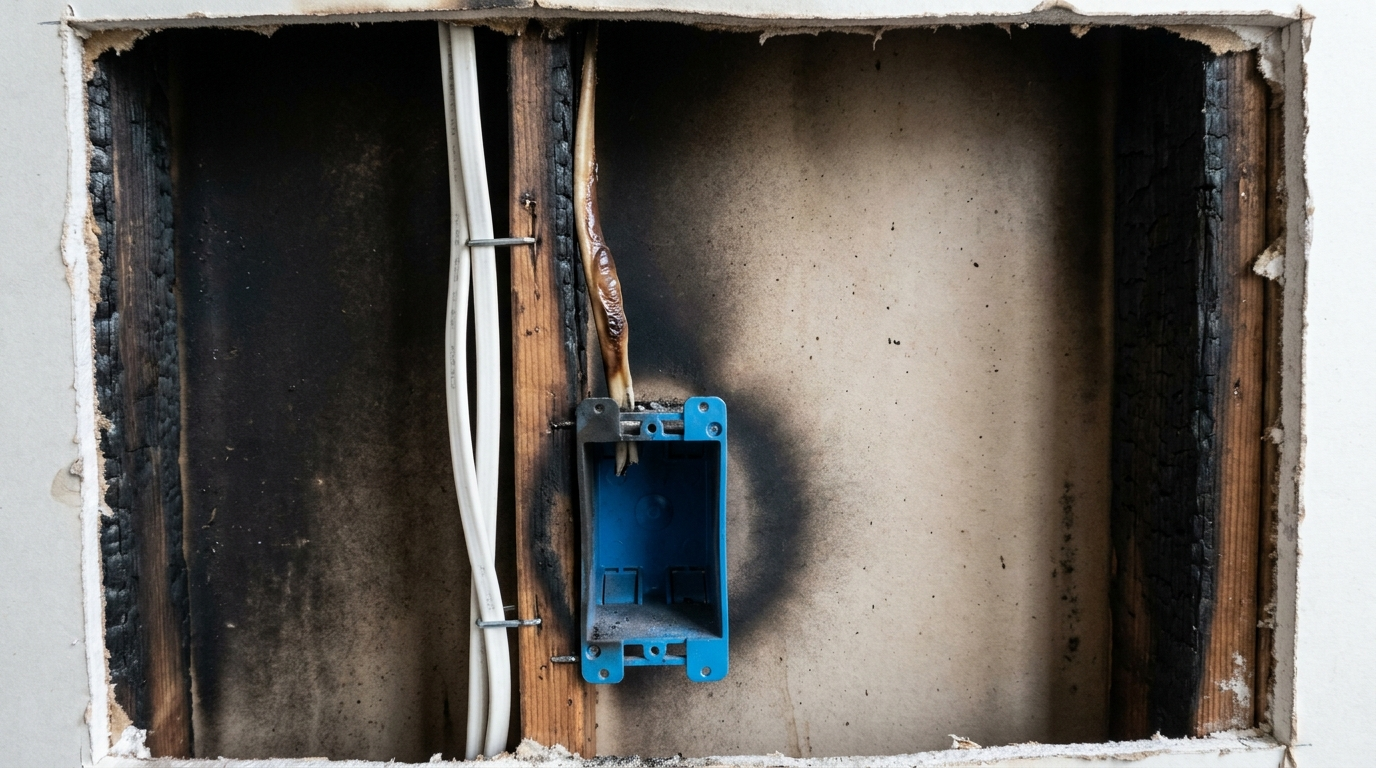
Look at the verbs, though. The line is about adding, altering, replacing or relocating those systems. It says nothing either way about a plain repair to them, so that section doesn't settle whether a smaller fix needs an application. The list also ends with "or other work affecting public health or general safety", so it isn't limited to the systems it names.
Timing in an emergency is the separate rule in the section above; this one is about whether the work needs an application at all. For example, if an electrician plans to replace the wiring run in a burned room, that's a replacement under the rule. For a fix you can't place, ask the Building Division about your house before any of that work starts.
Why Does a Fire Repair Permit Get a Floodplain Review for Some Eagle Homes?
Because the house sits in an area prone to flooding, and Eagle's code counts damage "of any origin", a fire included, when it values the work. Under section R105.3.1.1, when someone applies to reconstruct, rehabilitate, add to or otherwise improve an existing building in an area prone to flooding, the Eagle city floodplain administrator examines, or has someone examine, the construction documents. A fire repair that reconstructs or rehabilitates part of the house fits that description.
The fire matters because of the next sentence: "For buildings that have sustained damage of any origin, the value of the proposed work shall include the cost to repair the building or structure to its pre-damage condition." In plain terms, the cost of putting the fire damage right counts toward the value of the project. The same section adds that a substantially improved or reconstructed building has to meet the Eagle city flood control ordinance, and it doesn't say where "substantially improved" begins, so that's a question for the floodplain review, not a rule of thumb.
Which homes does this touch? The code ties "area prone to flooding" to its table of design criteria, which points to Eagle's floodplain ordinance and the flood maps the city has adopted. So on a house in a flood-prone part of Eagle, a large fire repair can bring flood rules into a project that had nothing to do with water. Ask the Building Division early whether your address is in one, before the scope is settled.
How Long Does an Eagle Fire Repair Permit Stay Valid Once Work Starts?
There isn't one fixed term. Under section R105.5 of Eagle's code, a permit expires if the work is "suspended or abandoned at any time after the work is commenced for a period of 180 calendar days", and the code measures that period from "the date of the last major inspection that resulted in an approval to move to the next stage of construction", or from the date the permit was issued if no inspection has been required.
So the count runs from the last approved major inspection, not from the last day someone worked on the house. Section R105.5 says the major inspections the city can require include framing and lath or gypsum board (drywall) inspections, so if the city requires them on a repair that replaces framing and drywall, each approved one restarts the count. The building official may also extend a permit for a holder's good-faith effort.
Before work starts, the same section sets a separate limit: the permit expires if the work is "not commenced within 180 calendar days from the date of such permit". Under that section, the building official may extend the start once, by up to 180 calendar days, on a written request showing a good-faith effort and a delay beyond the holder's control. If a permit does expire, the work can't restart until a new permit is issued.
The application has its own, separate clock. Under section R105.3.2, an application is "deemed to have been abandoned 180 days after the date of filing unless such application has been pursued in good faith or a permit has been issued". If a fire repair stalls, waiting on a scope, materials or a crew, it helps to know which clock you're on and to call the Building Division before either one runs out.
Get Your Quote
Ready to handle this with a pro?
You're reading about Who Handles the Permit and Inspections on a Fire Repair in an Eagle House. Get a fast quote for water damage restoration service in Boise, ID from Apex Restoration.
Who Handles the Permit and Inspections on a Fire Repair in an Eagle House?
The permit holder and the Building Division, from the application to the final inspection. The holder can be the contractor doing the rebuild or the owner. Eagle's code lets a permit transfer to another party with the original holder's signed, notarized consent, and back to the property owner, or the owner's designated legal agent, if the owner ends the relationship with the contractor (section R105.10). So ask who will hold yours before the work starts.
The application goes in with the required documents and building plans, and a plan reviewer checks them against the code, marking problems on the plans or calling to talk them through. Once the permit is issued, the code official inspects the work on site, and when the work is done, a final inspection and a final certificate close it out. Work doesn't go past each inspection point until the building official approves it (section R109.4). For example, if the job calls for a framing inspection, the new framing stays open until it passes. You can look up a permit and its inspections by address in the city's online Contractor Portal.
Our part comes before the rebuild. We handle fire and smoke damage, the rebuild is carried out by a reconstruction partner, and we leave the space ready for them. What happens in the first days, from re-entry and board-up to drying, is laid out in our guide to the first days after a house fire.
The Bottom Line on Fire Repair Permits in Eagle
A fire repair is a repair, and Eagle's permit list names repair, along with replacement, removal and demolition, among the work that needs a building permit.
Ordinary repairs need no application, but they exclude cutting away walls or parts of them, cutting or removing structural beams or load-bearing supports, removing or changing a required way out, and adding, altering, replacing or relocating gas piping, combustion vents, electric wiring or mechanical work.
Under Eagle's emergency rule, equipment replacements and repairs that must be done in an emergency can go first, with the application due within the next working business day or at a time the building official sets. The rule doesn't reach structural repairs, tear-out or the rebuild.
In an area prone to flooding, the city's floodplain administrator examines the construction documents for reconstructing, rehabilitating or otherwise improving a house, and damage of any origin, fire included, counts toward the value of the work.
Under Eagle's code, a permit expires after 180 calendar days of suspension or abandonment, counted from the last approved major inspection or, if none has been required, the issue date. Under the same code, an application is treated as abandoned 180 days after filing unless it's pursued in good faith or a permit has been issued.
The permit holder, whether the rebuild contractor or the owner, works with the Building Division through the inspections and the final certificate.
We work in Eagle and across the Treasure Valley, from Boise and Meridian to Nampa and Caldwell. If a fire has left smoke or fire damage in your Eagle home, the inspection and estimate are free and carry no commitment.
The Building Division's own advice is the place to end: "The best way to find out if you need a permit for a construction project is to contact the City of Eagle Building Department. Discuss your plans with one of the code officials before beginning the project to determine whether or not you need a permit."
Apex Restoration Team
Water Damage & Restoration Specialists
We're the Apex Restoration team — a family-owned, IICRC-certified crew handling water damage, mold, and abatement across Boise, the Treasure Valley, and Eastern Washington & North Idaho. We answer 24/7 and write these guides to help homeowners make calm, informed decisions when water, mold, or hazards show up.
Related Posts
Does Homeowners Insurance Cover Flooding in Garden City?
Homeowners policies typically exclude flood, so here is what an NFIP policy covers in Garden City, when a lender asks for one and how the 50% rule works.
Does Your Mountain Home, ID House Have Polybutylene Pipes?
Built or replumbed between 1978 and July 1995? Your Mountain Home house could have polybutylene. How to tell, where to look and when to call a plumber.
How Long Does a Landlord Have to Fix Mold in Boise?
Boise's three business days cover housing code violations, not mold by name. Who fixes what, tenant notices, rent, retaliation and who removes mold.