
What to Do After a House Fire in Coeur d'Alene, Idaho
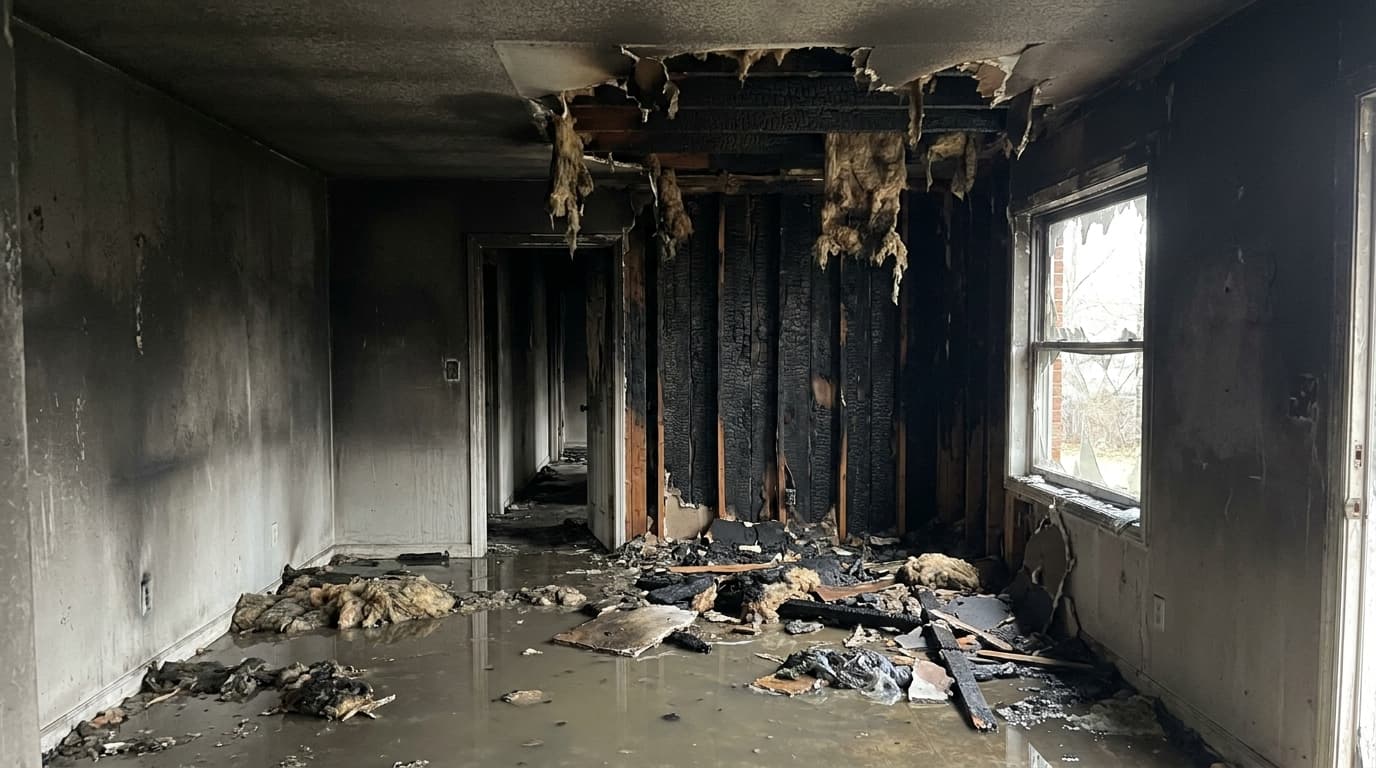
If you are reading this from a motel room the morning after, you are not behind. Most of what comes next is paperwork done on no sleep. This is the order it arrives in.
We handle fire damage restoration in Coeur d'Alene and across Kootenai County. The sequence runs like this: get cleared back in, secure the building, open the claim, sort what survives, and dry out the water the fire crews left behind. That last step is the one almost nobody warns you about.
Two rules sit over the rest. Do not go back inside until the fire department says the structure is clear. And do not throw anything away before your insurer has seen it, apart from food, medication and toiletries.
Get Your Quote
Ready to handle this with a pro?
You're reading about What Steps Come First in the 24 Hours After a House Fire in Coeur d'Alene. Get a fast quote for water damage restoration service in Boise, ID from Apex Restoration.
What Steps Come First in the 24 Hours After a House Fire in Coeur d'Alene?
The first day is triage, written down because almost nobody thinks clearly the morning after a fire.
Call 911 if it has not been called. Get first aid for anyone hurt; cool and cover burns.
Move everyone clear of the building and keep pets under your direct control.
Let family and friends know you are safe.
Anyone seriously injured or burned goes straight to medical or veterinary care.
Stay out of the house. Re-entry is the fire department's call, not yours.
Call your insurance company and ask what they want you to do first.
Those are adapted from USFA guidance and the American Red Cross guidance on recovering from a home fire. The federal After the Fire resources from the U.S. Fire Administration go further, covering insurance, valuing property and replacing documents.
Somewhere to sleep is the other first-day problem, and it is an insurance question — your carrier can usually advance money for a hotel long before anything settles. The emotional side lands later, once the adrenaline drops; that is normal, and no reason to rush what follows.
How Do You Know When It Is Safe to Re-Enter a Coeur d'Alene Home After a House Fire?
You do not. That call belongs to the fire department. The Red Cross says to stay out of fire-damaged homes until local fire authorities say it is safe to re-enter, and the U.S. Fire Administration booklet After the Fire: Returning to Normal is just as flat: do not enter your damaged home unless the fire department says it is safe. No home test substitutes for that, and we are not going to publish one.
Clearance is a procedure, not a glance. Crews open concealed spaces during overhaul to confirm nothing is burning inside a wall or ceiling, then sweep with a thermal imaging camera for heat nobody can see. In a firefighters' forum, a retired Cal Fire engine officer called rekindles rare and usually traceable to overhaul that stopped short; another commenter noted that a thermal camera cannot see a hot spot buried in insulation. Cleared houses do not commonly reignite, and the wait is part of why.
The building is still not what it was when you are let back in. The same booklet warns that floors and walls may not be as safe as they look — and that is before the water. Suppression water soaks into subfloors, insulation and ceiling assemblies, adding weight to framing that heat already weakened.
Assume the utilities are off and leave them off. The fire department checks water, electricity and gas, and disconnects them before leaving if they are not safe. The USFA's instruction is not to turn them back on yourself. Power waits for a licensed electrician, because two problems sit in the same house: standing water against live wiring, and soot, which conducts electricity and can damage or ignite equipment switched on under it.
Gas has its own rule. If you smell gas near the property, get away from the building, do not touch a light switch or use a phone in the fumes, and call the gas utility from a distance. Do not check the line, do not shut anything off, and do not turn anything back on.
Who Should a Coeur d'Alene Homeowner Hire to Board Up a House After a Fire?
Securing the building happens as soon as the fire department leaves, and the urgency has a reason most homeowners are never told: under most policies, protecting the property from further damage is your obligation. The Insurance Information Institute frames it as taking reasonable steps and saving the receipts for reimbursement.
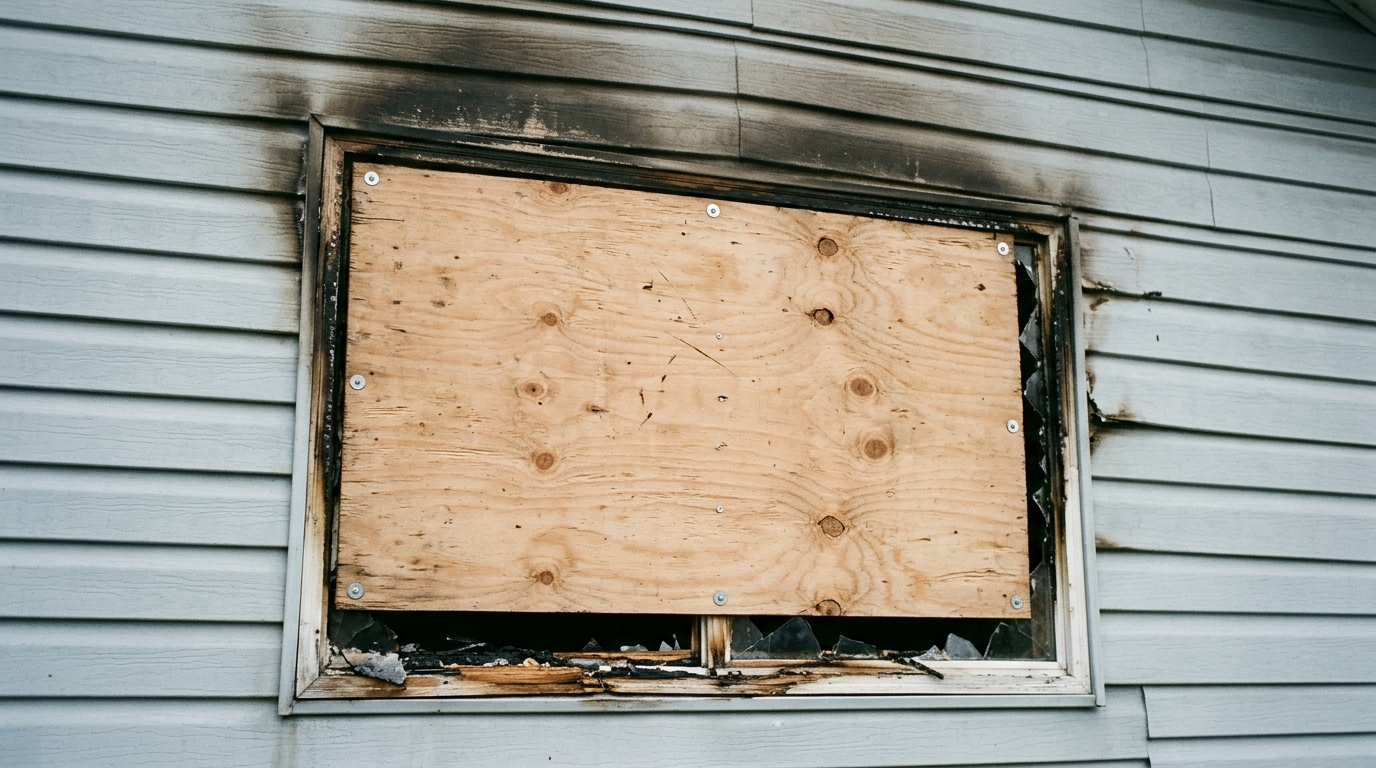
Board-up closes the openings the fire and the crews left behind, before weather and anything else gets in.
The work is plain: plywood over broken windows and doorways, sheeting over holes cut through the roof, a lock where the entry used to be. Your insurer may have an emergency vendor they want used; otherwise call a restoration contractor with a crew on call. Tell the police the house will stand empty, as the federal booklet recommends, and photograph every elevation before the boards go up.
You will be approached before you have decided any of this. Homeowners describe being handed contracts at the scene while still in shock, in one case before the fire was out. The rule applies to us as much as to anyone else who turns up: you are never required to sign on the spot. Emergency board-up and water extraction are the only two things that genuinely cannot wait.
Everything else waits until you have read the agreement somewhere quiet. Ask for the scope in writing, and keep a copy of whatever you sign.
Get Your Quote
Ready to handle this with a pro?
You're reading about How Do You Start an Insurance Claim After a House Fire in Coeur d'Alene. Get a fast quote for water damage restoration service in Boise, ID from Apex Restoration.
How Do You Start an Insurance Claim After a House Fire in Coeur d'Alene?
Call the carrier before you call anyone about repairs. The USFA's advice is to contact your insurance company right away and ask what to do first. That call shapes what gets approved and who is authorized on the property.
Ask about loss of use while you have them. Temporary living costs are often filed under that heading, and the Insurance Information Institute's guidance on settling claims after a disaster describes the amount available as generally equal to 20 percent of the insurance on your home, with some insurers paying more and others capping by time. Treat that as a pattern. Your declarations page has your number.
The mortgage does not pause, either. One homeowner who lost a house described paying the note on a place nobody can live in while also paying for somewhere to sleep.
Ask one more thing: whether contents are covered at actual cash value or at replacement cost, which decides whether an older sofa settles at what it was worth the day before the fire or at what a comparable new one costs, and read your own policy on it rather than any summary, including ours.
Two more points, both policy questions rather than Idaho ones. Triple-I notes that most policies require claims to be filed within one year of the disaster — a common policy term, not a state statute, so the binding date is the one printed in your policy. And if someone offers to run the claim as a public adjuster, know the trade: your insurer provides an adjuster at no charge, while a public adjuster's service, by Triple-I's account, could cost as much as 15 percent of your settlement.
What Can Be Cleaned and What Must Go After Smoke and Soot Damage in Coeur d'Alene?
Soot does not settle evenly, and what it settles on decides most of this. Hard sealed surfaces generally clean up: glass, glazed tile, finished metal, sealed cabinetry. Porous materials hold the residue inside themselves — carpet padding, upholstery foam, mattresses, unsealed drywall, insulation, particle board. Heat makes it worse, because warm material opens up and takes the residue deeper than a wipe can reach.
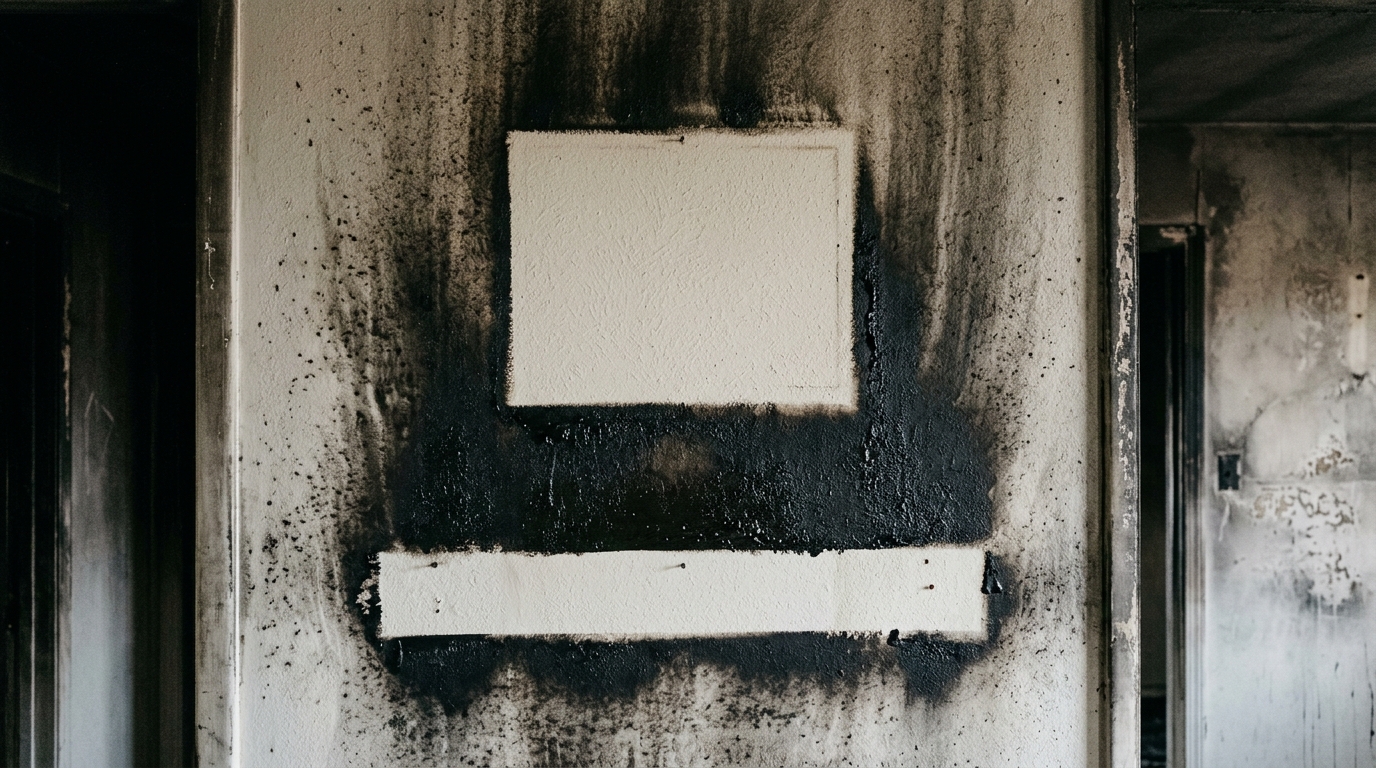
Soot records where it could and could not reach. The clean rectangle is where a picture frame blocked it, and the feathered edges show how the residue drifted in.
A short list goes regardless of how it looks:
Food and drink exposed to heat, smoke or soot. The Red Cross says discard it, without qualification.
Medication, cosmetics and toiletries that were open or exposed, along with plastics that may have absorbed fumes.
Porous materials the residue soaked into rarely survive either: carpet padding, some mattresses and upholstery, drywall or insulation that took smoke or water. They are still not yours to haul out. Photograph them, leave them where they are for the adjuster, and let a crew remove them under contained conditions.
Everything else waits for the adjuster. Policies typically require your insurer to inspect damaged property before it is disposed of, and Triple-I is blunt: do not throw out damaged items until the adjuster has visited. Photograph each room before you move anything.
This is where the bucket-and-sponge instinct causes harm. Soot is a respiratory hazard, and wiping it dry lifts it back into the air of a house already full of it, which is why the cleaning is done under contained, filtered conditions. Soot also conducts electricity, so an appliance with residue inside does not get switched on to see whether it still works.
Smoke goes where the fire never did — closets, ductwork, ceiling voids, attics nobody thought to open. One homeowner described an attic that smelled of smoke for months for exactly that reason. If lingering odor is what you are left with, we cover the treatment side in our guide to getting smoke smell out of an Idaho house.
Why Does a Coeur d'Alene Home Need Drying After a House Fire, Not Just Cleaning?
Here is the half of fire recovery that almost nothing online covers. Putting a house fire out takes water, and that water does not leave with the trucks. It runs down through the structure and stops where gravity stops it: under flooring, inside wall cavities, in insulation, in the joist bays above.
The one federal booklet that names the water left behind mentions it only in passing — things not damaged by the fire may still be soggy with the water used to put it out. Nobody follows that sentence anywhere.
Not every fire floods a house. A contained kitchen fire can be finished with overhaul alone — hood, cabinets and ceiling opened up to confirm nothing is still burning, no water used at all. Where suppression water did go in, though, you have two losses in one building, and only one of them is on your mind.
The water is not clean, either. It has run through burned materials, soot, melted plastics and whatever was stored in the rooms it passed through, which puts it in a different class from a supply line that let go upstairs. We set out how water damage is classified separately.
It is also on a clock. Wet building materials do not wait for the fire cleanup to be scheduled, and they stay wet inside assemblies that look dry on the surface. The drying half of a fire loss is governed by IICRC S500, the water-damage restoration standard, and it runs like any other water job: find the moisture with meters instead of by eye, open what has to be opened, set equipment, and measure until the readings say the structure is dry. Our technicians are IICRC-certified, and those readings get taken on every visit rather than judged by feel.
There are two things not to attempt here. Do not wade into standing water inside a fire-damaged building, where live circuits, contaminated water and weakened floors are in the same room. And do not try to pump or extract it.
That is why the fire work and the water work belong in one conversation. The drying is the same job our water-damage crews handle in Post Falls and around the north Idaho lakes, on the same clock. For the coverage side, we have written about how Idaho homeowners policies handle water damage separately.
Get Your Quote
Ready to handle this with a pro?
You're reading about Which Documents Should Coeur d'Alene Homeowners Collect to Handle a House Fire Claim. Get a fast quote for water damage restoration service in Boise, ID from Apex Restoration.
Which Documents Should Coeur d'Alene Homeowners Collect to Handle a House Fire Claim?
Build one folder, on paper or on your phone, and put everything in it. The federal booklet's own worksheet says what to record first:
The fire incident report number, and the name, address and non-emergency number of the department that responded.
The fire marshal or investigator assigned to your fire.
Your insurance company, its phone number and your policy number, which are the three the federal booklet's worksheet actually asks for. Add your agent and the claim number once it exists.
Every receipt: meals, clothing, lodging, the board-up, the storage unit. The insurer will want them, and so will your tax return.
Which department holds your report depends on whether the address sits inside Coeur d'Alene city limits. Inside the city, the City of Coeur d'Alene Fire Department responded, and a resident requests the report through the city's public-records request, listed on the City of Coeur d'Alene contact page alongside separate forms for accident and crime reports. Outside the city limits, Kootenai County Fire & Rescue runs its own process. Ask about fees and timing when you file.
The inventory is the piece everyone underestimates. Triple-I's guidance is to give the adjuster a list of damaged and destroyed items along with any receipts, and detail is the whole value of it: "toothbrush" gets you the cheapest one on somebody's list, while brand, model and rough age gets you the one you owned. Work room by room from your photographs, and do not let a spoken date become a deadline — inventory deadlines come from your policy, not the adjuster's preference.
Then there is the paperwork the fire took: licenses, passports, birth certificates, titles, deeds, the policy itself. Each has its own replacement route and none is quick, so start them in parallel.
The Bottom Line After a House Fire in Coeur d'Alene
Short version, in order. Get everyone safe and let the fire department clear the building. Secure it once they have. Open the claim and ask about loss of use. Photograph everything before it moves. Throw out only food, medication and toiletries. And get the water out while the rest is still being sorted.
None of this week will feel efficient. You will repeat yourself to four different people and remember almost none of it, which is why that folder matters.
When you want someone to walk the loss with you — soot, structure and water in one scope rather than three — we answer the phone around the clock and can be on site the same day. We work directly with carriers and adjusters, so the documentation your claim needs is built as the work happens.
Apex Restoration Team
Water Damage & Restoration Specialists
We're the Apex Restoration team — a family-owned, IICRC-certified crew handling water damage, mold, and abatement across Boise, the Treasure Valley, and Eastern Washington & North Idaho. We answer 24/7 and write these guides to help homeowners make calm, informed decisions when water, mold, or hazards show up.
Related Posts
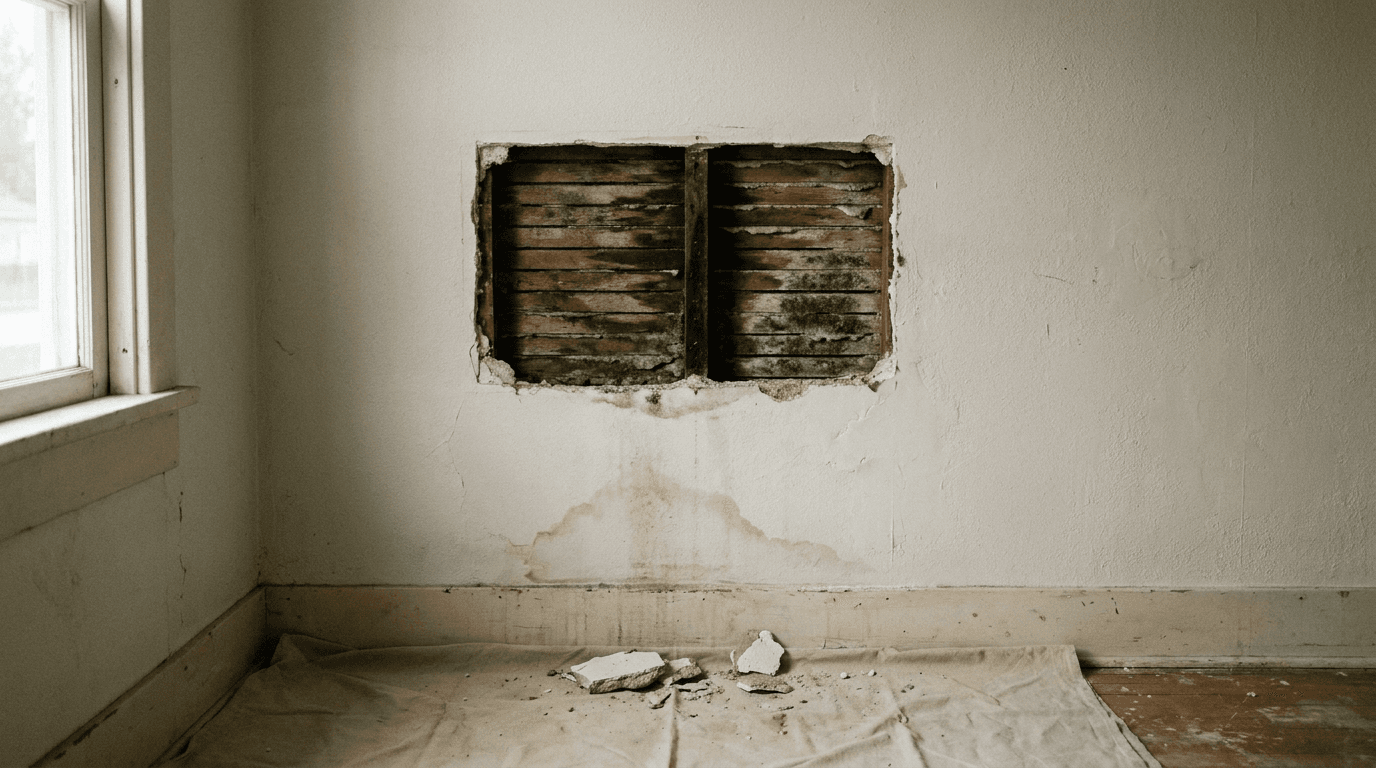
Does Homeowners Insurance Cover Mold Removal in Caldwell?
Homeowners insurance can pay for mold removal in a Caldwell home when the mold traces back to a covered water event, often only up to a limit. Here's how that limit often works, what an adjuster weighs, and what to tell your insurer.
What Should You Do When a Star Garage Floods?
When a water heater or washer floods a Star garage, stay clear of anything electrical the water reached, stop it at the source, and move it away from the house wall. Here's what to check next, and which board Idaho's code calls for when that wall is repaired.
How Do You Find a Water Leak in a Middleton Wall?
A leak inside a Middleton wall can show up in the water bill, a faint running sound or a bubbling paint seam before any stain appears. Here's how to narrow it down, what the City's meter rules mean for you, and when opening the wall makes sense.