
Does Homeowners Insurance Cover Frozen Pipes in Emmett?
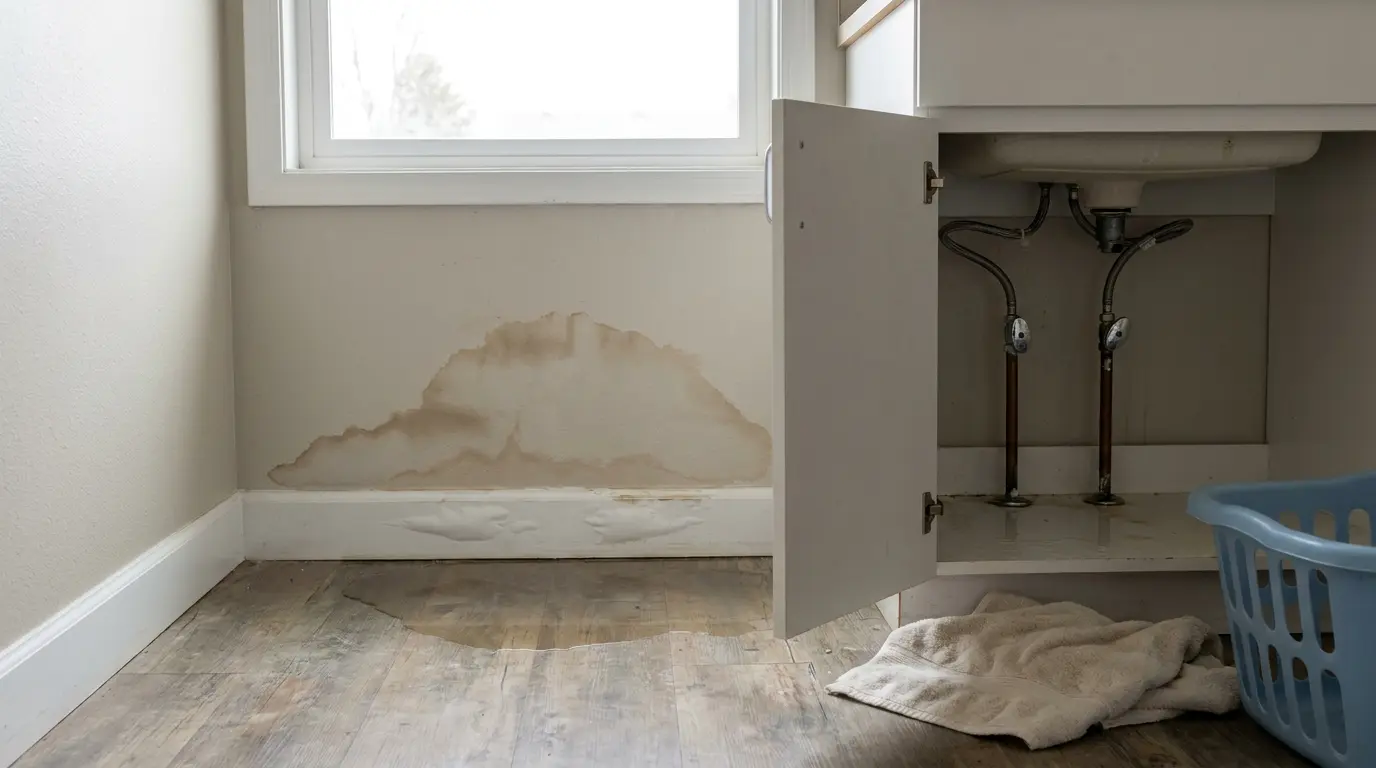
Often, yes, for the water damage. When frozen pipes burst, insurance policies often cover the resulting water damage if the homeowner has taken reasonable steps to maintain the pipes and keep them from freezing, according to the National Association of Insurance Commissioners. Paying for the split pipe itself is a separate question, and the wording of your own policy decides both.
If a pipe is frozen right now and the faucet has run dry, keep that faucet open, call a plumber and don't thaw the pipe with an open flame, which is State Farm's advice for frozen pipes.
We're the restoration company in this story, not the plumber, the agent or the insurer, and we don't thaw or repair pipes. Once the plumber has stopped the leak, our water damage restoration work finds where the water went and dries it out.
Get Your Quote
Ready to handle this with a pro?
You're reading about Does Insurance Cover Frozen Pipes in an Older Emmett House at All. Get a fast quote for water damage restoration service in Boise, ID from Apex Restoration.
Does Insurance Cover Frozen Pipes in an Older Emmett House at All?
It can, but in an older house two things come before the freeze clause: the kind of policy you have, and what actually broke the pipe.
The kind of policy. Homeowners policies are written on different forms. The special form, the most popular, insures against all perils except the ones the policy names as not covered. The basic form insures against only a listed set of perils, and the modified coverage form, written for older homes where the cost to rebuild is greater than the market value, covers the same set as the basic form (consumer guide to home insurance). If your Emmett house is insured on a basic or modified form, check whether freezing is on that list at all, and ask your agent how a burst from freezing would be handled.
What broke the pipe. In a pre-1940 Emmett house the cause is often an original supply line. A line that split because it froze and a line that gave out from age, wear or corrosion sit under different parts of the HO-3 sample policy quoted in the next sections. Ask the plumber to put in writing what failed and why.
What Does Your Policy's Freeze Clause Ask of an Emmett Household?
In the HO-3 sample wording below, one of two things: keep the building heated, or shut off the water and drain the system. Damage caused by freezing of the plumbing is excluded in the Insurance Services Office's HO-3 form (2000 edition, posted as a sample policy) unless you "have used reasonable care to" either "Maintain heat in the building" or "Shut off the water supply and drain all systems and appliances of water." If the building is protected by an automatic fire protective sprinkler system, the same form asks instead that you "use reasonable care to continue the water supply and maintain heat in the building for coverage to apply." That form names no temperature, though your own policy may set one.
Two details are worth checking against your own policy.
It's a reasonable-care test. The question is whether you took reasonable care, not whether a pipe froze anyway. Say the furnace in an older Emmett house quits overnight and a line in the crawl space splits before anyone notices. Those are different facts from a house where the heat was turned off on purpose.
Each option is complete on its own terms. Shutting off the main without draining the lines isn't the second option as written, because that wording asks for the shut-off and the drain together.
If your insurer decides the plumbing was neglected, with no steps taken to keep it from freezing, the damage from a burst pipe may not be covered. For the steps that keep pipes from freezing in the first place, see our guide to ice dams and frozen pipes in Idaho.
Why Does a Vacant House Change a Frozen Pipe Claim?
Because policies generally require you to keep the home at a minimum temperature, or to shut off the water supply if the home is vacant, and in an empty house nobody is there to notice when the furnace quits or a leak starts.
Ask your agent whether your policy defines "vacant" or "unoccupied," and which word fits a house you're away from.
If an Emmett house is going to sit empty, whether it's for sale, between owners or you're away for a stretch:
Call your agent first. Ask what the policy requires while the house is empty: heat kept on, the water shut off and the lines drained, or someone checking on it. If the house has fire sprinklers, say so before you shut off any water, because shutting off water disables fire sprinklers.
Do what it asks, and write it down. Note the thermostat setting, the date the water was shut off and the lines drained, and who checked the house and when.
Ask about the calendar. Find out how many days the house can sit empty before any part of the coverage changes, and what you'd need beyond that.
Get Your Quote
Ready to handle this with a pro?
You're reading about Does a Homeowner's Policy Pay for the Frozen Pipe Itself or Only the Water Damage in an Emmett House. Get a fast quote for water damage restoration service in Boise, ID from Apex Restoration.
Does a Homeowner's Policy Pay for the Frozen Pipe Itself or Only the Water Damage in an Emmett House?
The water damage and the pipe are separate questions, and the answer for the pipe depends on why it failed and on your policy's wording. After a frozen pipe, the bill can break into separate lines: the plumber's repair to the pipe, opening the wall or ceiling to reach it, drying and repairing what the water soaked, and your belongings.
When the pipe wore out. If a pipe fails from wear and tear, deterioration, mechanical breakdown, rust or corrosion, the HO-3 sample's wording covers the damage from the escaping water unless something else in the policy excludes it. That includes tearing out and replacing part of the building to get at the pipe, "but only when necessary to repair the system or appliance." The same paragraph then says: "We do not cover loss to the system or appliance from which this water or steam escaped." Under that wording, the worn-out pipe is yours to replace.
When the pipe froze. A split from freezing falls under the freeze clause instead, and in the HO-3 sample that paragraph doesn't repeat the sentence about the system the water escaped from. Your own policy may word this differently, so ask your agent directly: does my policy pay the plumber for a pipe that split from freezing, and for opening and closing the wall to reach it?
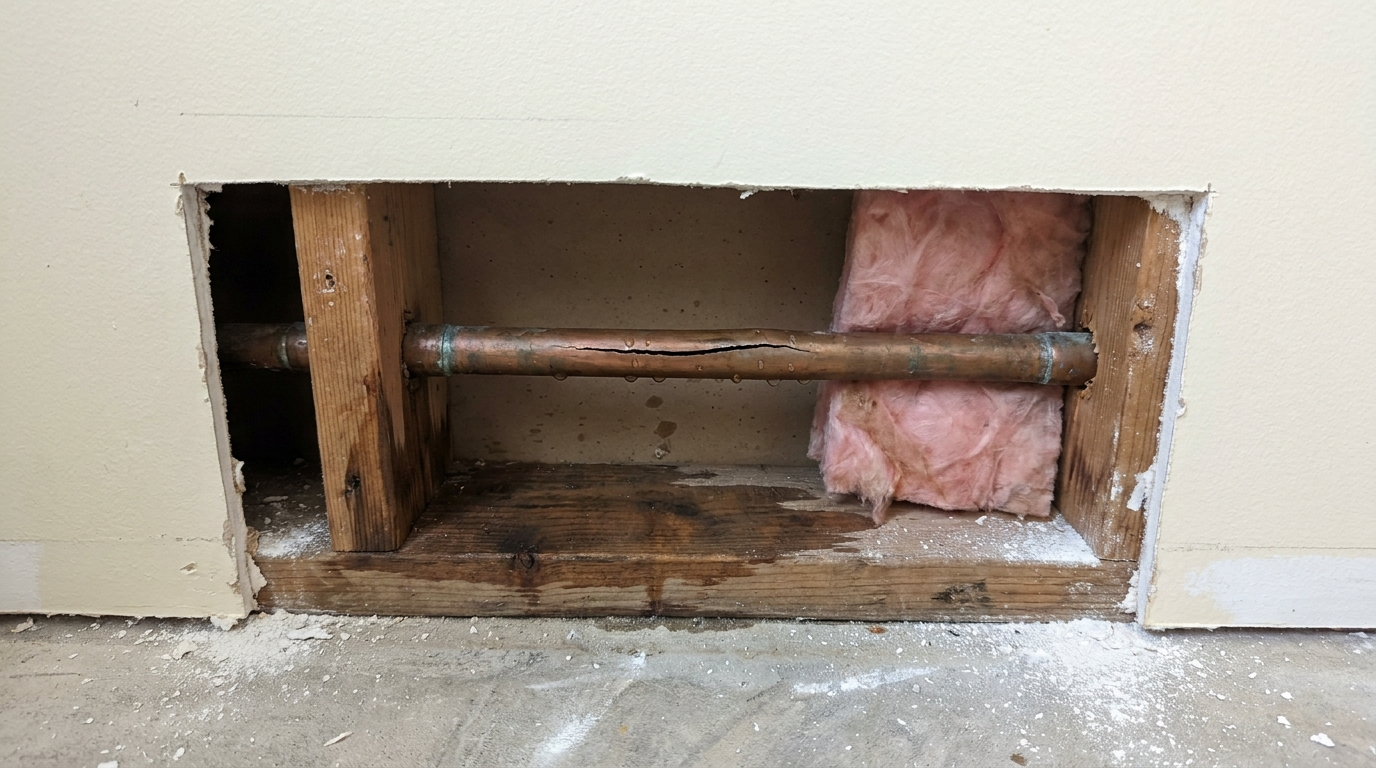
In an older Emmett house, a plumber who opens the wall may recommend replacing more of the original line than the split section. Ask for the invoice to separate the repair of this break from replacing old pipe that didn't fail, since a policy can treat the two differently. A whole-house repipe is that same question on a larger scale.
Your belongings fall under a different part of the policy from the house itself, which our guide to what homeowners insurance covers for water damage in Idaho walks through.
What Happens, Step by Step, Between the Thaw and the Claim in Emmett?
The plumber comes first, then drying, then the adjuster's visit. That order isn't set by the HO-3 sample above, which lists the duties after a loss to covered property, including "prompt notice to us or our agent," protecting the property from further damage and, if repairs are required, keeping "an accurate record of repair expenses," and showing the damaged property and providing records as often as the insurer reasonably requires.
Here's the order once a frozen line in an Emmett house thaws and starts to leak:
Make it safe, then stop the water. Don't touch anything electrical that's wet, or anything electrical while you're standing in water. That's the American Red Cross's rule for flood cleanup, and it applies just as much to water from a pipe. If you can reach the main water valve without doing either, shut it off and leave the faucets open (burst pipe steps). If the only way to the valve is through water near wiring, stay out and tell the plumber when you call.
The plumber stops the source. We don't thaw or repair pipes, so this call comes first. Ask the plumber to check the rest of the lines, to note what failed and why, and to leave you the split section if you can keep it.
Tell your insurer or agent promptly. If you may want the loss covered, prompt notice comes first on that list. Ask which forms or documents you'll need.
Readings first, then drying. Before anything wet is moved or cut out, the wet areas get photographed and measured, as the next section explains. Drying is how the property is protected from further damage, so it doesn't wait for the adjuster's visit; ask your insurer before any permanent repairs. Our inspection and estimate are free and carry no commitment, and an inspection doesn't open a claim.
The adjuster visits. Your insurer's adjuster will probably want to inspect the damage at your house, so keep a note of each conversation and its date. We work directly with the carrier and the adjuster on the claim and the documentation.
The rebuild comes last. When the readings show the structure is dry, we leave the space ready for our reconstruction partner, who carries out the rebuild.
Which Moisture Readings Document Hidden Water Behind Emmett Walls for Your Insurance File?
Dated readings that put a number and a place on water nobody can see. When a frozen line lets go inside a wall, the stain on the drywall shows only part of it. The rest can be in the framing, the insulation and the subfloor, or in the crawl space under an older Emmett house. A photo records the stain, and readings record the water.
Three kinds of readings do that work:
Moisture meter readings in the materials. A moisture meter can help measure the moisture content of wallboard, wood and concrete after water damage, and the same meter can follow those materials as they dry, according to the EPA's mold remediation guide for schools and commercial buildings. Readings at marked spots along the water's path, from the wall to the bottom plate to the subfloor, show how far it went.
Thermal images. A thermal camera detects temperature differences that can indicate hidden moisture or a leak, according to the National Environmental Health Association's mold inspection toolkit. Pair each image with a meter reading taken at the same spot.
A moisture map. A floor plan that marks the affected areas and where each reading was taken turns the numbers into a moisture map that someone who wasn't there can follow.
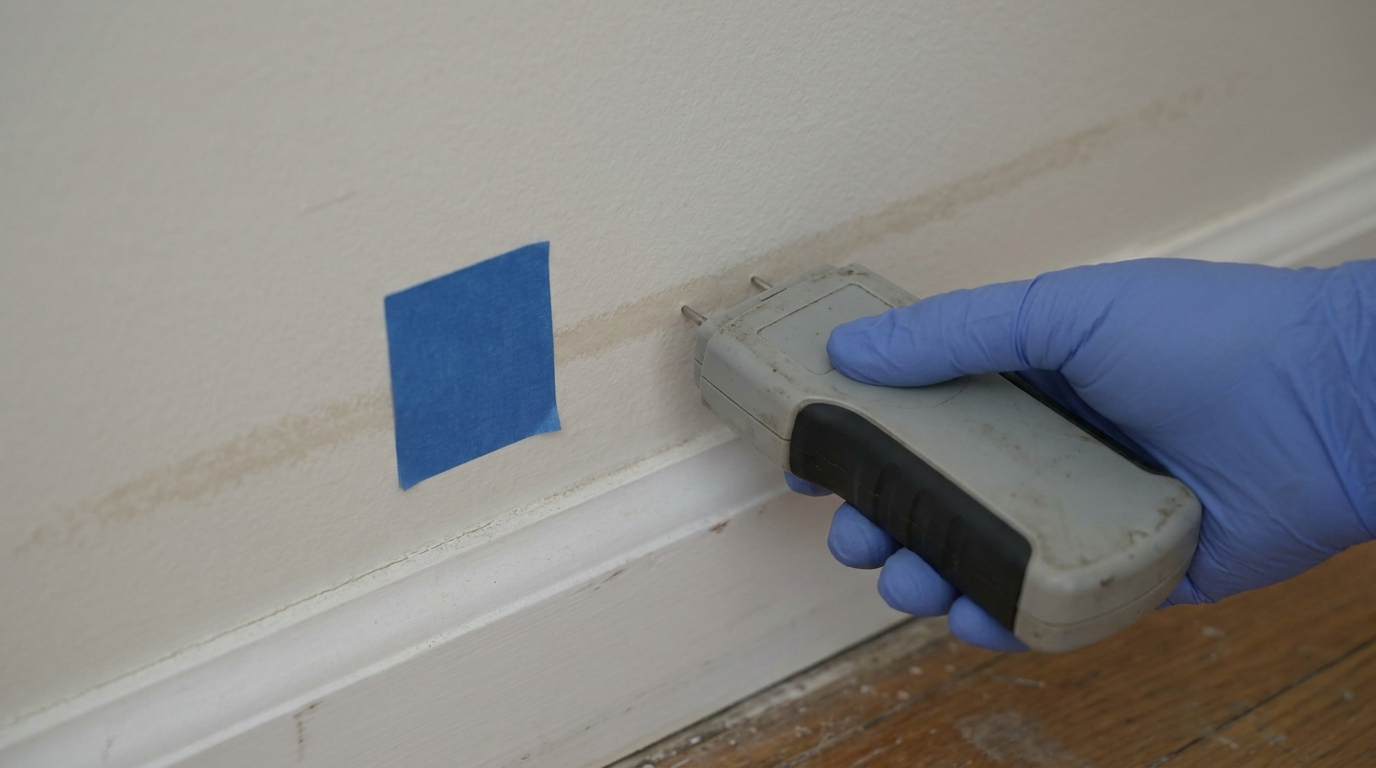
Timing is why readings carry weight in the insurance file. Drying starts before the adjuster's visit, and dry framing can't show how wet it was. Since a policy like the HO-3 sample can require you to show the damaged property and provide records, readings taken before drying and repeated as it dries are the record of what the adjuster may never see wet. We use thermal imaging and moisture meters to find where the water went, and we document each loss with DocuSketch.
Get Your Quote
Ready to handle this with a pro?
You're reading about What Should You Ask Your Insurer Before Filing a Claim From an Emmett Home. Get a fast quote for water damage restoration service in Boise, ID from Apex Restoration.
What Should You Ask Your Insurer Before Filing a Claim From an Emmett Home?
Ask how your policy treats this loss early, before you decide whether to file. Your agent or insurer can answer these from your own policy:
Which form is my policy on, and does it cover freezing?
What does my freeze clause require, and does a furnace or power failure, or the house being empty, change that?
What is my deductible? It's the money you pay on a claim before the policy pays, and it's paid on each claim (deductibles).
Does the policy pay for the pipe repair, and for opening the wall to reach it?
Is there a mold limit, and how much is it? If mold turns up behind the wall, a separate, smaller limit may apply, which our guide to mold removal and homeowners insurance explains.
Does loss of use apply if rooms are out of service during drying? In the HO-3 sample, it covers the necessary increase in living expenses when a covered loss makes the part of the home you live in "not fit to live in," for the shortest time required to repair or replace the damage. Ask whether that fits your situation and which receipts to keep.
How a claim might affect your premium is a separate question, covered in our guide to burst pipe water damage in Boise.
The Bottom Line
When frozen pipes burst, policies often cover the resulting water damage if you took reasonable steps to keep the pipes from freezing. Your own policy decides.
In an older Emmett house, check your policy form and, on a basic or modified form, whether freezing is on its list. Have the plumber note whether the line froze or wore out.
The HO-3 sample's freeze clause asks for reasonable care to keep the building heated, or to shut off the water and drain the system. With an automatic fire sprinkler system, it asks instead for reasonable care to keep both the water supply and the heat on for coverage to apply.
Before an Emmett house sits empty, call your agent, mention any fire sprinklers before you shut off water, do what the policy asks, write down what you did, and ask how many days it can stay empty before coverage changes.
The pipe repair, the tear-out to reach it and the water damage are separate lines, and a policy can treat them differently.
After a thaw, make it safe before you go near the water valve, then the plumber, prompt notice to your insurer, readings and drying, the adjuster's visit and the rebuild.
Moisture meter readings, thermal images and a moisture map record water that photos can't show.
Before you file, ask about your policy form, the freeze clause, your deductible, the pipe repair, any mold limit and loss of use.
We respond 24/7 in Emmett and across the Treasure Valley, from Middleton to Boise, and our page on drying and restoration for Middleton homes covers the same work. To see how we dry what can be saved and take out what can't, read how our water damage repair works.
Apex Restoration Team
Water Damage & Restoration Specialists
We're the Apex Restoration team — a family-owned, IICRC-certified crew handling water damage, mold, and abatement across Boise, the Treasure Valley, and Eastern Washington & North Idaho. We answer 24/7 and write these guides to help homeowners make calm, informed decisions when water, mold, or hazards show up.
Related Posts
Does Homeowners Insurance Cover Flooding in Garden City?
Homeowners policies typically exclude flood, so here is what an NFIP policy covers in Garden City, when a lender asks for one and how the 50% rule works.
Does Your Mountain Home, ID House Have Polybutylene Pipes?
Built or replumbed between 1978 and July 1995? Your Mountain Home house could have polybutylene. How to tell, where to look and when to call a plumber.
How Long Does a Landlord Have to Fix Mold in Boise?
Boise's three business days cover housing code violations, not mold by name. Who fixes what, tenant notices, rent, retaliation and who removes mold.